

22 NYC Budget Travel Tips to Know
New York City has a reputation for being expensive, and honestly, it’s not wrong. Hotel rooms cost more than most cities.
Cocktails run $18-25 at a decent bar. A taxi from JFK to Manhattan will set you back $70 before tip.
And the general cost of existing in New York for a week adds up faster than most first-time visitors expect.
But here’s what most people don’t realize: New York is also one of the most budget-friendly cities in the world if you know how to navigate it.
The subway costs the same $3 whether you’re going one stop or twenty. Some of the best food in the city comes from a $5 bagel or a $4 slice of pizza.
The most iconic parks, bridges, and neighborhoods cost absolutely nothing to experience. And the city’s free cultural offerings, concerts, markets, museums, festivals, run year-round in every borough.
The difference between an expensive New York trip and an affordable one comes down almost entirely to planning and knowing where to spend versus where to save. These are some must know NYC budget travel tips that will help you save plenty!
Use the Subway for Everything
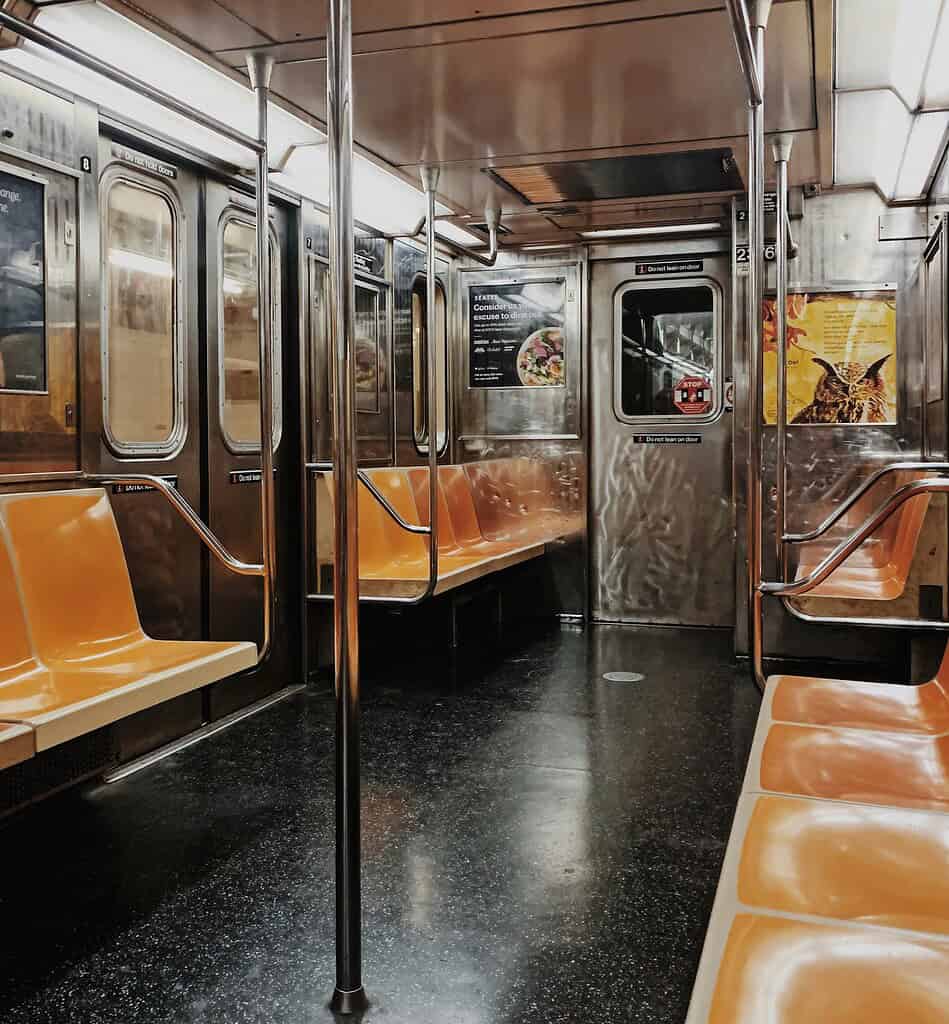
The New York City subway is one of the great bargains in American travel, and using it for every journey is the single most effective way to control your transportation budget.
A single ride costs $2.90 regardless of distance. The same fare takes you one stop in Manhattan or all the way from the Bronx to Coney Island in Brooklyn.
The system runs 24 hours a day, seven days a week, and connects virtually every corner of the five boroughs.
Get an OMNY card or use contactless payment from your phone or credit card to tap in and out. Avoid single-ride MetroCards, the $1 surcharge per card adds up unnecessarily.
Taxis and rideshares in New York are expensive, stuck in traffic, and rarely faster than the subway during peak hours.
Save them for situations where the subway genuinely doesn’t work, late night in an outer borough, traveling with heavy luggage, or an airport run.
Avoid Eating or Drinking Anywhere Near Times Square
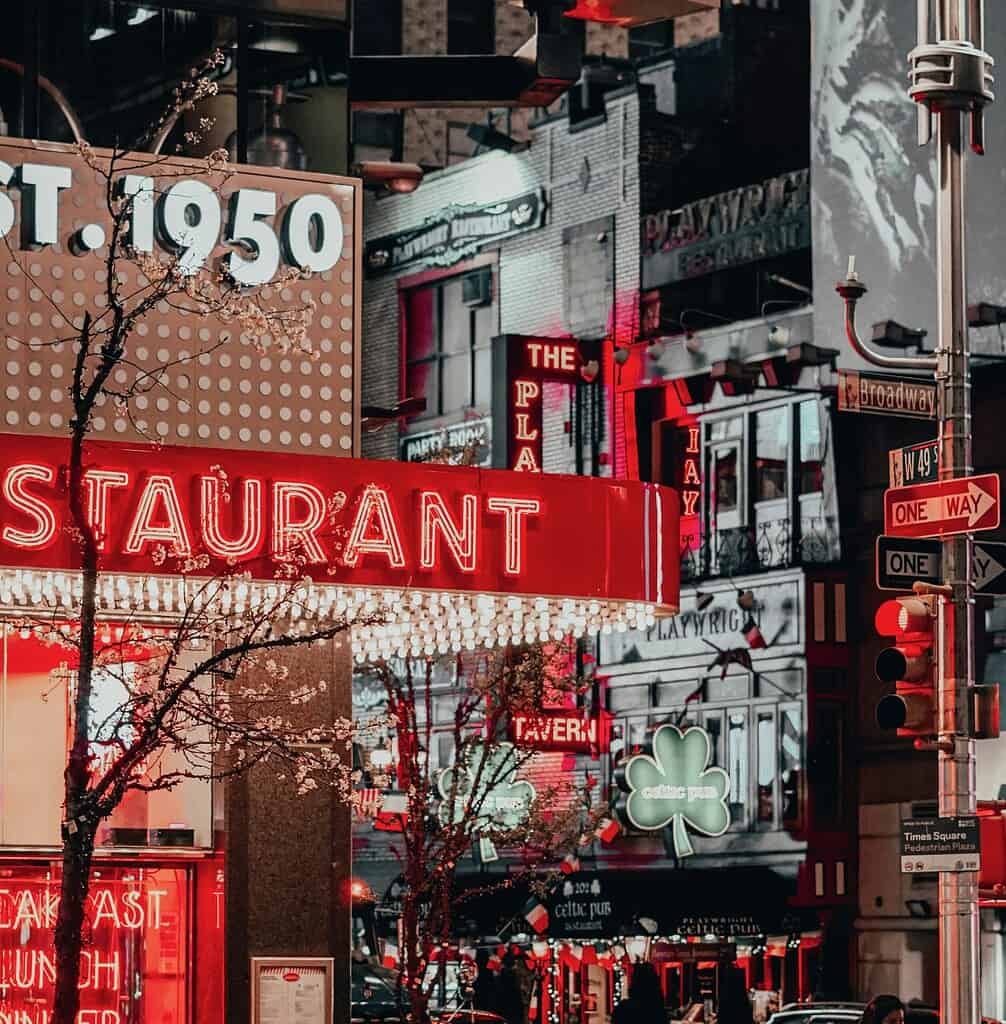
Times Square is surrounded by restaurants, bars, and food vendors that charge significantly higher prices for significantly lower quality than you’ll find anywhere else in the city.
A mediocre pasta dish that costs $18 in a neighborhood restaurant in Brooklyn costs $35 in Times Square.
A beer that’s $7 in a Hell’s Kitchen bar two blocks away is $14 inside Times Square. The markup is real and consistent.
Experience Times Square for the spectacle, it’s worth seeing, particularly at night, and then walk five minutes in any direction for food and drink.
Hell’s Kitchen to the west and the Theater District streets around it have dozens of genuinely good options at normal New York prices. Times Square is for looking at. Everywhere else is for eating.
Buy a Weekly Unlimited MetroCard if Staying 7 Days
If you’re in New York for a full week and plan to move around the city extensively, the 7-Day Unlimited MetroCard is worth the math.
At $34, it covers unlimited subway and local bus rides for seven consecutive days. If you’re taking more than six rides per day, which is easy to do when you’re sightseeing across multiple neighborhoods, it pays for itself quickly.
Do the math before you buy. If you’re only riding two or three times a day, pay-per-ride is cheaper.
But for active sightseers covering multiple neighborhoods daily, the unlimited card saves real money.
Fly Into Newark Instead of JFK or LaGuardia
JFK and LaGuardia are the two airports most associated with New York, but Newark Liberty International in New Jersey is often significantly cheaper for flights and worth considering seriously.
The AirTrain to Newark Penn Station and then NJ Transit into Manhattan runs about $15-17 total, considerably cheaper than a taxi or rideshare from JFK, which can hit $80-100 with traffic and tip. Travel time is comparable to JFK at around 45-60 minutes.
Check flights into all three airports when booking. The fare difference between JFK and Newark on the same route is often more than enough to justify the slightly different arrival logistics.
Eat Pizza by the Slice
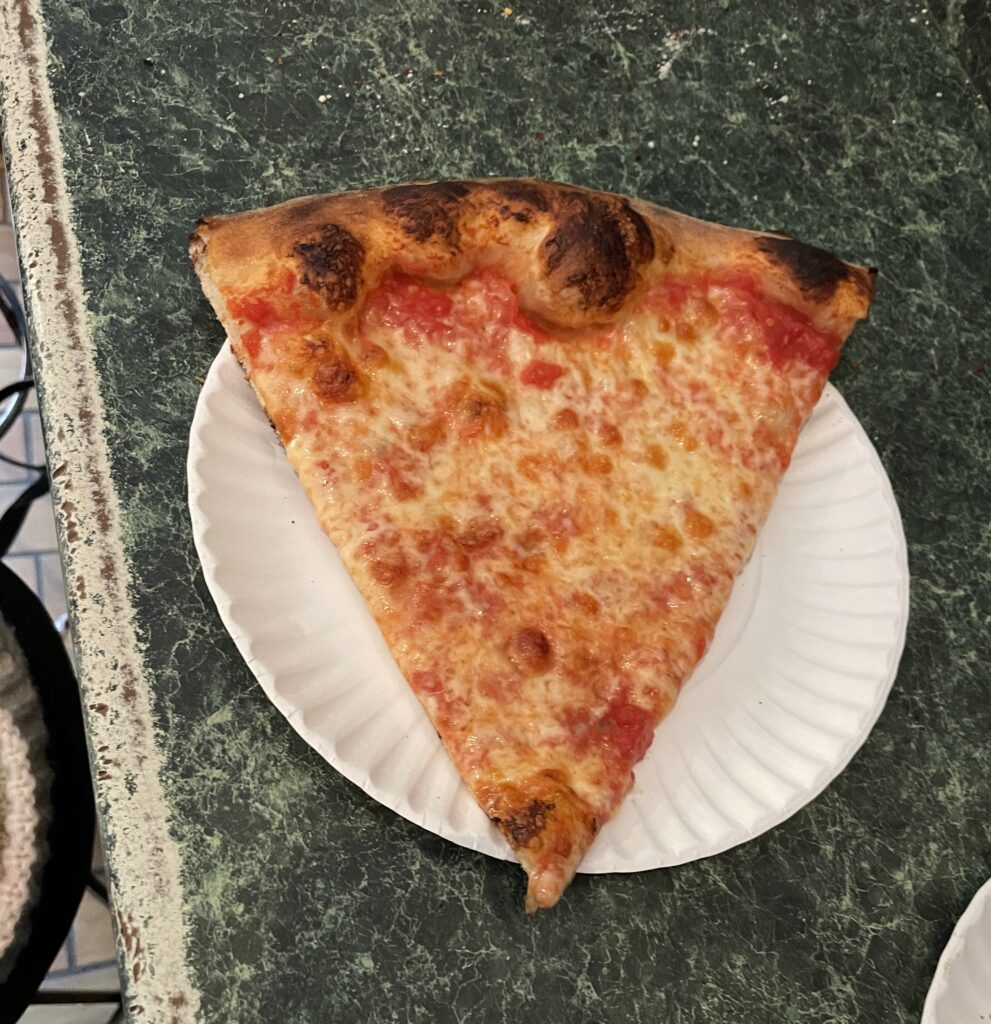
New York pizza by the slice is one of the best food bargains in any major city in the world, and eating it is also simply the correct thing to do in New York.
A plain cheese slice at a neighborhood pizzeria runs $3-4. A specialty slice might hit $5-6.
For lunch or a quick dinner, two slices and a drink comes in well under $15 and will be more satisfying than most sit-down meals costing three times as much.
Skip the tourist-facing pizzerias in Times Square, which charge premium prices for mediocre results.
Walk a few blocks in any direction into an actual neighborhood and find a slice place where locals eat. The pizza will be better and the price will be lower every single time.
Visit Free Museums and Cultural Institutions
New York has an extraordinary number of free or pay-what-you-wish cultural institutions, and most visitors don’t take full advantage of them.
The Metropolitan Museum of Art has a suggested admission of $30 but operates on a pay-what-you-wish basis for New York State residents, worth knowing.
The American Museum of Natural History has a similar suggested-but-optional structure. The Brooklyn Museum is free on the first Saturday of every month. MoMA PS1 in Long Island City is free to visit.
Completely free institutions include the New York Public Library’s main branch on Fifth Avenue, the National Museum of the American Indian in Lower Manhattan, the Museum of Arts and Design’s public spaces, and the entire collection of galleries in Chelsea which rival any museum in the city at no cost whatsoever.
Research free days and suggested-admission policies before you visit. The savings across a week of cultural activity add up substantially.
Eat at Bodegas for Breakfast
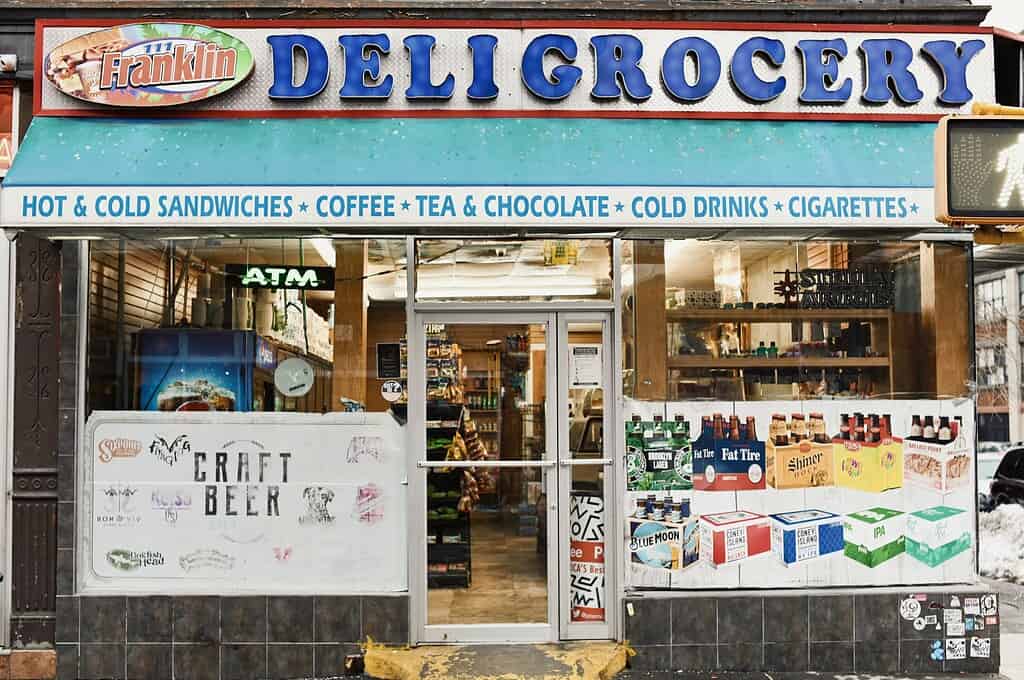
New York’s bodegas are open early, open late, and serve breakfast sandwiches: bacon, egg, and cheese on a roll, that are genuinely excellent and cost $4-7 depending on the neighborhood.
This is what New Yorkers actually eat for breakfast. Not a $22 avocado toast at a trendy café, not a hotel buffet, a bodega breakfast sandwich eaten while walking or standing at the counter.
Coffee from a bodega is also consistently good and costs $2-3. Starting your day at a bodega instead of a sit-down café can save $15-20 before you’ve even started sightseeing.
Find the bodega nearest to where you’re staying on your first morning and make it a routine. You’ll eat better and spend less than almost any alternative.
Go to Central Park Instead of Paid Attractions
Central Park is 843 acres of free public space in the middle of Manhattan, and spending time in it costs nothing.
The park has rowboating on the lake, free outdoor concerts in summer through SummerStage and the Metropolitan Opera’s free performances on the Great Lawn, playgrounds, running paths, the Conservatory Garden, Strawberry Fields, Belvedere Castle, and more.
A morning or afternoon in Central Park delivers as much of a New York experience as most paid attractions, often more.
Combine it with a cheap bodega breakfast or a pizza slice from a nearby shop and you have a genuinely great half-day for almost nothing.
Walk the Brooklyn Bridge for Free
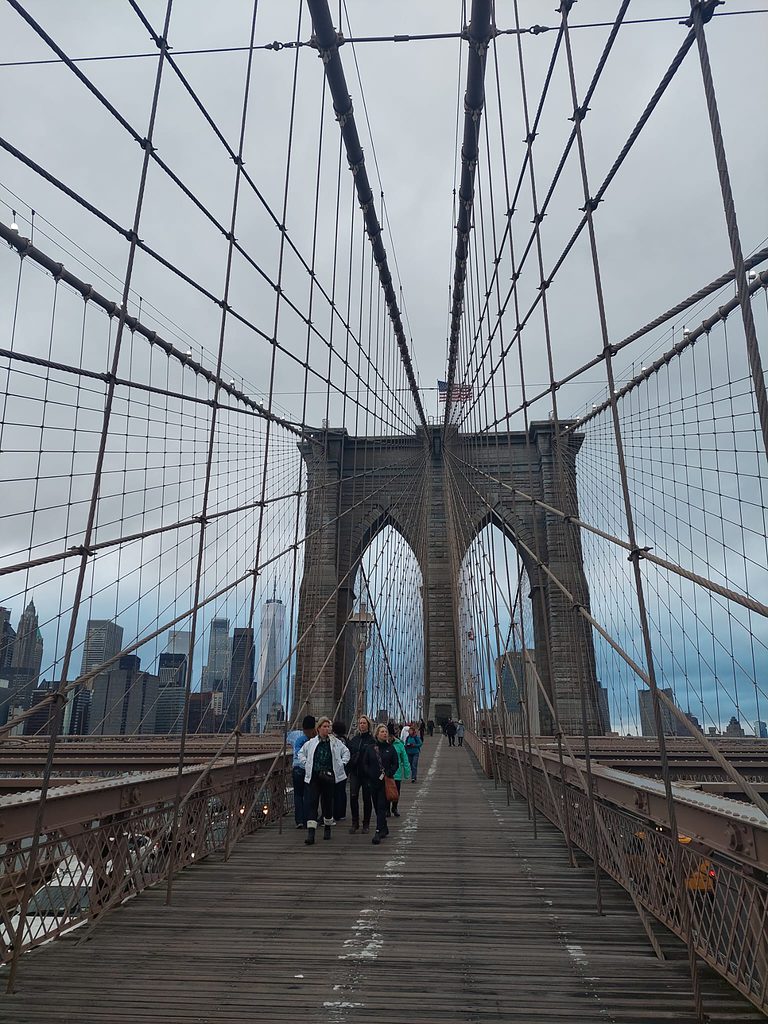
The Brooklyn Bridge walk is one of the best free experiences in New York and consistently one of the most memorable parts of any visit.
The pedestrian walkway sits above the car traffic with unobstructed views of the Manhattan skyline, the East River, and the bridge’s own remarkable steel cable structure. The walk takes 30-40 minutes at a comfortable pace.
Start from the Brooklyn side for the best views walking toward the skyline. Go early morning for the best light and the fewest people.
From the Brooklyn side, DUMBO is directly below with excellent coffee shops and the Brooklyn Bridge Park waterfront, all free to walk and explore.
Use Happy Hour Strategically

New York has a genuine happy hour culture and using it correctly saves significant money on what would otherwise be one of the city’s biggest expenses.
Most bars in the city offer discounted drinks from 4-7 p.m. on weekdays. Standard cocktails that run $18-22 in the evening come down to $10-14 during happy hour.
Draft beers drop from $9-12 to $5-7. Some bars include discounted food as well.
Plan to do your bar-sitting in the late afternoon and transition to restaurants or food markets for dinner rather than ordering full rounds at evening prices.
The West Village, East Village, Lower East Side, and Williamsburg all have strong happy hour cultures with genuinely good bars participating.
Eat at Food Halls and Markets
New York’s food hall scene has grown into one of the best in the world, and eating at food halls delivers excellent quality at significantly lower prices than sit-down restaurants.
Chelsea Market on 9th Avenue has dozens of vendors including The Lobster Place for fresh seafood at market prices, excellent tacos, bread from Amy’s, and more.
Smorgasburg in Williamsburg on weekends has 100 vendors covering everything from ramen to jerk chicken to soft-serve.
The Plaza Food Hall, DeKalb Market Hall in Brooklyn, and Time Out Market in DUMBO are all worth knowing about.
Food hall meals typically run $12-20 per person compared to $30-50 at a sit-down restaurant for comparable quality.
You eat standing or at communal tables, the food is often better, and there’s no expectation of tip on top of the meal.
Take the Free Staten Island Ferry
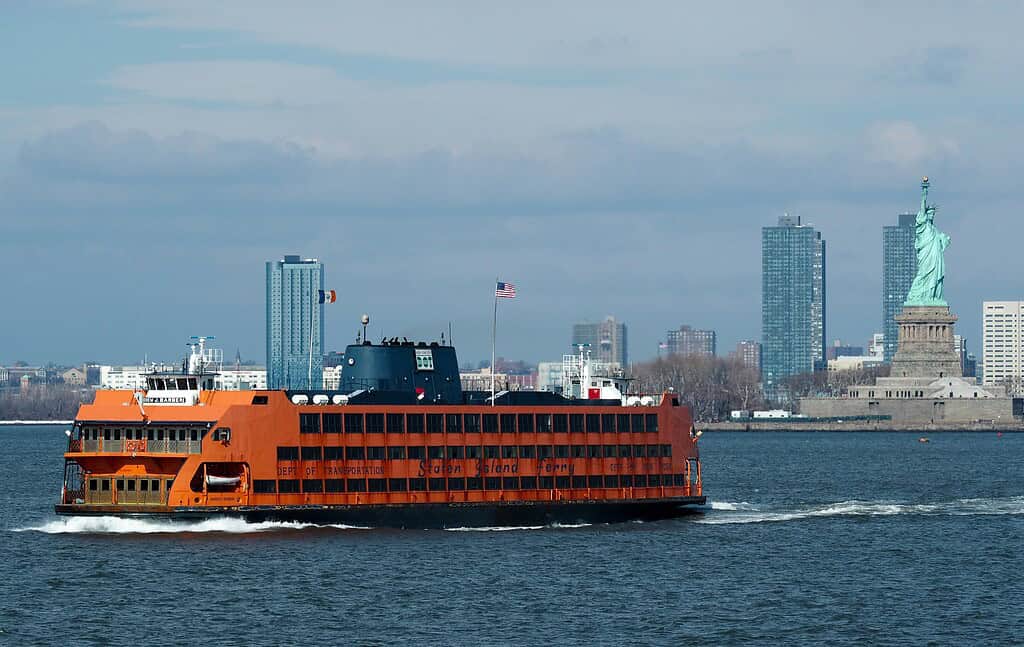
The Staten Island Ferry runs 24 hours a day, 7 days a week, between Whitehall Terminal in Lower Manhattan and St. George Terminal in Staten Island. It is completely free in both directions.
The 25-minute crossing gives you views of the Statue of Liberty, Ellis Island, New York Harbor, and the Lower Manhattan skyline from the water, comparable to what you’d see on a paid harbor cruise at a fraction of the cost.
Most people ride it, take the views, and turn around at Staten Island without disembarking. That’s completely fine.
Go on a weekday mid-morning for the least crowded experience. Stand on the outdoor deck on the way out for the best Statue of Liberty views.
See Broadway on a Budget with TKTS
Broadway shows are one of New York’s signature experiences and the assumption that they’re always expensive isn’t accurate if you know how to buy tickets.
TKTS in Times Square sells same-day and next-day tickets for many Broadway and Off-Broadway shows at 20-50% off face value.
The booth opens at 3 p.m. for evening shows and 10 a.m. for matinees. Lines form, but they move steadily and the selection is usually substantial.
Rush tickets, eleased on the day of the show directly through theater box offices or apps like TodayTix, are another option and can bring premium shows down to $30-50 per ticket. Student rush programs offer similar savings for those with valid student ID.
Broadway at full price is expensive. Broadway with planning is significantly more accessible.
Book Accommodation in Outer Boroughs
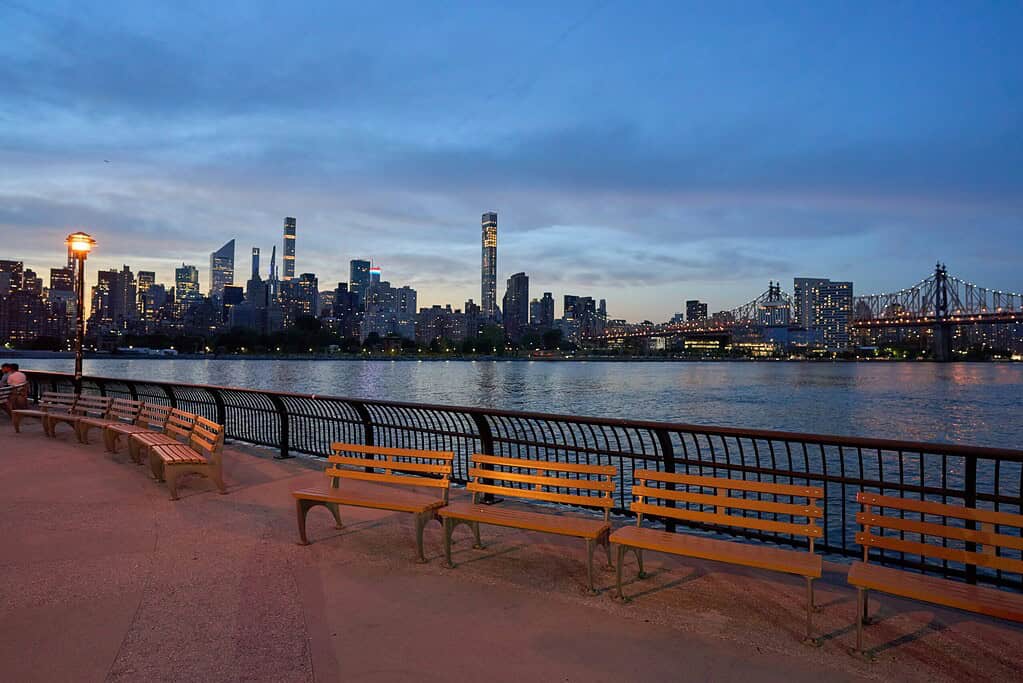
Manhattan hotel rates are among the highest in the United States, and choosing accommodation in the outer boroughs cuts your nightly cost significantly while keeping you connected to the city by subway.
Long Island City in Queens is one stop from Midtown on the 7 train, a six-minute ride, and has newer hotel inventory at meaningfully lower prices.
Williamsburg in Brooklyn is 15 minutes from Midtown on the L and has a better neighborhood experience than most of Midtown.
Harlem in upper Manhattan sits along express subway lines and runs 15-20 minutes to major attractions.
Saving $80-120 per night on accommodation across a week-long trip is the most significant single budget impact you can make in New York. The subway neutralizes the location disadvantage almost entirely.
Eat Lunch Instead of Dinner at Nice Restaurants
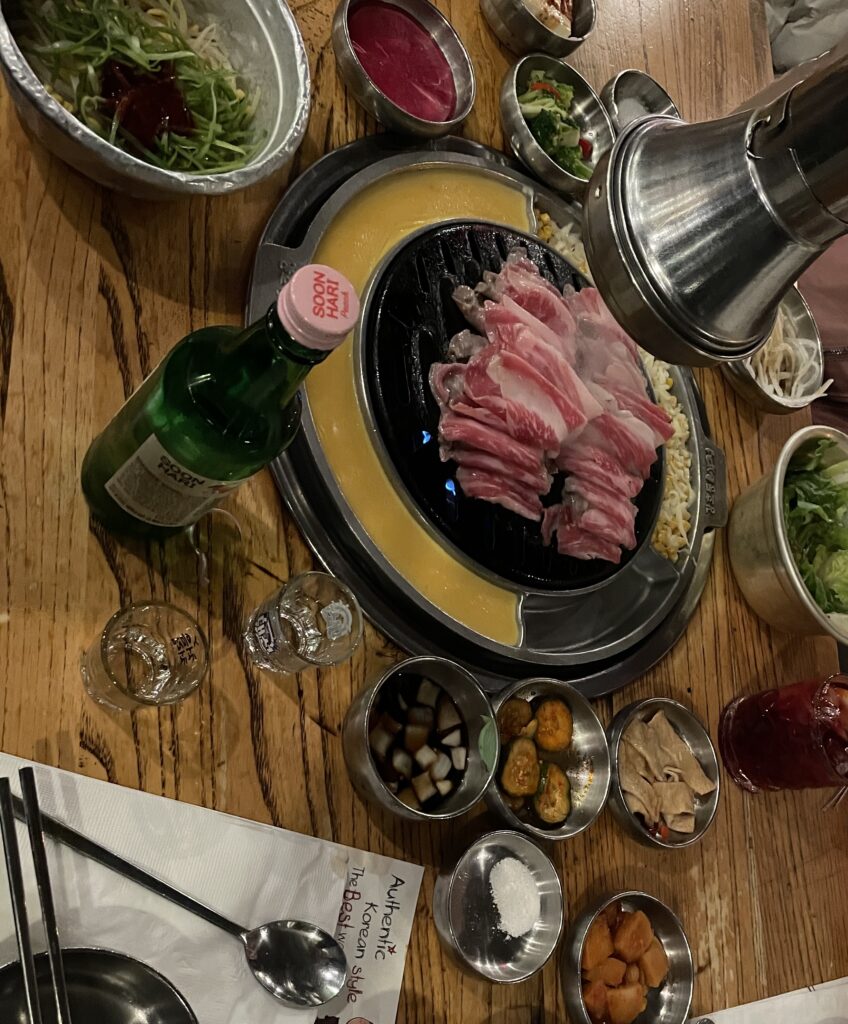
If there’s a restaurant you specifically want to try in New York that would be expensive at dinner, eating there at lunch is the most effective way to experience it at lower cost.
Most restaurants offer lunch menus or prix-fixe lunch specials that use the same kitchen, the same ingredients, and the same quality standards as dinner service at 40-60% of the evening price.
A restaurant charging $45 per person at dinner may offer a $20 lunch set menu covering multiple courses.
Restaurant Week, held twice yearly in January and summer, extends this principle city-wide with hundreds of participating restaurants offering fixed-price lunch and dinner menus at reduced rates. Check the NYC Restaurant Week website for dates and participants.
Drink at Dive Bars
New York has an extraordinary dive bar culture and the prices at a genuine dive bar are among the most reasonable in the city for alcohol.
A draft beer at a neighborhood dive runs $4-7. A shot of well whiskey is $5-8. The bar snacks are often free.
The atmosphere is authentic in a way that rooftop bars at $22 a cocktail simply aren’t.
The East Village has some of the best dive bars in Manhattan, Standings, Double Down Saloon, International Bar.
The Lower East Side has more. Bushwick and Ridgewood in Brooklyn and Queens have excellent options at even lower prices.
Going to a proper New York dive bar is also just a genuinely good experience that most tourists miss entirely.
Visit Governors Island
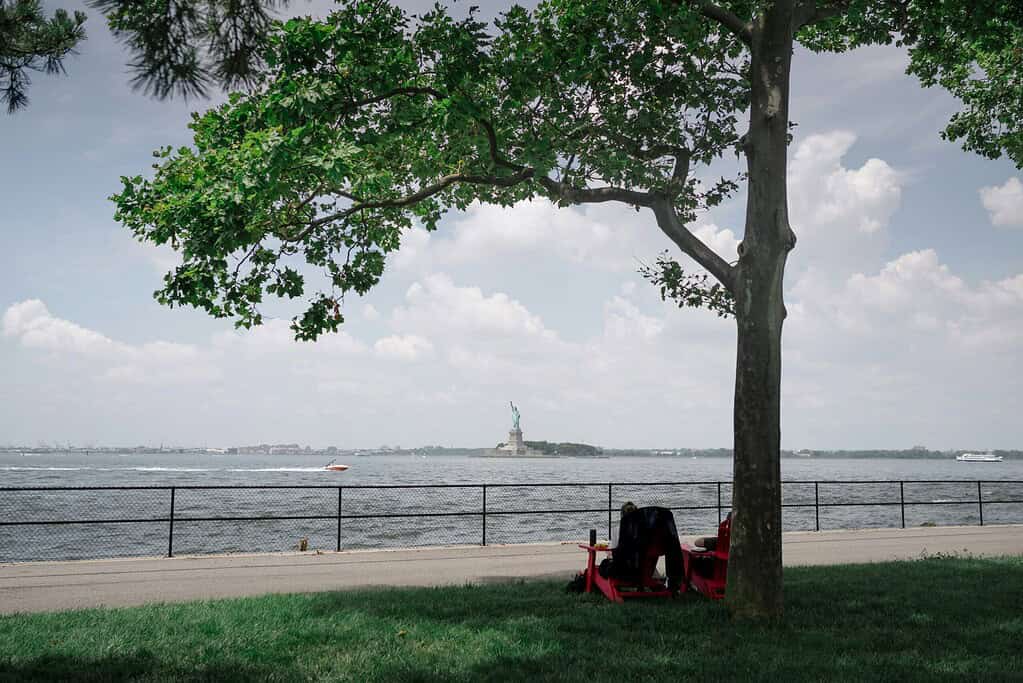
Governors Island is a small, car-free island in New York Harbor accessible by ferry from Lower Manhattan and Brooklyn, and it’s one of the most pleasant and least crowded free experiences the city offers.
The ferry from Manhattan is free on weekday mornings and $4 round-trip otherwise. Once on the island, admission to the grounds is free.
You’ll find parks, art installations, bike rentals, food vendors, and extraordinary views of the Manhattan skyline and the Statue of Liberty from a perspective most visitors never see.
The island is open seasonally from May through October. Go on a weekday for the most relaxed experience. Bring a picnic from a nearby deli or grocery store and spend an afternoon.
Shop at Trader Joe’s and Whole Foods Hot Bars
If you’re staying in accommodation with even a small refrigerator or kitchenette, buying groceries rather than eating every meal out makes a substantial difference to your daily budget.
Trader Joe’s locations in Manhattan, Union Square, Chelsea, Upper West Side, offer genuinely good food at reasonable New York prices.
The hot bar and prepared food section at Whole Foods stores allows you to build a meal by weight that’s cheaper than most restaurant options and usually excellent quality.
A simple grocery run covering breakfast items, snacks, and a few easy dinners can save $30-50 per day compared to eating every meal at restaurants.
Go to Free Outdoor Events
New York runs an extraordinary calendar of free outdoor events from May through October, and taking advantage of them cuts entertainment costs dramatically while delivering experiences that rival anything you’d pay for.
SummerStage in Central Park and parks across all five boroughs runs free concerts all summer covering everything from jazz to Latin music to indie rock.
Shakespeare in the Park at the Delacorte Theater in Central Park offers free performances of Shakespeare, tickets are distributed by lottery online and in person on the day of the show.
Bryant Park hosts free outdoor movie screenings on Monday evenings in summer.
The Celebrate Brooklyn festival in Prospect Park runs free and ticketed performances through the summer.
Check NYC Parks, SummerStage, and Bryant Park websites before your visit for current schedules.
Use the Roosevelt Island Tramway
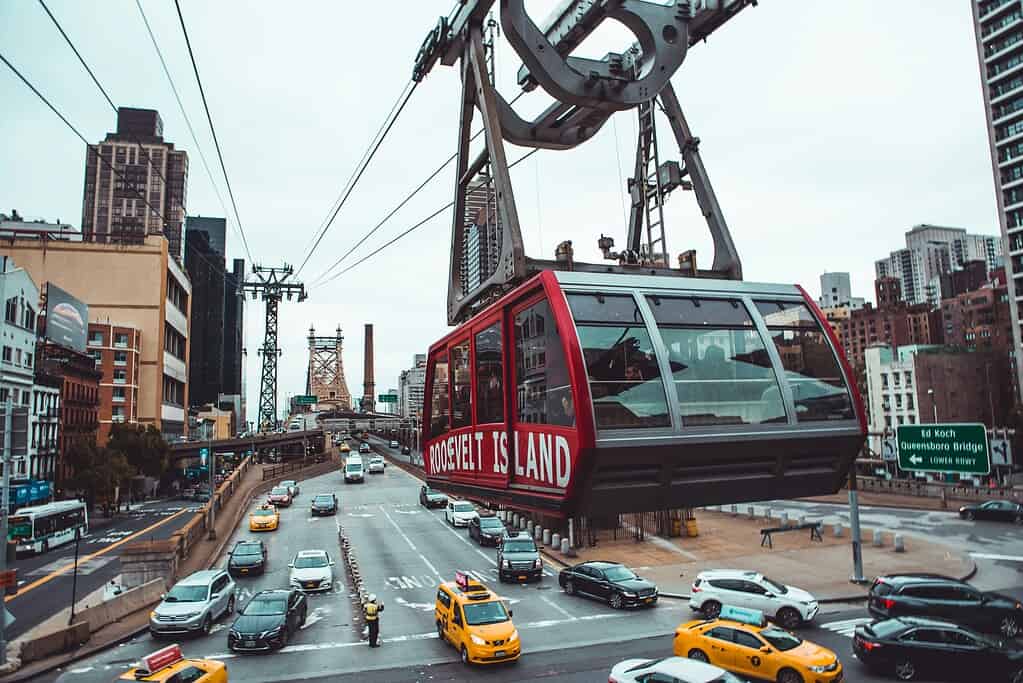
The Roosevelt Island Tramway is included in your subway fare, runs between Manhattan at 59th Street and Roosevelt Island, and gives you aerial views of the East River and the Queensboro Bridge that are genuinely dramatic.
It’s five minutes each way, costs nothing beyond the standard subway fare, and provides one of the better scenic experiences available for free in New York. Most tourists have never heard of it.
Roosevelt Island itself is a quiet, car-free community with a park along the southern tip that looks directly back at Midtown Manhattan, one of the better free viewpoints in the city.
Get a New York City Pass Only If It Makes Sense
The New York City Pass and similar attraction bundles offer discounted entry to multiple major attractions and can save money, but only if you were genuinely planning to visit all the included attractions anyway.
Run the math specifically. Add up the individual admission prices for every attraction included in the pass.
Compare to the pass price. If the savings are real for your specific itinerary, buy it. If you were only planning to visit two or three of the included attractions, the pass costs more than buying individually.
Many visitors buy attraction passes and then don’t use everything included, which means the pass costs more than the alternatives. Be honest about what you’ll actually visit.
Take Advantage of Free Wi-Fi
Maintaining data connectivity in New York on a foreign SIM can add meaningful cost to a trip, and New York’s public Wi-Fi infrastructure makes it largely unnecessary.
LinkNYC kiosks throughout the five boroughs offer free, high-speed Wi-Fi that covers most outdoor areas in Manhattan and increasingly in the outer boroughs.
The NYC Subway system has Wi-Fi connectivity at most underground stations, though not on moving trains.
Most coffee shops, fast food locations, bodegas, and public spaces offer free Wi-Fi without requiring a purchase.
For navigation, translation, and basic internet use throughout the day, the city’s free Wi-Fi coverage is sufficient for most visitors without the need for a local data plan.
Final Thoughts on Traveling New York City on a Budget
New York is one of those cities where the budget version and the expensive version can be almost identical in quality and experience, sometimes the budget version is actually better.
The bodega breakfast beats the hotel buffet. The neighborhood pizzeria beats the tourist restaurant. The subway is faster than the cab.
The Brooklyn Bridge walk is more memorable than any paid observation deck. The dive bar has more personality than the rooftop.
Plan your big splurges, the one nice dinner, the Broadway show, the observation deck, and be smart everywhere else.
That combination gives you a genuinely great New York trip at a fraction of what most visitors spend. The city rewards the prepared traveler. Now you are one! Enjoy your visit!

What is the cheapest way to get around NYC?
The subway at $2.90 per ride is the cheapest and often fastest way to get around the city.
A 7-Day Unlimited MetroCard at $34 is the best value for visitors staying a full week who plan to ride more than six times per day.
Avoid taxis and rideshares for regular sightseeing, they’re significantly more expensive and rarely faster.
What is the cheapest area to stay in NYC?
Long Island City in Queens offers the best combination of low hotel prices and fast subway access to Manhattan, one stop to Midtown on the 7 train.
Harlem and Williamsburg are also solid budget-friendly options with good transit connections and genuine neighborhood character.
Can you visit NYC on $100 a day?
Yes, with discipline. Budget accommodation in the outer boroughs runs $80-120 per night. Eating at bodegas, pizza shops, food halls, and markets keeps food costs under $30.
When is the cheapest time to visit NYC?
January and February offer the lowest hotel rates and fewest crowds of the year. The weather is cold but manageable with proper clothing, and the city’s indoor offerings, museums, Broadway, restaurants, are fully operational.
