
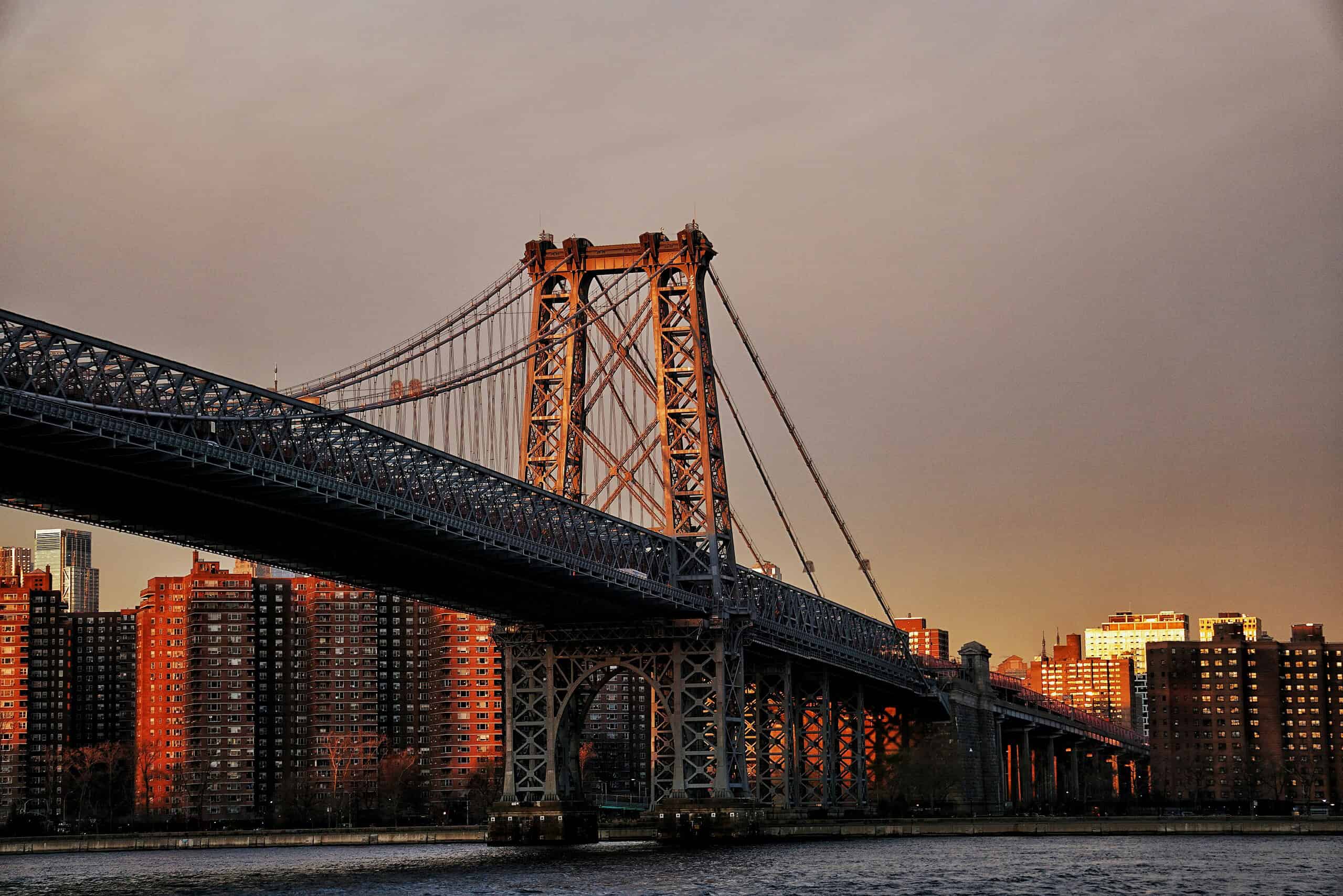
9 Cheapest Areas to Stay in NYC
New York City is one of those places where everyone tells you it’s going to be expensive, and they’re right. But what they don’t tell you is that where you stay makes all the difference.
Most first-time visitors automatically book something in Midtown Manhattan, usually near Times Square, and then spend the rest of their trip wincing at their credit card statement.
The thing is, New York’s subway system is one of the best in the world, and if you’re willing to stay a few stops outside the tourist epicenter, you can cut your accommodation costs significantly without sacrificing convenience.
New York is a city of neighborhoods. Each one has its own personality, its own food scene, its own vibe. And some of the best ones happen to be the most affordable.
I’ve broken down nine areas that consistently offer lower nightly hotel rates, all with solid subway access that gets you into Midtown or Downtown in under 30 minutes.
Some are in Brooklyn. Some are in Queens. One isn’t even technically in New York City. But all of them are legitimate bases for exploring everything the city has to offer.
Here are the nine cheapest areas to stay in NYC, ranked from most affordable to least, and what you need to know about each one before you book.
Jersey City, NJ
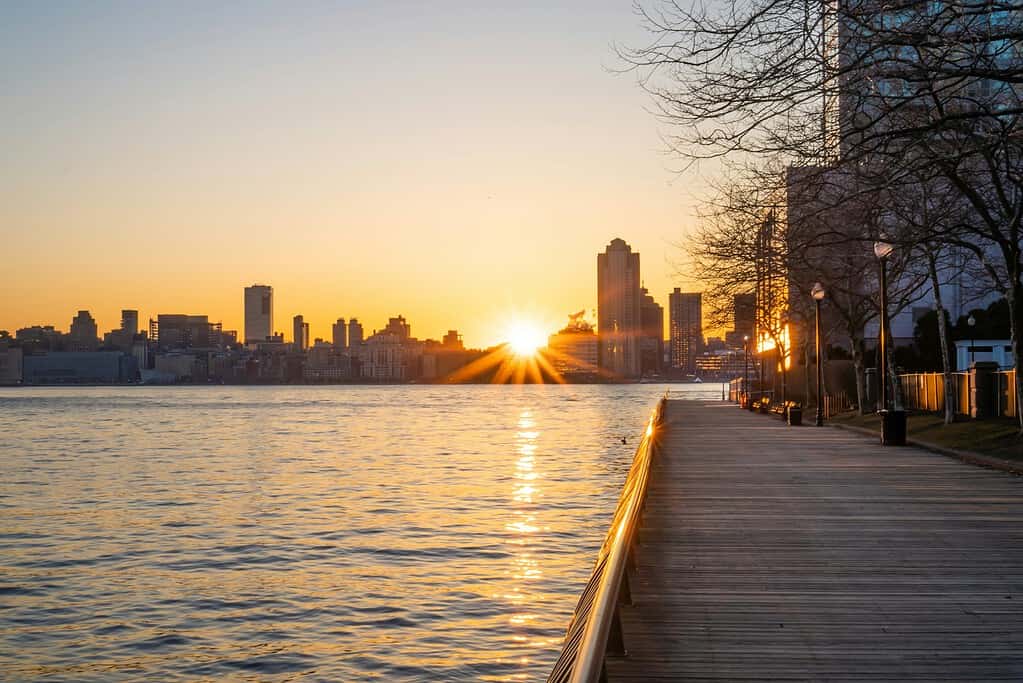
Average Hotel Cost: $120-150/night
Jersey City is the open secret of NYC accommodation, and if you haven’t considered it, you should.
Technically across the Hudson River in New Jersey, Jersey City feels like a natural extension of New York.
The PATH train connects Jersey City directly to Lower Manhattan in about 10-15 minutes and to Midtown in around 25-30 minutes. It runs 24 hours a day, which is more than you can say for most subway lines.
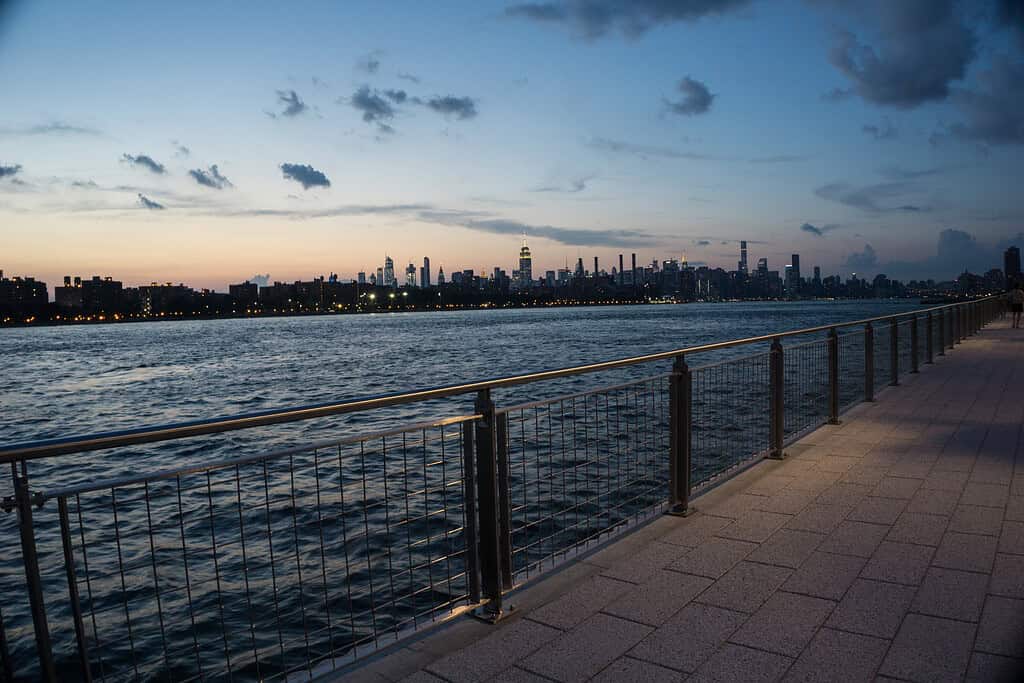
The waterfront area of Jersey City has stunning views of the Manhattan skyline that rival anything you’d see from inside the city itself.
The neighborhood has good restaurants, coffee shops, and a genuine local feel that’s worlds away from the tourist chaos of Midtown.
Hotel rates here are consistently lower than anywhere across the river, and you’re getting newer properties with more space for your money.
The only real trade-off is that you’re technically not in New York, which means an extra transit step to get everywhere. But for most visitors, the savings more than make up for it.
If you’re visiting for the first time and your main goal is seeing Manhattan’s highlights without paying Manhattan hotel prices, Jersey City is genuinely one of the smartest moves you can make.
Harlem
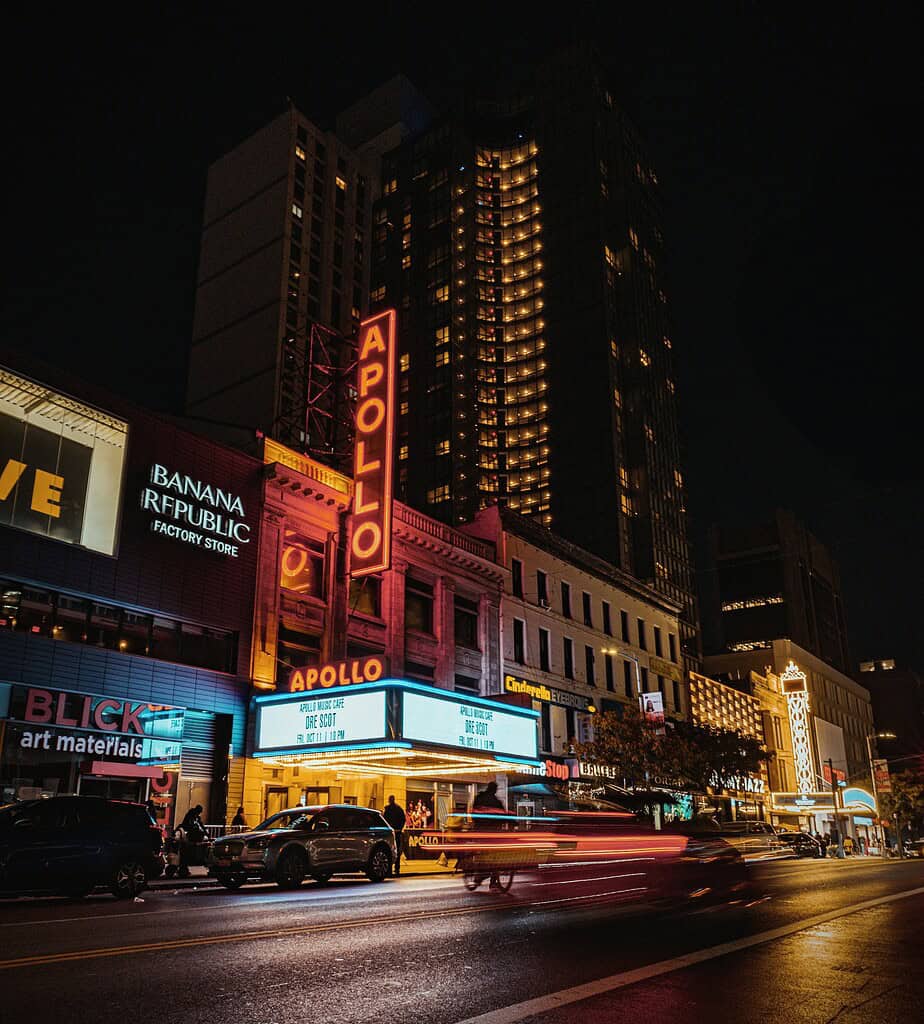
Average Hotel Cost: $150-180/night
Harlem is one of the most historically significant neighborhoods in New York, and it’s also one of the most underrated places to stay.
Located in upper Manhattan, Harlem sits along the A, B, C, D, and 2/3 subway lines, which gives you fast, direct access to Midtown, Central Park, and Downtown without transfers.
From 125th Street, you’re about 15-20 minutes from Times Square on the express train.
The neighborhood is defined by its deep cultural roots in African American history, music, and arts.
The Apollo Theater is here. Some of the best soul food, Caribbean food, and Southern cooking in the city is here.
The brownstone architecture is stunning. And the energy is authentic in a way that a lot of Manhattan has long since lost.
Hotels in Harlem are meaningfully cheaper than Midtown or downtown options, and the area has seen significant investment in recent years, meaning newer and better-maintained properties.
For first-time visitors who want to stay in Manhattan but don’t want to pay Midtown prices, Harlem is one of the best calls on this list.
You’re still technically in Manhattan, but your wallet will feel the difference immediately.
Crown Heights, Brooklyn
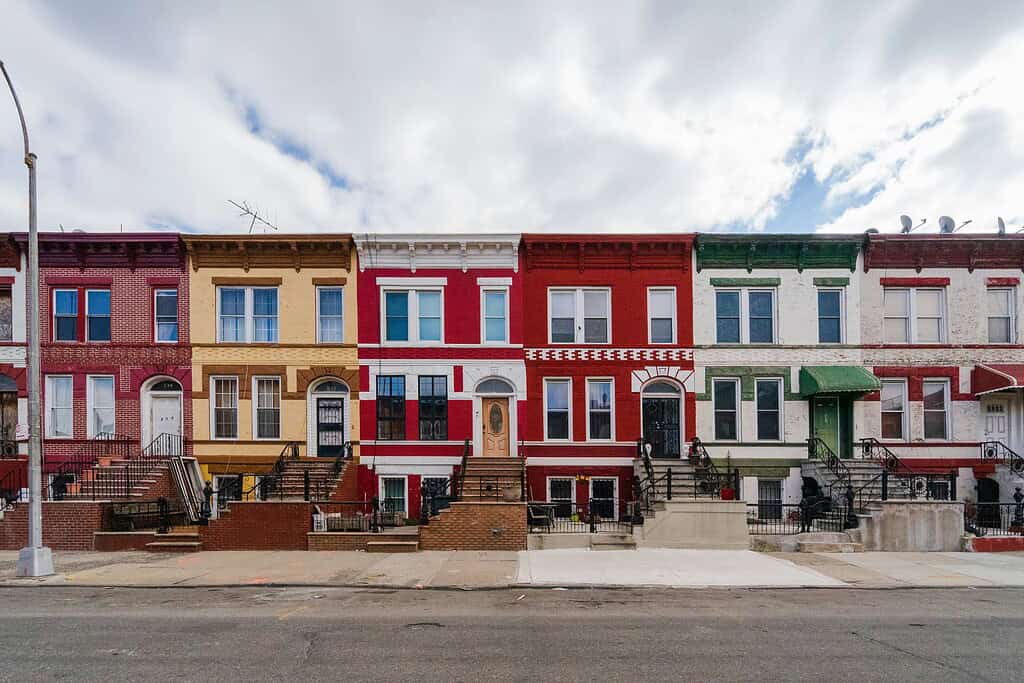
Average Hotel Cost: $150-180/night
Crown Heights is one of Brooklyn’s most vibrant and culturally diverse neighborhoods, and it’s one of the best-kept secrets for budget-conscious NYC visitors.
The neighborhood sits along the 2, 3, 4, and 5 subway lines, with direct access to Downtown Brooklyn, Midtown Manhattan, and the Financial District.
From Crown Heights, you’re looking at around 20-25 minutes to get into the heart of the city.
Crown Heights has a strong Caribbean cultural influence, which shows up in the food, the music, and the general energy of the neighborhood.
The restaurant scene is excellent and affordable. Eastern Parkway runs through the area, and Prospect Park is just a short walk away.
Hotel options are more limited here compared to Manhattan neighborhoods, but the ones that exist offer solid value and genuine access to a neighborhood that most tourists never experience.
It’s not a typical tourist area, which is exactly why it works. You’ll feel like you’re actually living in New York rather than being packaged through it.
Long Island City, Queens
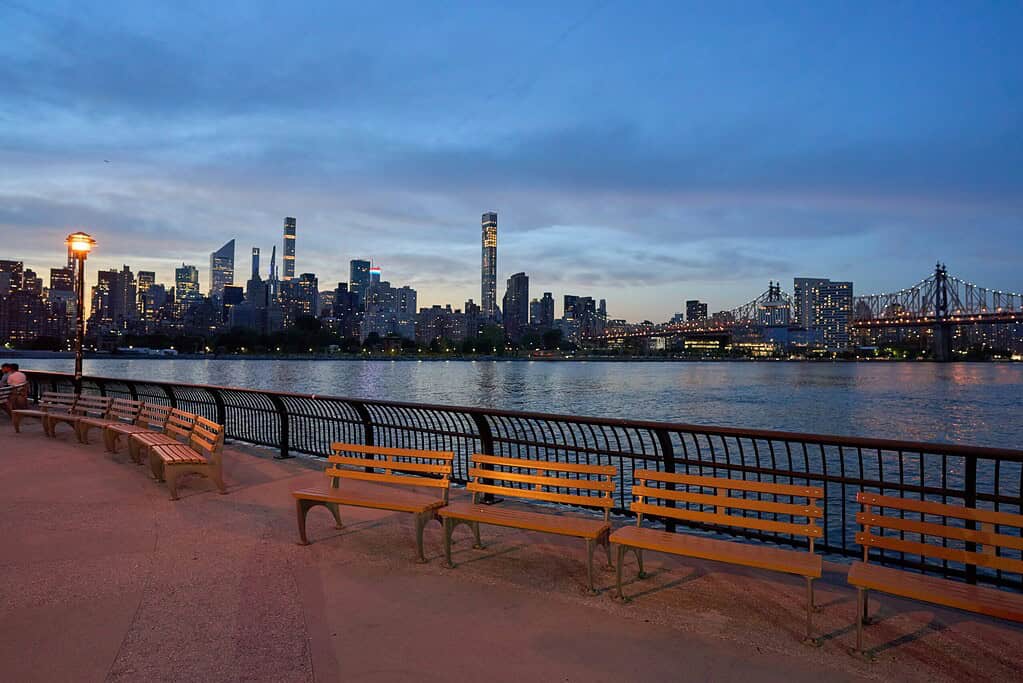
Average Hotel Cost: $160-200/night
Long Island City is the single most practical neighborhood on this list for first-time visitors to New York, and it consistently gets overlooked.
Located in Queens directly across the East River from Midtown Manhattan, Long Island City is served by the E, M, N, W, 7, and G subway lines.
The 7 train gets you to Times Square in literally one stop, about six minutes. The E train puts you at 5th Avenue in under 10 minutes.
No other neighborhood on this list gets you into the center of the city faster.
The area has undergone significant development in recent years, meaning hotels here are often newer and larger than what you’d find at the same price point in Manhattan.
You get more square footage, better amenities, and a cleaner, quieter environment than Times Square at a fraction of the cost.
LIC also has a solid restaurant scene, easy access to MoMA PS1 (one of NYC’s best contemporary art museums), and waterfront parks with unobstructed Manhattan skyline views.
For pure value and convenience, Long Island City might be the best neighborhood on this list.
One subway stop to Midtown and noticeably lower hotel prices is a combination that’s hard to beat.
Williamsburg, Brooklyn
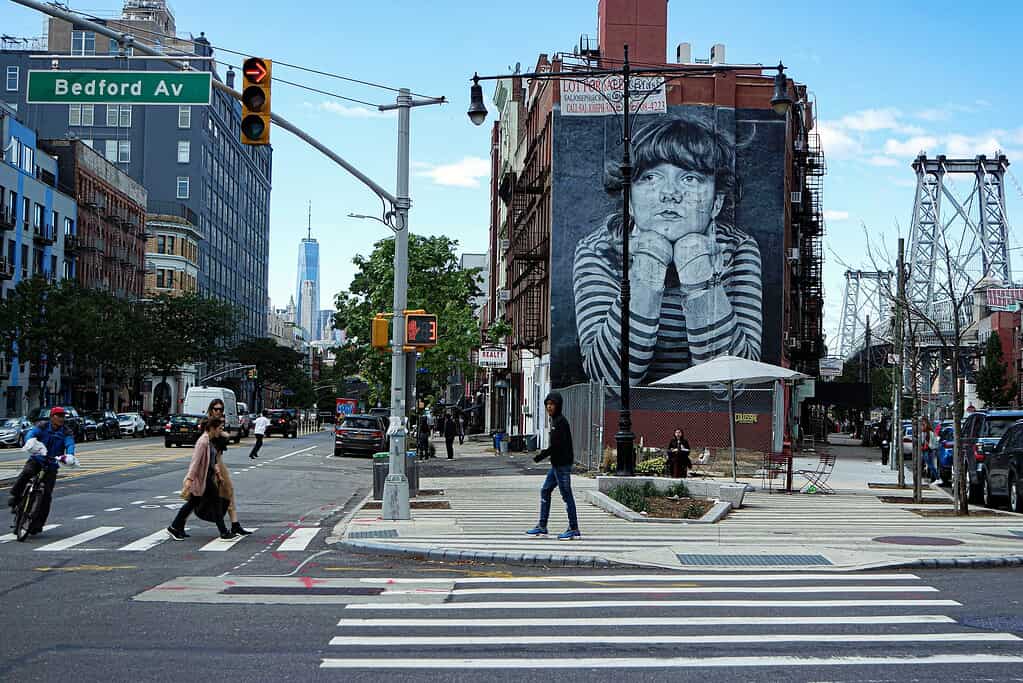
Average Hotel Cost: $170-210/night
Williamsburg is Brooklyn’s most famous neighborhood, and while it’s gotten more expensive over the years, it still comes in well below comparable Manhattan options.
The L train connects Williamsburg directly to 14th Street in Manhattan in about 10-15 minutes.
The J, M, and Z lines also serve the area from the south end of the neighborhood. From Williamsburg, you’re 15-25 minutes from most major Manhattan destinations.
What makes Williamsburg genuinely special as a base is the neighborhood itself. It’s one of the most interesting places to spend time in New York.
The food scene is excellent across every price range. There are independent coffee shops, record stores, vintage clothing, rooftop bars, and weekend markets all within walking distance.
It’s a younger, more creative energy than Midtown Manhattan, and a lot of visitors end up preferring it.
The hotel options have grown significantly in recent years, with a solid mix of well-designed properties that reflect the neighborhood’s aesthetic.
If you want to stay somewhere with genuine neighborhood character and still have easy subway access to Manhattan, Williamsburg is one of the strongest options on this list.
Astoria, Queens
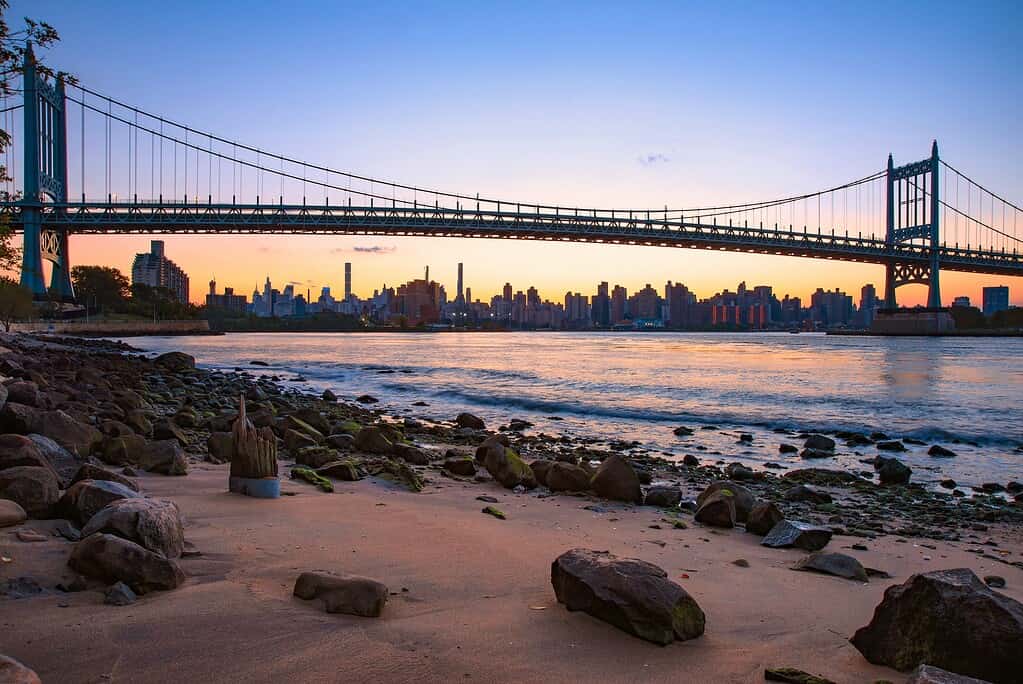
Average Hotel Cost: $170-210/night
Astoria is one of New York’s most underrated neighborhoods, and it makes a genuinely excellent base for visitors who want a local experience without sacrificing transit access.
The N and W trains connect Astoria to Midtown Manhattan in about 20-25 minutes with no transfers.
The area is also served by the M60 bus, which connects to both LaGuardia Airport and the subway system, making it practical for arrivals and departures.
Astoria has one of the most diverse food scenes in New York City. Greek restaurants, Middle Eastern spots, Brazilian churrascarias, Korean barbecue, the neighborhood’s culinary options are genuinely exceptional and considerably cheaper than Manhattan equivalents. It’s a foodie neighborhood that most tourists never discover.
The area is residential, safe, and has a tight-knit community feel. Astoria Park along the waterfront offers great views of the Triborough Bridge and the Manhattan skyline, and it’s one of the best free afternoon spots in the outer boroughs.
Hotel inventory is smaller here than in Manhattan neighborhoods, but the options that exist are solid and the neighborhood more than compensates for what it lacks in hotel volume.
Lower East Side
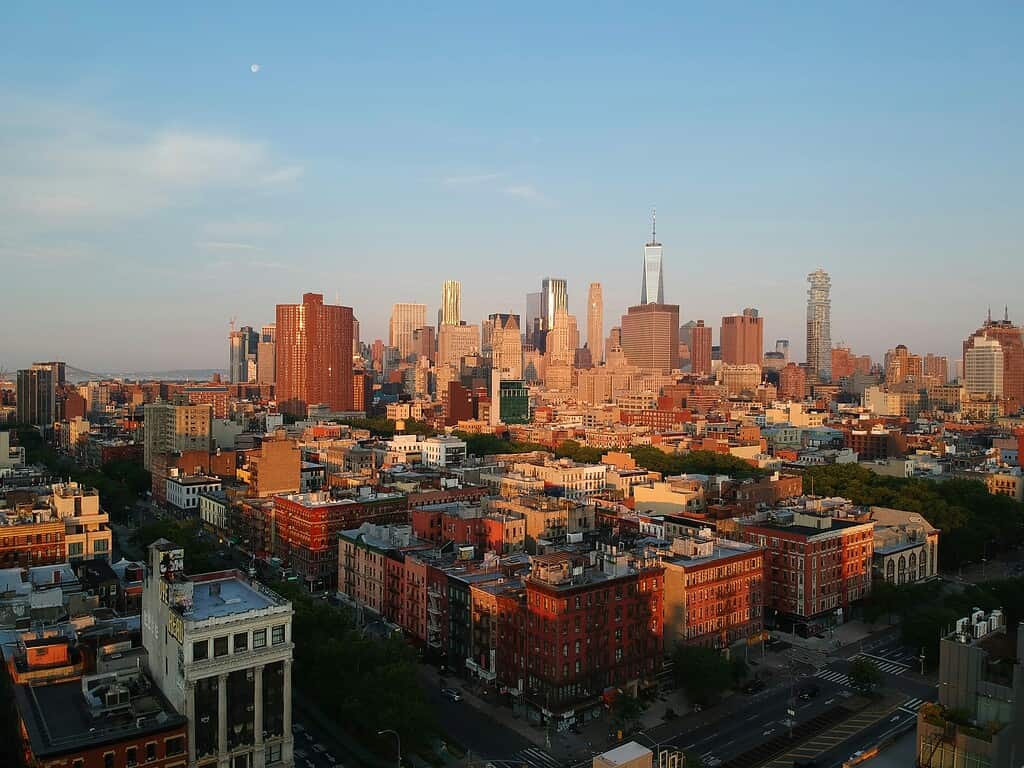
Average Hotel Cost: $190-230/night
The Lower East Side is one of Manhattan’s most historically layered and culturally rich neighborhoods, and it sits at the lower end of Manhattan pricing.
The F, J, M, Z, and B/D lines all serve the area, giving you strong connectivity to Midtown, Downtown, and Brooklyn without complicated transfers. You’re 15-20 minutes from most major Manhattan destinations.
The Lower East Side has a long history as an immigrant gateway, Jewish delis, Chinese bakeries, Puerto Rican bodegas, all layered on top of each other over generations.
Today, it’s also one of Manhattan’s most vibrant nightlife and dining neighborhoods, with a dense concentration of bars, cocktail spots, and restaurants that attract locals rather than tourists.
It’s not the polished, sanitized Manhattan of Midtown. It has more edge, more history, and more personality. And the hotel pricing reflects the fact that it’s not on most visitors’ radar.
If you want to stay in Manhattan proper at below-average Manhattan prices, the Lower East Side gives you that.
You’re centrally located, well-connected, and surrounded by one of the city’s most interesting neighborhoods.
Hell’s Kitchen
Average Hotel Cost: $200-260/night
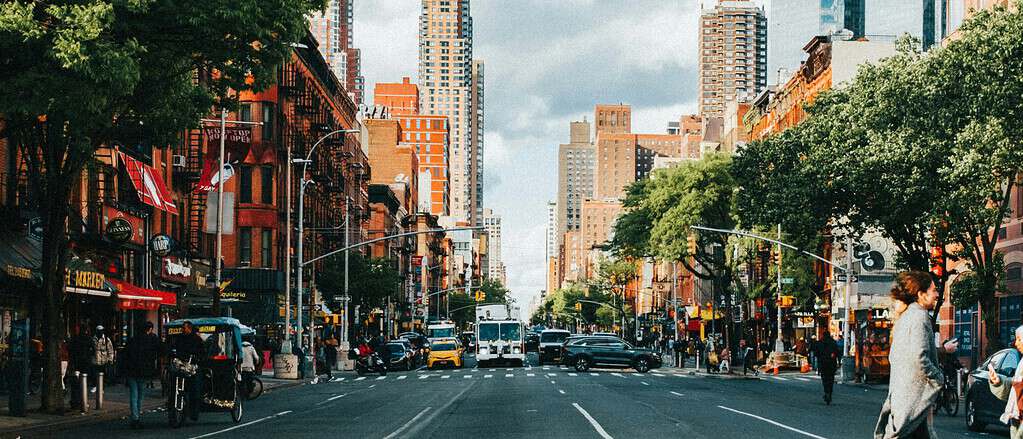
Hell’s Kitchen is one of Midtown Manhattan’s best-kept secrets for visitors who want a central location without paying Times Square prices.
Located just west of Times Square between roughly 34th and 57th Streets, Hell’s Kitchen puts you within walking distance of Broadway theaters, Central Park, the High Line, Hudson Yards, and the Intrepid Sea, Air and Space Museum. The A, C, E, and 1/2/3 lines all run through the neighborhood.
For sheer location and convenience, nothing on this list beats Hell’s Kitchen. You’re essentially in the heart of the city for significantly less than a Times Square hotel would cost.
The neighborhood has a strong restaurant culture, particularly along 9th Avenue and the famous Restaurant Row on 46th Street.
It’s a working neighborhood with a genuine community, which gives it a grounded feeling that Times Square completely lacks.
Hotel rates here are higher than the outer borough and Jersey City options, but you’re paying for the location.
If your priority is walkability to Manhattan’s main attractions and you want to minimize transit time, Hell’s Kitchen is the sweet spot between affordability and convenience.
Chelsea
Average Hotel Cost: $220-280/night
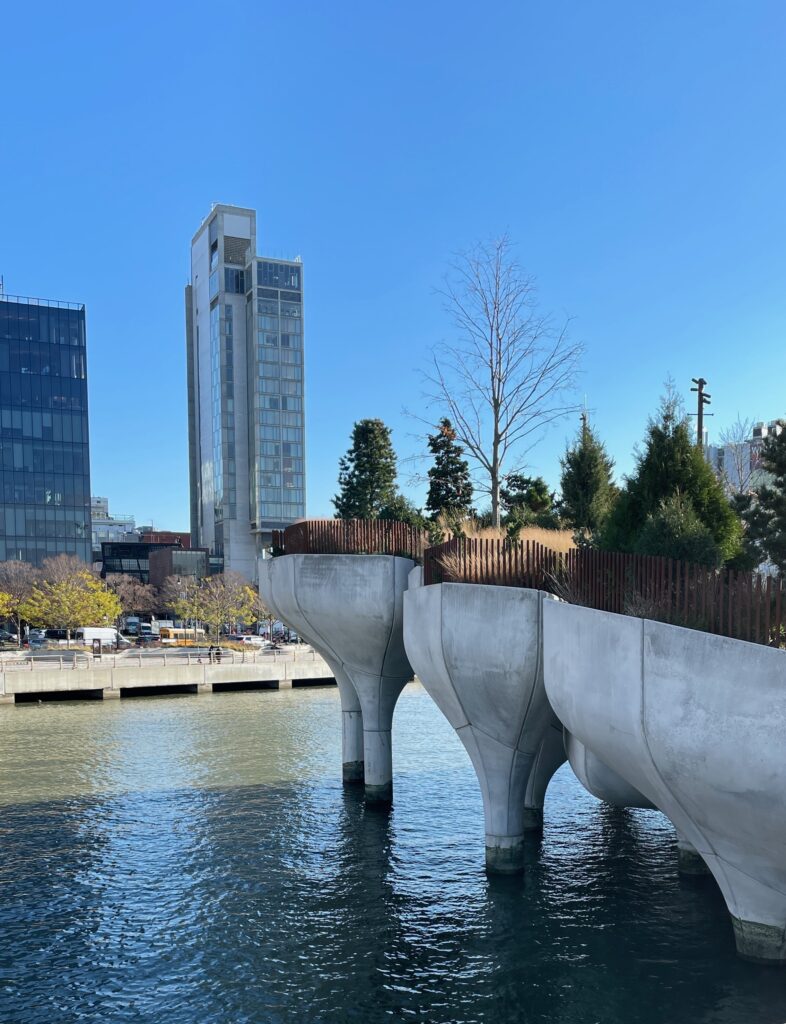
Chelsea is Manhattan’s most expensive neighborhood on this list, but it earns its spot as the final entry because it’s still meaningfully cheaper than Midtown East, Tribeca, or the West Village while offering one of the best overall New York experiences.
Located on the west side of Manhattan roughly between 14th and 34th Streets, Chelsea is served by the A, C, E, 1, and 2/3 lines, with easy access to the entire city.
You’re walking distance from the High Line, Chelsea Market, Hudson Yards, and the Meatpacking District.
The neighborhood is known for its gallery scene, Chelsea has more art galleries per square block than almost anywhere in the world, and its restaurant culture is excellent. The food hall inside Chelsea Market alone is worth a visit.
It’s also a pleasant neighborhood to walk in. The streets are calmer than Midtown. The architecture is interesting.
And the High Line elevated park gives you a completely different perspective on the city.
Hotels in Chelsea are more expensive than everything else on this list, but they’re still consistently below what you’d pay in prime Midtown locations.
If you want the genuine Manhattan experience with neighborhood character and good transit access, Chelsea is the most complete option.
How to Get Around NYC
Getting around New York is straightforward once you understand your options. Here’s a quick breakdown of everything you need to know for your visit!
- Subway — The best and cheapest way to get around. $3.00 per ride regardless of distance. Runs 24/7. Use OMNY contactless payment by tapping your credit card, debit card, or smartphone directly on the reader, no card needed. After 12 rides in a 7-day period, all remaining rides that week are free, capping your weekly subway and bus spend at $35 automatically.
- Bus — Same $3.00 fare as the subway. Slower but useful for crosstown trips where the subway doesn’t run efficiently east to west. Select Bus Service routes are faster and worth knowing about.
- Staten Island Ferry — Completely free. Runs 24/7 between Lower Manhattan and Staten Island with views of the Statue of Liberty en route.
- Roosevelt Island Tramway — Included in your standard $3.00 fare. Runs between 59th Street Manhattan and Roosevelt Island with aerial East River views. A hidden gem most visitors miss entirely.
- Citi Bike — NYC’s bike share program. Day passes run $25 for unlimited 30-minute classic bike rides within 24 hours. Great for short trips in Manhattan and Brooklyn where cycling is faster than waiting for transit.
- Taxi (Yellow Cab) — Metered, reliable, and flagged on the street. More expensive than the subway but useful for late nights or when you have heavy luggage. Tip 15-20%.
- Uber/Lyft — Convenient but adds up fast. Surge pricing during rush hour, rain, and weekends makes them significantly more expensive than the subway for regular use. Reserve for situations where transit genuinely doesn’t work.
- Walking — Underrated and often the fastest option for short distances in Manhattan. The grid system makes navigation simple. Always factor walking into your plans before pulling out your phone for a ride.
- PATH Train — Connects New Jersey (Jersey City, Newark, Hoboken) to Lower Manhattan and Midtown. Essential if you’re staying in Jersey City. Runs frequently and costs around $3.00 per trip.
- AirTrain + Subway — The most affordable way to get from JFK Airport into the city. AirTrain to Jamaica or Howard Beach station, then subway into Manhattan. Around $10-11 total. Slower than a taxi but significantly cheaper.
Final Thoughts on Cheap Areas to Stay in NYC
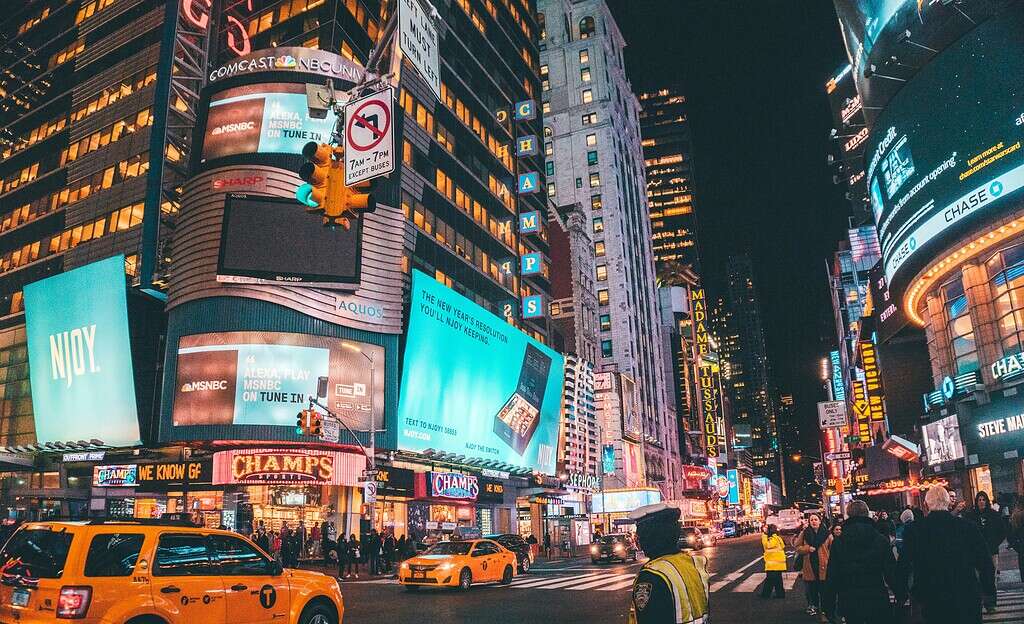
The biggest mistake first-time visitors make is assuming they need to stay in Times Square to have a good New York experience.
You don’t. In fact, staying in Times Square often makes the experience worse, more noise, more crowds, more tourist traps, and significantly higher hotel rates.
New York’s subway system is the great equalizer. A 15-minute subway ride from Long Island City or Harlem costs the same $2.90 as a one-block trip in Midtown, and it puts you in the center of the city just as efficiently.
The neighborhoods on this list aren’t consolation prizes. They’re genuinely interesting places to base yourself, and in some cases, Harlem, Williamsburg, the Lower East Side, they’re actually better than Midtown for experiencing what New York really feels like.
Book smart, use the subway, and your NYC trip budget will thank you! Enjoy your visit in the Big Apple!
Is it safe to stay outside of Manhattan in NYC?
Yes. Harlem, Crown Heights, Williamsburg, Long Island City, and Astoria are all safe neighborhoods with active street life and good transit access. Use common sense the same way you would in any major city, and you’ll be fine.
How long does it take to get from these neighborhoods to Times Square?
Long Island City is one subway stop, about six minutes. Harlem and Hell’s Kitchen are 15-20 minutes.
Williamsburg, Astoria, and the Lower East Side are 15-25 minutes. Jersey City via PATH train is 25-30 minutes. None of these are far.
Is Jersey City actually worth considering for a NYC trip?
Genuinely, yes. The PATH train runs 24 hours, the views of Manhattan from the Jersey City waterfront are incredible, and you’ll save $50-100 per night compared to Manhattan hotels.
The only downside is the psychological one, you’re not technically in New York.
What’s the best neighborhood to stay in NYC for first-time visitors on a budget?
Long Island City is the most practical answer. One subway stop to Times Square, newer hotels with more space, and meaningfully lower prices than Manhattan.
For visitors who want neighborhood character on top of convenience, Williamsburg is the best alternative.
