
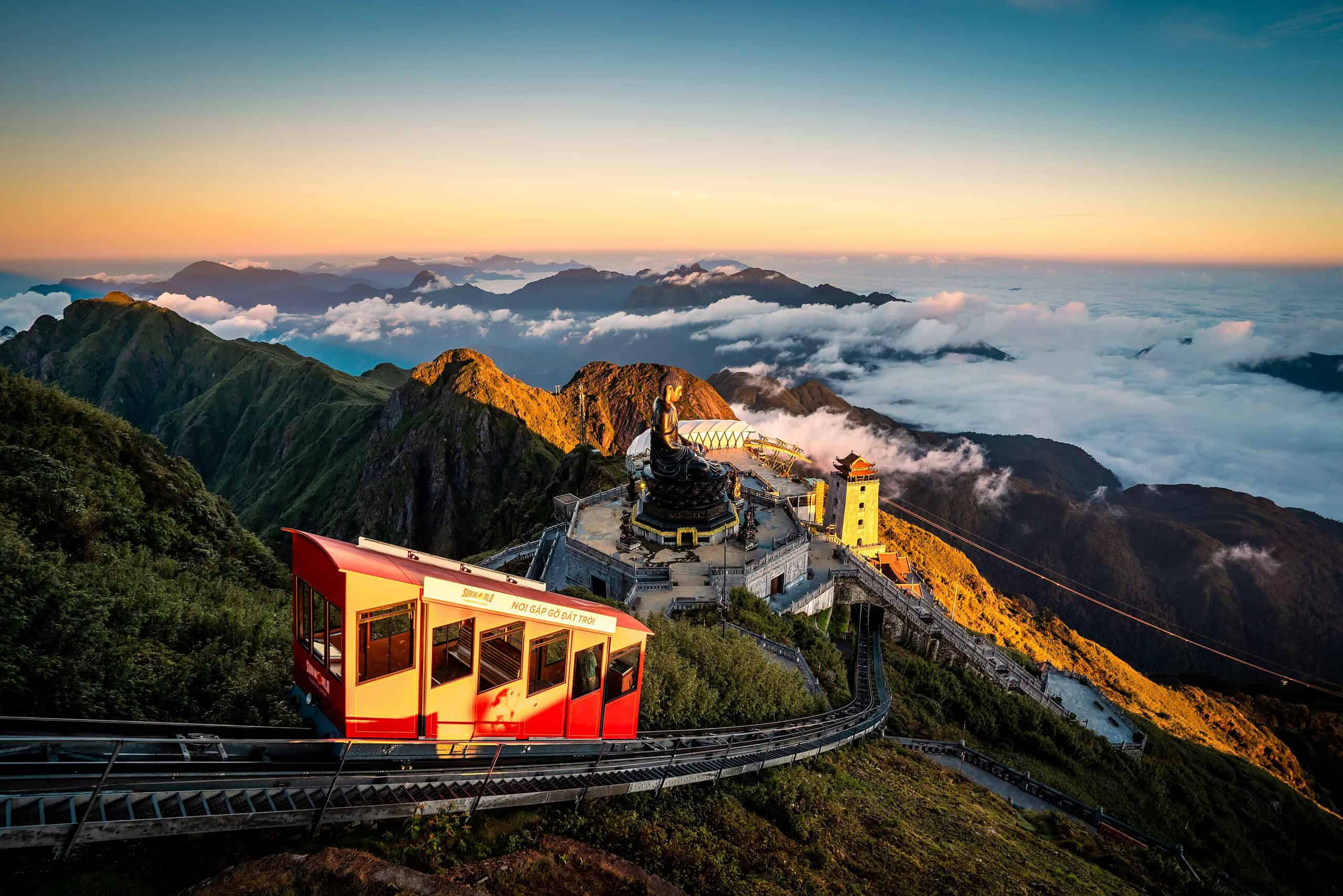
19 Must Do Things in Vietnam: Ultimate Bucket List
Vietnam is one of those countries that gets under your skin in the best possible way.
The food alone is worth the flight. The landscapes are extraordinary. The cities are loud and chaotic and completely addictive.
And the people, once you find your footing and start to slow down, are some of the warmest you’ll encounter anywhere in the world.
I’ve traveled through Vietnam multiple times, and every single trip has left me wishing I’d booked more time.
That’s the thing about this country, it rewards the traveler who stays longer, wanders further, and resists the urge to rush through it.
This Vietnam bucket list is a mix of iconic experiences and a few things that don’t always make the top ten lists.
Some of these are absolute non-negotiables. Others are quieter, more personal moments that end up being the ones you talk about for years after.
This is inspiration, not an itinerary. Your trip doesn’t have to look like mine. But if you’re planning your first visit or your third, these are the 19 things worth making room for.
Cruise Halong Bay
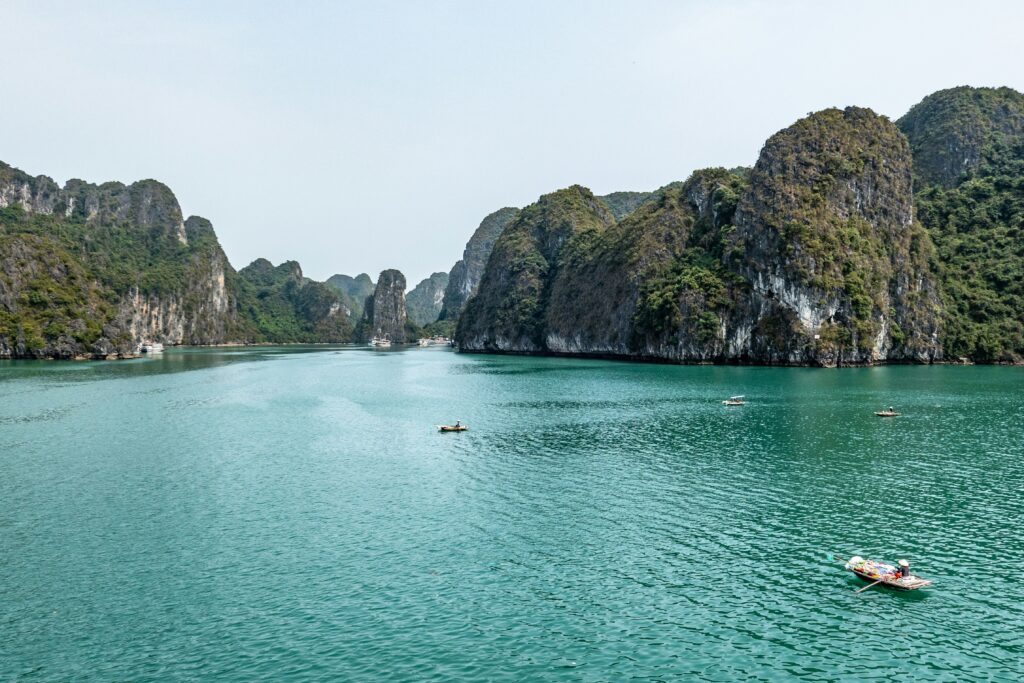
Halong Bay is one of the most stunning natural landscapes in the world, and seeing it in person is genuinely different from any photo you’ve encountered.
Over 1,600 limestone karsts rise out of emerald green water across 1,500 square kilometers of bay.
The scale of it is hard to process until you’re actually there, drifting between the formations on a wooden junk boat with nothing but water and rock in every direction.
The best way to experience Halong Bay is on an overnight cruise. A good cruise typically includes kayaking through hidden lagoons, exploring caves, swimming, and meals prepared fresh on board.
The early morning on the bay, before most boats are moving, is when it’s at its most peaceful and most beautiful.
Book through a reputable operator. Quality varies enormously, and the cheapest option is almost never the right call here. Two nights gives you significantly more than one if your schedule allows.
Eat Pho for Breakfast in Hanoi

You’ve had pho before. You think you know what it is. You don’t, not until you’ve had a bowl at a street-side stall in Hanoi at 7 a.m. with the broth still steaming and the herbs picked that morning.
Hanoi’s pho is different from what you’ll find in the south or anywhere outside Vietnam. The broth is cleaner, the flavors more restrained, the whole experience more ritual than meal. Locals eat it fast, standing or perched on tiny plastic stools with one eye on the street.
Find a busy stall in the Old Quarter or ask your hotel for a local recommendation away from the tourist spots.
Sit down, order by pointing, customize it yourself with the fresh herbs, lime, and chili on the table.
Eat quickly. Come back tomorrow. It will become part of your daily routine within two days.
Wander Hoi An’s Ancient Town at Night

Hoi An at night is one of the most beautiful places in Southeast Asia, and I’ll stand behind that without hesitation.
The Ancient Town is a UNESCO World Heritage Site, and when the lanterns come on after dark, the whole place transforms into something that looks too good to be real.
Silk lanterns in every color hang from buildings, reflect off the Thu Bon River, and line streets that haven’t changed structurally in centuries.
Walk slowly. Don’t rush it. Stop at the Japanese Covered Bridge. Find a table by the river. Buy a lantern and release it on the water if the timing is right.
Come back in the early morning too, before the crowds arrive. The Ancient Town before 8 a.m. is a completely different experience from the afternoon rush, quieter, more local, and genuinely stunning.
Take a Motorbike Through the Hai Van Pass
The Hai Van Pass connecting Da Nang and Hue is one of the most spectacular stretches of road in Vietnam, and riding it on the back of a motorbike is one of those travel experiences that stays with you for a long time.
The pass climbs through cloud forest with the South China Sea far below and the mountains rising ahead.
On a clear day the views are extraordinary. The road itself, winding, dramatic, completely unlike anything you’ve driven through before, is the whole point.
You can rent a motorbike and ride it yourself if you’re comfortable on a bike. If not, book an Easy Rider tour with a local guide who knows the road.
The guides often have stories about the pass from the war era that add a completely different layer to the experience.
Don’t take the highway. The tunnel bypasses the pass entirely. That’s not the point.
Visit the Old Quarter in Hanoi

Hanoi’s Old Quarter is one of the most chaotic, most alive, and most interesting urban environments in Asia.
36 streets originally organized by trade, silk street, paper street, tin street, now layered with centuries of history, French colonial architecture, street food stalls, coffee shops, and the constant hum of motorbike traffic flowing in every direction.
You don’t need a plan here. Walk in and let it unfold. Turn down alleys. Duck into courtyards.
Follow your nose toward whatever smells good. Stop at a bia hoi (fresh beer) stall and sit on a plastic stool for 50 cents a glass.
The Old Quarter rewards wandering more than most places. Give yourself an entire afternoon with nowhere to be.
See the Terraced Rice Fields of Sapa
Sapa in northern Vietnam is where the country shows you a completely different version of itself and is an absolute must visit in Vietnam!
The terraced rice fields carved into the mountain slopes of the Muong Hoa Valley are some of the most visually striking landscapes in Southeast Asia.
In the harvest season, September to October, they turn golden in a way that looks like a painting. In May and June, the young rice is a vivid, almost electric green.
Trek through the valley with a local guide from the H’mong or Dao communities. The guides grew up walking these trails and know the landscape in a way no map can replicate. The trek itself isn’t difficult, but it’s full-day and physical, wear proper shoes.
Stay overnight in Sapa town and get up early for the morning light over the fields.
Take a Cooking Class in Hoi An

Hoi An is one of the best places in Vietnam to learn to cook Vietnamese food, and a good cooking class here is one of those experiences that sounds touristy until you’re actually in it.
Most classes start at a morning market where you choose ingredients with your instructor, then move to an outdoor kitchen where you learn to make three to five traditional dishes.
Cao lau, white rose dumplings, fresh spring rolls, banh xeo, the specific menu varies by class.
The cooking is hands-on and the instructors are patient and genuinely proud of what they’re teaching you. You eat everything you make at the end.
Book a class that includes the market visit. That part of the experience, learning to identify ingredients, watching the instructor negotiate with vendors, is as valuable as the cooking itself.
Spend Time in Ho Chi Minh City’s District 1
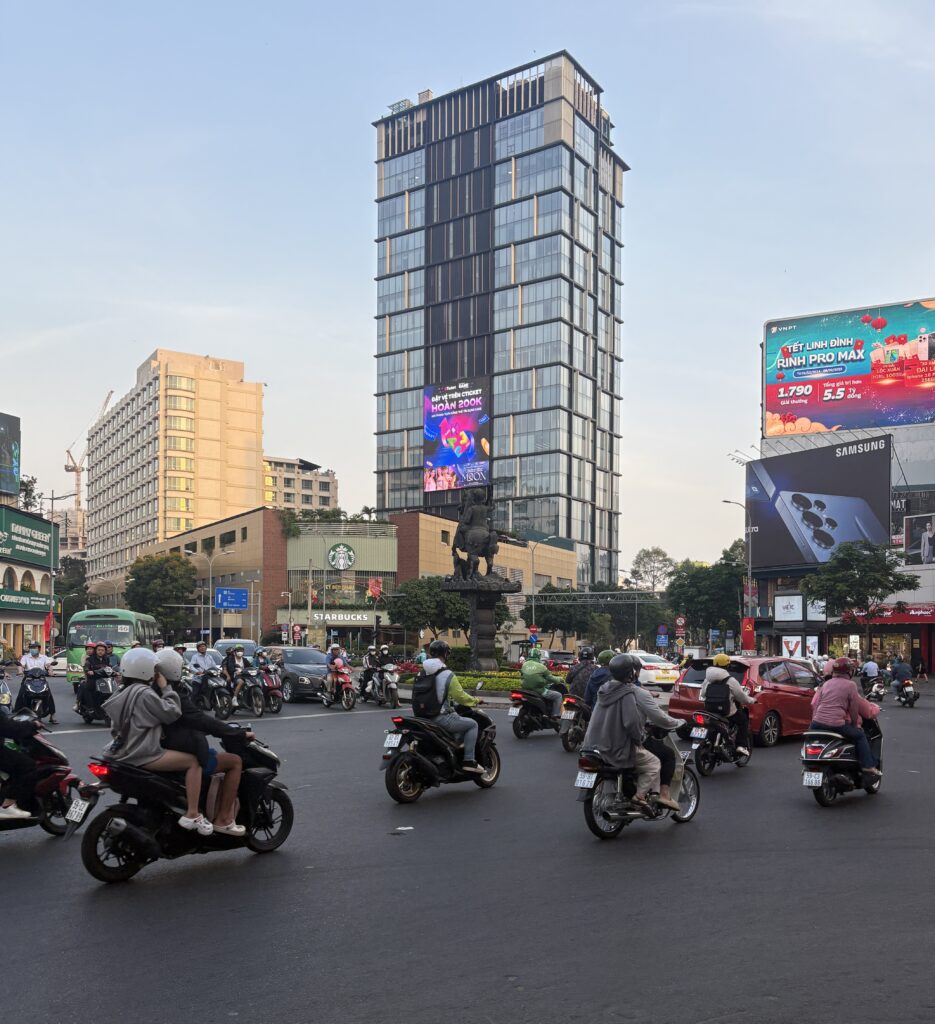
Ho Chi Minh City moves faster than almost any other city in Southeast Asia, and District 1 is the center of that energy.
The War Remnants Museum is here, one of the most powerful and sobering museums I’ve visited anywhere in the world.
Ben Thanh Market is here, messy and wonderful and full of food worth eating. The rooftop bars along Bui Vien are here, loud and chaotic and undeniably alive.
Give District 1 at least two full days. Eat com tam (broken rice with grilled pork) from a street cart for breakfast.
Drink Vietnamese coffee in the afternoon at a sidewalk café. Walk Ben Thanh at dusk when the evening market opens.
The city will exhaust you and electrify you simultaneously. That’s the whole point.
Visit the War Remnants Museum
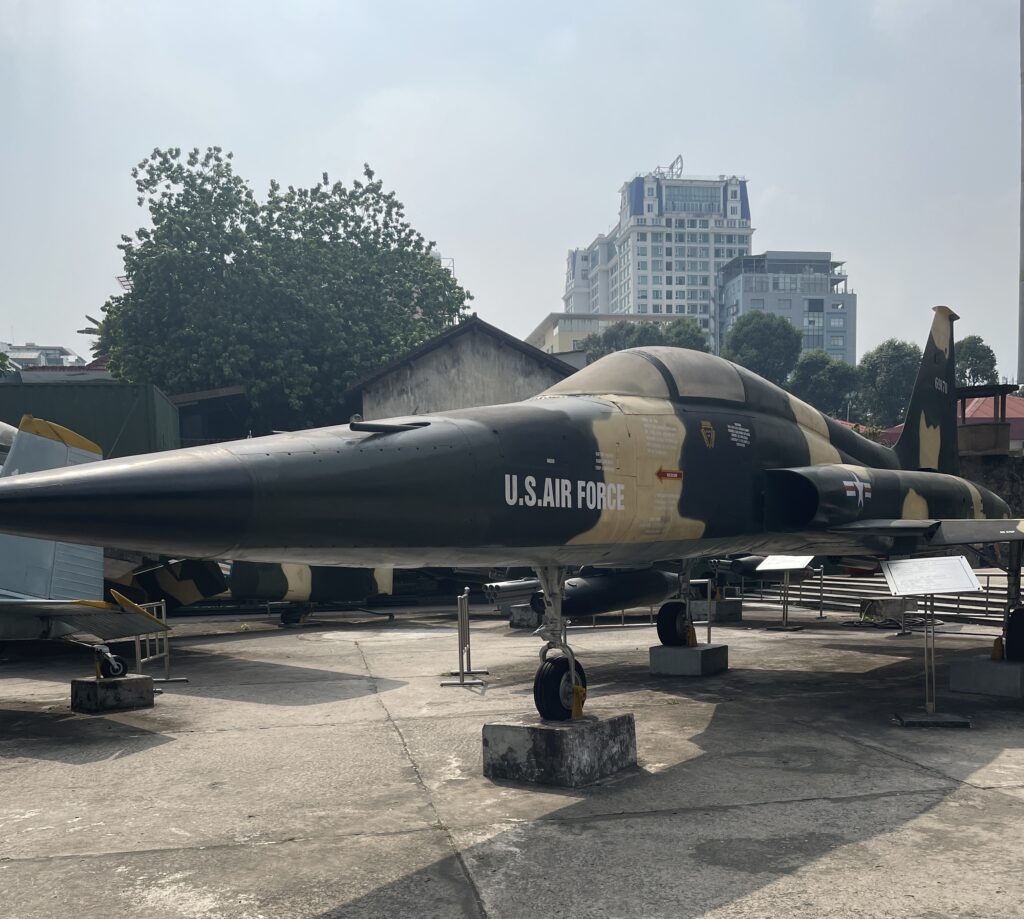
The War Remnants Museum in Ho Chi Minh City is not an easy experience. It’s one of the most important ones you’ll have in Vietnam.
The museum documents the American War from the Vietnamese perspective, with photographs, artifacts, and firsthand accounts that are graphic, unflinching, and deeply necessary for understanding the country you’re traveling through.
Give yourself at least two hours. Read the captions. Sit with what you’re seeing. Don’t rush through it.
Vietnam has processed its history in a way that’s remarkable, the country that experienced this level of destruction rebuilt itself into one of the most dynamic and welcoming destinations in Asia. The museum gives you context for that. It’s worth every difficult minute inside.
Take a Boat Through the Mekong Delta
The Mekong Delta in southern Vietnam is where the country slows down completely, and experiencing it by boat is unlike anything else in the region.
The delta is a network of rivers, canals, and floating markets where life has operated the same way for generations.
Vendors sell fruit and vegetables from their boats. Stilt houses sit directly over the water. Water buffalo work rice fields that stretch to the horizon.
A day trip from Ho Chi Minh City gets you there, but an overnight stay in Can Tho, the largest delta city, gives you access to the early morning Cai Rang floating market before the tour groups arrive.
Go before 7 a.m. The market winds down by mid-morning, and the early light over the water is something you won’t forget.
Eat Banh Mi from a Street Cart

Vietnam’s banh mi is one of the great sandwiches of the world, and eating one from a street cart in the city where it was made is a very different experience from anything you’ve had at home.
The bread is a baguette left from French colonial influence, lighter and crispier than a Western version.
The fillings vary, pork belly, pâté, pickled vegetables, fresh herbs, chili, but the combination is somehow perfect every time.
Hoi An has a famous banh mi scene, with Banh Mi Phuong drawing lines of locals and tourists alike.
Ho Chi Minh City has street carts on almost every block that locals eat from daily. Cost around $1-2. Eat it standing on the sidewalk. Don’t overthink it.
Explore the Marble Mountains
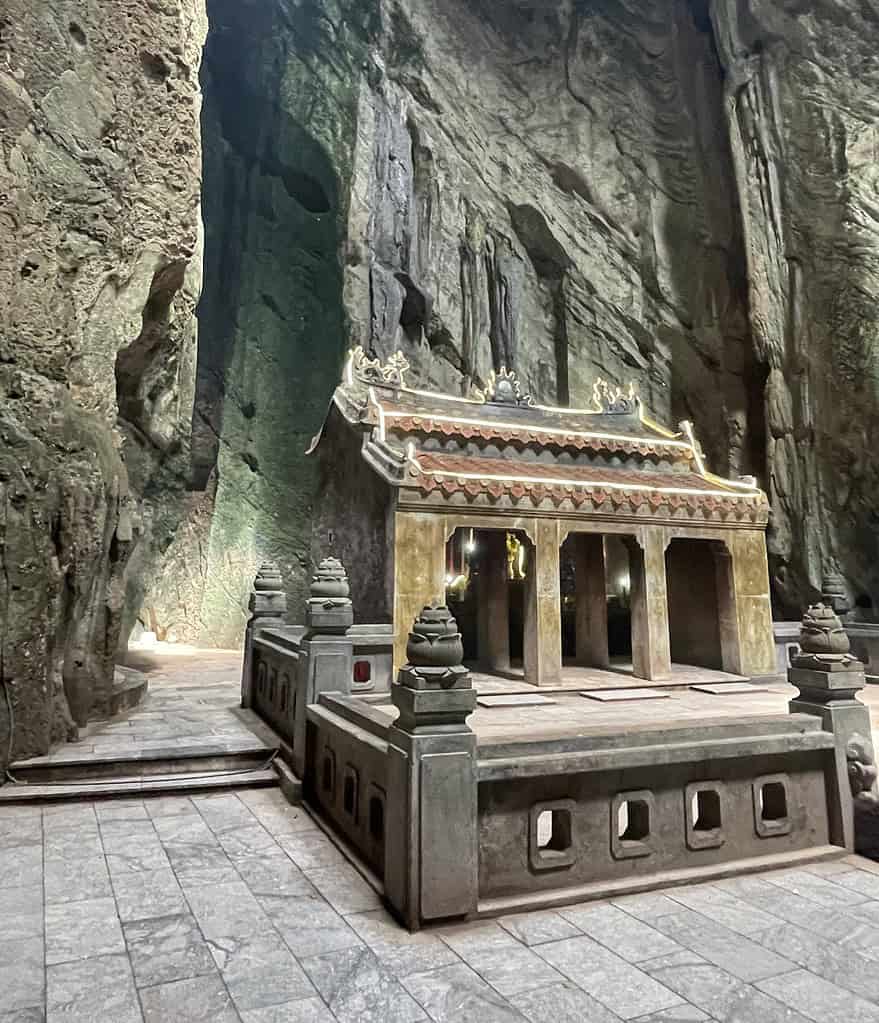
The Marble Mountains are five limestone and marble hills rising out of the coastal plain between Da Nang and Hoi An, and most visitors drive past them without stopping and they shouldn’t.
The hills contain Buddhist sanctuaries, Hindu temples, and caves that served as Viet Cong field hospitals during the war.
The climb to the top of Thuy Son, the largest hill, offers panoramic views of the Da Nang coastline and the ocean beyond.
The cave temples inside are extraordinary, natural limestone chambers converted into active places of worship with incense smoke drifting up through holes in the rock ceiling where shafts of light fall through.
Allow two to three hours. Wear shoes you can climb in. Go in the morning before the heat peaks.
Drink Egg Coffee in Hanoi

Hanoi’s egg coffee is one of those things that sounds strange until you try it and then becomes something you think about for weeks afterward.
Cà phê trứng is made with Vietnamese robusta coffee, egg yolk, condensed milk, and sugar whipped together into a thick, creamy foam that sits on top of the coffee like a dessert.
The result is rich, sweet, and completely unlike any coffee you’ve had before.
The original is from Giang Café in Hanoi’s Old Quarter, a narrow shophouse that’s been serving it since 1946.
The café itself, cramped, wooden, impossibly atmospheric, is worth the visit as much as the coffee. Order it hot. Sit near the window. Take your time with it.
Visit Hue’s Imperial City
Hue was the imperial capital of Vietnam under the Nguyen Dynasty, and the Imperial City at its center is a UNESCO World Heritage Site that gives you an entirely different understanding of Vietnamese history.
The complex is modeled on Beijing’s Forbidden City but distinctly Vietnamese in its architecture and scale. Palaces, temples, gates, and walled gardens spread across a vast area that took decades to build and was significantly damaged during the Tet Offensive in 1968.
Walking through the partially restored ruins, some rebuilt, some left as they were, is a powerful experience.
The contrast between the grandeur of what it once was and the evidence of what happened to it tells you more about Vietnam’s history than any museum. Hire a guide. The context they provide transforms the visit.
Watch Sunrise over Hoi An’s Rice Fields
Most visitors to Hoi An spend their time in the Ancient Town. The ones who wake up early and rent a bicycle to ride out to the surrounding countryside before dawn get a completely different experience.
The rice fields that surround the town are extraordinary in the early morning light, mist over the paddies, farmers already working, the town’s lanterns still visible in the distance. It’s quiet in a way that the Ancient Town itself rarely is.
Rent a bicycle from your accommodation the night before. Ask for a route toward the rice fields west of town. Ride out before 6 a.m. It costs almost nothing and produces the kind of memory that doesn’t fade.
Take a Night Train from Hanoi to Hue
Vietnam’s Reunification Express runs the length of the country from Hanoi to Ho Chi Minh City, and the overnight train from Hanoi to Hue is one of the most enjoyable ways to move between the two cities.
The soft sleeper cabins are comfortable enough for a good night’s sleep, and waking up as the train moves through the central Vietnamese coastline with the South China Sea visible through the window is genuinely beautiful.
Book a soft sleeper cabin in advance through the Vietnam Railways website or a reputable booking platform.
Bring snacks, a travel pillow, and something to read for the evening portion before sleep.
It takes longer than flying and costs less. It also gives you something a flight never could.
Visit My Son Sanctuary

My Son is a cluster of abandoned and partially ruined Hindu temples built between the 4th and 14th centuries by the Cham civilization, located about 40 kilometers from Hoi An.
Most visitors to Hoi An don’t make it here, which is a genuine loss. The temples, some crumbling, some restored, all deeply atmospheric, sit in a jungle valley surrounded by hills that make the whole place feel remote and ancient in a way that very few sites in Southeast Asia manage.
The site was heavily bombed during the war, and the damage is visible everywhere. But what remains is extraordinary.
Go early. The heat by midday is intense and the crowds that arrive on day tours from Hoi An make the afternoon experience significantly worse than the morning.
Experience Tet If Your Timing Allows

If your travel dates happen to fall around Tet, the Vietnamese Lunar New Year, typically in late January or February, and you can arrange to be in Vietnam for it, do it.
Tet is Vietnam’s most important cultural event. The week leading up to it sees the country transform, markets overflow with flowers and food, cities light up with decorations, and the energy in the streets builds into something you can physically feel.
On Tet itself, the country goes quiet. Families gather. Temples fill. Fireworks go off at midnight in major cities with a scale and intensity that’s unlike any New Year’s celebration you’ve experienced.
Just know that many businesses close and transport fills up weeks in advance. Plan carefully and book everything well ahead.
Spend a Night in a Mekong Delta Homestay
The single most underrated experience on this entire list is spending a night with a family in the Mekong Delta.
Homestays here put you directly inside Vietnamese rural life, eating home-cooked meals made from ingredients grown or caught that morning, sleeping in a simple room above the water, waking up to the sounds of the delta before the rest of the world is awake.
The interactions that happen during a homestay, around a dinner table, on a boat at dawn, in a kitchen while someone teaches you to make a dish, are the kind that stay with you long after the trip ends.
Book through a reputable operator or your accommodation in Can Tho. Do your research and choose a family-run operation over a commercial setup. It will be the part of your Vietnam trip you talk about most.
Final Thoughts on Your Vietnam Bucket List
Vietnam gives back exactly what you bring to it. Show up curious, slow down when the place asks you to, and say yes to things that weren’t on the original plan.
Some of my best Vietnam moments came from a conversation that went longer than expected, a side street I turned down without a reason, or an extra day I added somewhere because leaving felt wrong.
The bucket list is a starting point. The trip will fill in the rest. Eat everything. Take the overnight train. Stay one more night in Hoi An. You’ll understand why soon enough.

How many days do you need to see Vietnam properly?
Two weeks is the minimum for a first visit that covers both north and south without feeling rushed.
Three weeks lets you slow down, add the central region, and spend real time in places rather than passing through them. Anything under ten days means making hard choices about what to skip.
What is the best base for exploring Vietnam?
Hoi An is the most universally loved base for first-time visitors, central location, walkable Ancient Town, easy day trips to My Son, the Marble Mountains, and Da Nang.
Hanoi works better if your trip is focused on the north. Ho Chi Minh City is the right base for the south and Mekong Delta.
Is Vietnam safe for solo travelers?
Vietnam is one of the safer destinations in Southeast Asia for solo travel. Petty scams exist in tourist areas and staying alert matters, but violent crime against tourists is rare.
Solo female travelers visit regularly without issue, though standard awareness practices apply as they would anywhere.
What is the best time of year to visit Vietnam?
Vietnam’s length means weather varies significantly by region. February to April is generally the most reliable window across the country.
The central coast and south are best from January to August. The north is most pleasant from October to April. Avoid the central coast from September to November when typhoon season peaks.
