
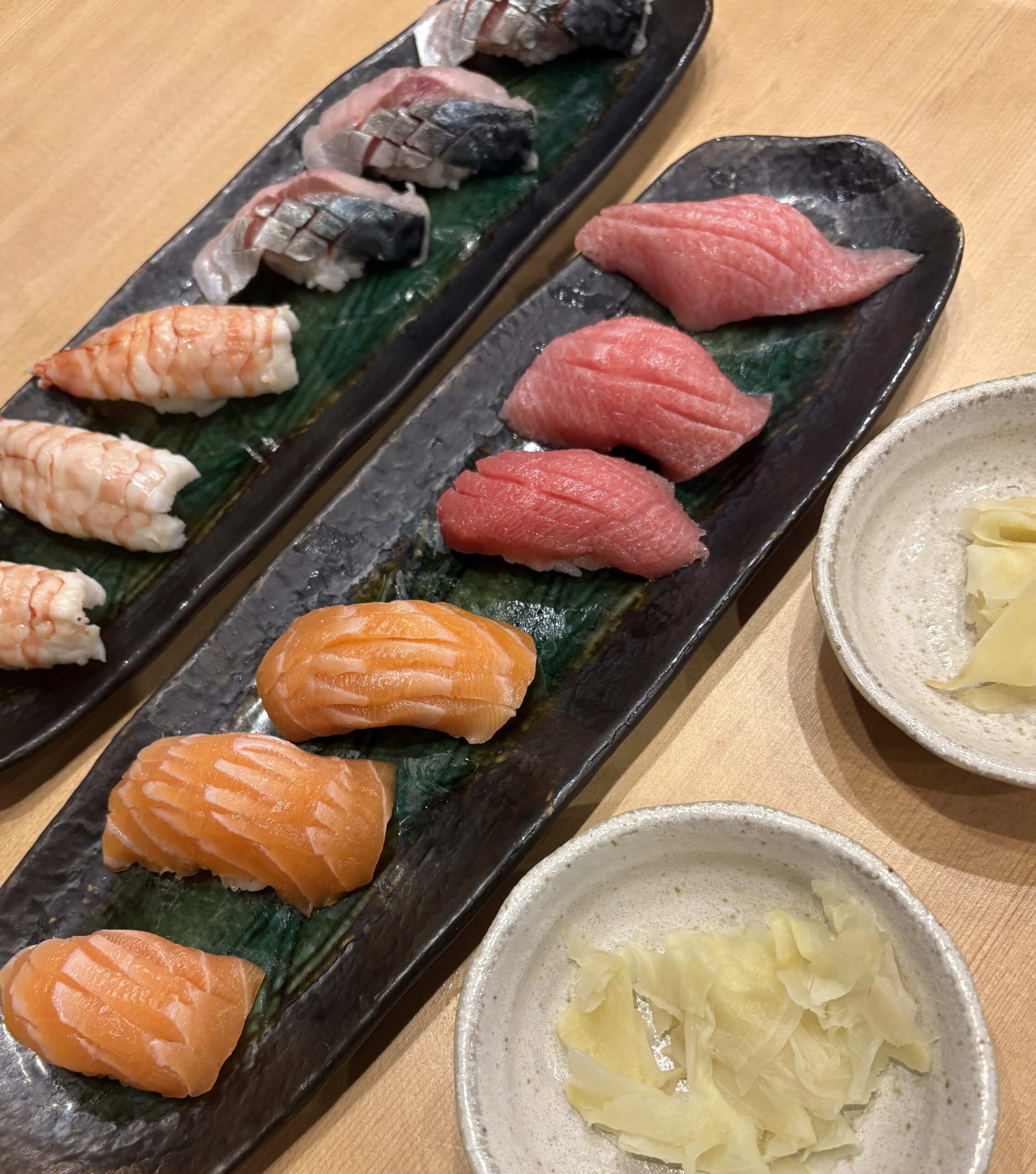
21 Japan Budget Travel Tips to Know
Japan has a reputation for being expensive, and compared to some places in the world, it is.
But compared to Western Europe, Australia, or most of North America, Japan is remarkably good value, especially right now with the yen sitting at historically favorable rates for international visitors.
The problem isn’t that Japan is unaffordable. The problem is that it’s easy to overspend without realizing it. The Shinkansen adds up.
Cherry blossom season hotel prices are genuinely shocking. A few dinners at sit-down restaurants, some shopping in Donki, a couple of paid attractions, and suddenly your daily budget is nowhere near where you planned.
The difference between an expensive Japan trip and an affordable one comes down to the same thing it always does: knowing where to spend and where to save.
I’ve visited Japan multiple times and learned most of these lessons the hard way. These are the Japan budget travel tips that actually move the needle, not generic advice you already know, but the specific decisions that make a real difference across a two-week trip.
Get a Suica or Pasmo IC Card the Moment You Land
The single most practical thing you can do on arrival in Japan is get a Suica or Pasmo IC card before you leave the airport.
These rechargeable contactless cards work across virtually all public transit in Japan, subways, buses, local trains, and many Shinkansen services.
Instead of calculating individual fares for every journey, you tap in and tap out. The correct amount is deducted automatically.
They also work at convenience stores, vending machines, lockers, and a growing number of restaurants and shops.
In practical terms, a Suica card removes one of the most stressful parts of navigating Japan, figuring out how much each transit journey costs.
You can add Suica directly to Apple Wallet or Google Wallet if your phone supports it, which means one less physical card.
Load it with enough yen to cover your first few days and top it up at any station vending machine as you go.
Get this sorted before you leave the airport arrivals hall. It makes everything from the first train journey onward significantly smoother.
Eat at Convenience Stores — Seriously

Japan’s convenience stores, 7-Eleven, Lawson, and FamilyMart, are one of the genuine wonders of the country, and eating at them regularly is one of the most effective budget strategies available.
Fresh onigiri costs ¥120-180. Egg salad sandwiches on milk bread run ¥200-280. Hot nikuman (steamed pork buns) at the counter are ¥150-200.
Full bento boxes covering a complete meal are ¥400-600. The quality is extraordinary at every price point, Japan’s convenience store food embarrasses most restaurants in other countries.
Eating convenience store meals for breakfast and occasional lunches while reserving your restaurant budget for dinners and specific experiences is a completely legitimate and genuinely enjoyable strategy. It’s not a compromise. It’s how a lot of Japanese people eat daily.
Budget ¥500-800 for a full convenience store meal and know that the egg salad sandwich will be one of the more memorable food experiences of your entire trip.
Use the JR Pass Only If the Math Works
The Japan Rail Pass is frequently presented as an automatic must-buy for Japan visitors. It isn’t.
Since a significant price increase in October 2023, the math needs to be checked carefully before purchasing.
The 7-day ordinary JR Pass costs around ¥50,000 ($330 USD as of 2026). A single Tokyo to Kyoto Shinkansen ticket costs approximately ¥14,000 one way.
If your itinerary involves multiple long-distance Shinkansen journeys, Tokyo to Kyoto, Kyoto to Hiroshima, and back, the pass saves money.
If you’re spending most of your time in one or two cities with occasional short trips, individual tickets or IC card payments are cheaper.
Calculate your specific itinerary before buying. Add up the individual ticket costs for every journey you plan. Compare to the pass price. Buy the pass only if the savings are genuine for your actual travel pattern.
Buy Your Shinkansen Tickets Early
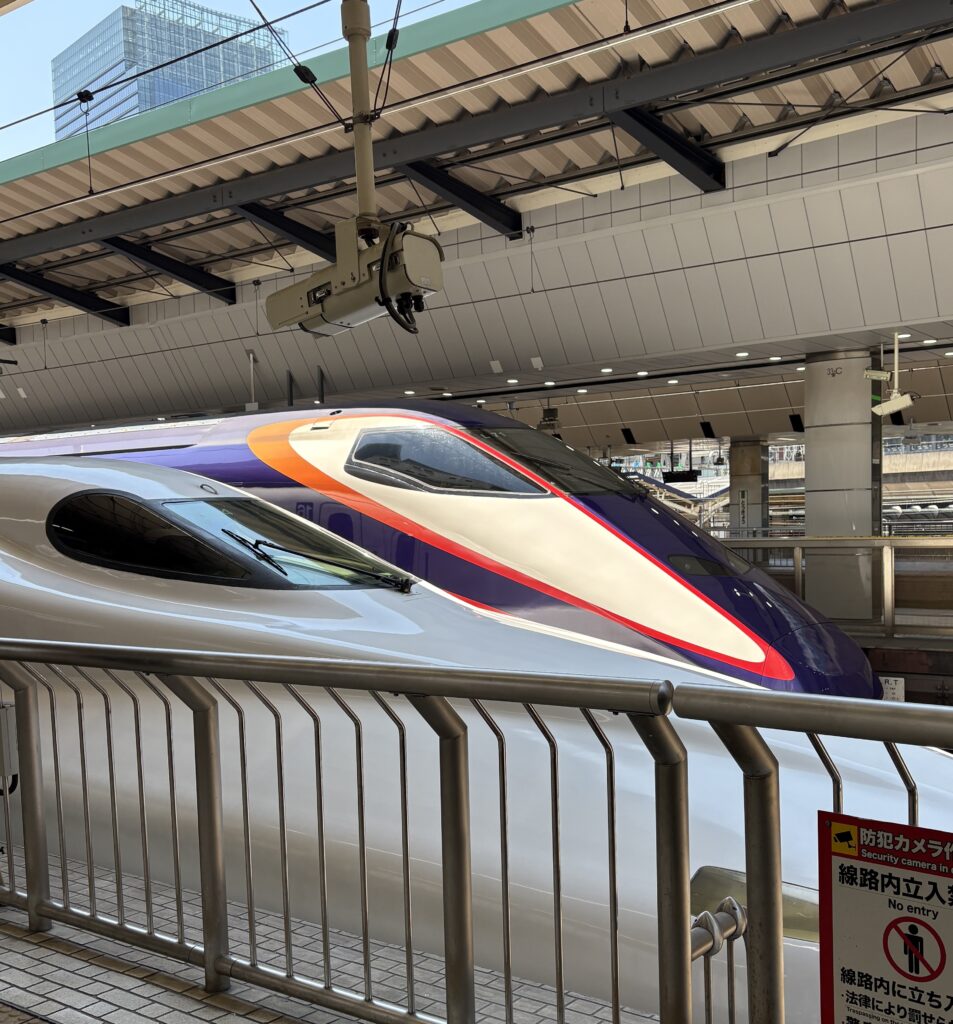
If you’re not using a JR Pass, buying individual Shinkansen tickets in advance saves money and guarantees your preferred departure time.
Reserved seat tickets booked through the JR website, Smart EX app, or at ticket offices can be purchased up to a month in advance.
Non-reserved seating is available without advance booking but has no seat guarantee and can be standing-only on busy routes during peak travel periods.
During cherry blossom season, Golden Week, and autumn foliage season, popular Shinkansen routes, particularly Tokyo to Kyoto, fill up quickly.
Leaving ticket purchase until you’re ready to travel during these periods means either paying more or missing your preferred timing.
Book Shinkansen tickets as soon as your travel dates are confirmed. The price doesn’t change with advance purchase, but availability does.
Eat at Standing Sushi Bars
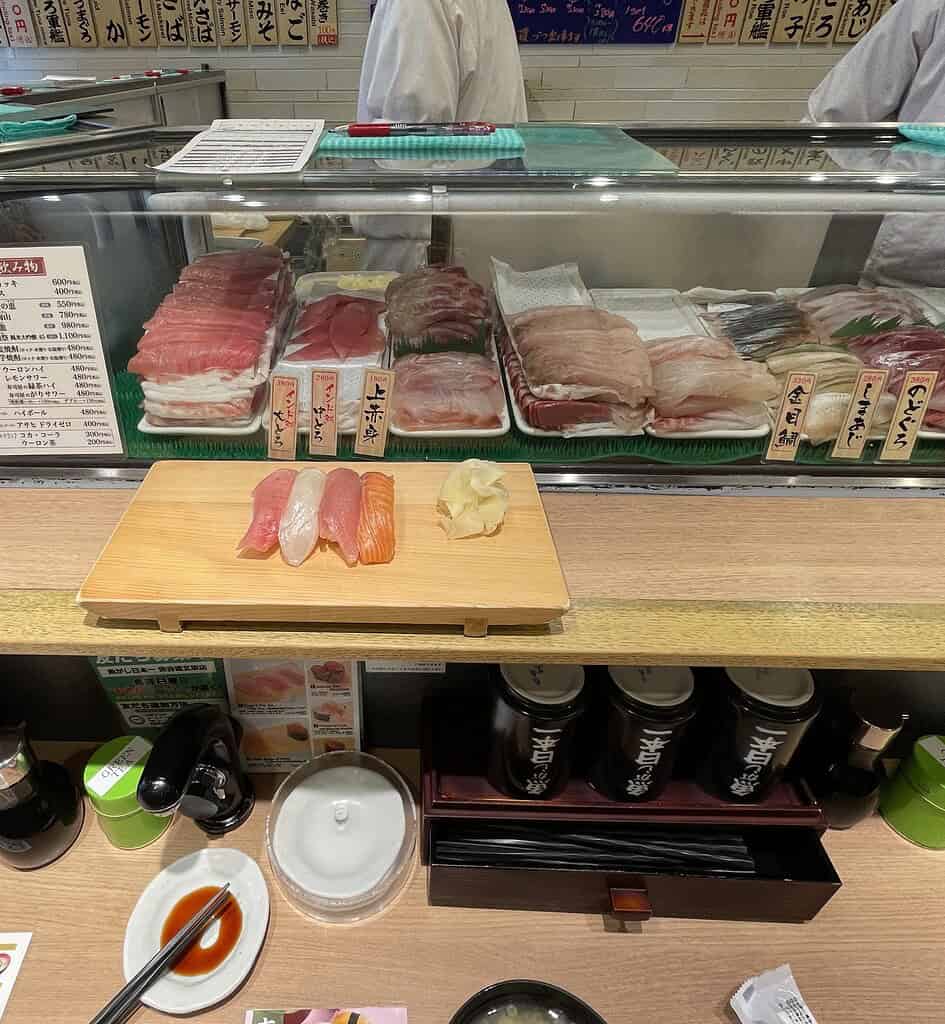
Standing sushi bars, kaiten-zushi (conveyor belt sushi) and tachigui (stand-and-eat) sushi counters, are one of the best food value experiences in Japan and genuinely excellent in quality.
At a standing sushi bar, individual plates run ¥110-330 per plate depending on the fish. A satisfying meal of eight to ten pieces costs ¥1,000-2,500.
The fish is fresh, the turnover is constant, and the quality rivals sit-down sushi restaurants charging four to five times as much.
Chains like Sushiro, Kura Sushi, and Hamazushi operate conveyor belt systems across Japan where even the most premium items rarely exceed ¥500 per plate.
These aren’t budget compromises, they’re where Japanese families eat sushi regularly, and the quality reflects it.
For one of the world’s great food experiences at an entirely accessible price point, standing sushi bars are non-negotiable, better than conveyor belt sushi by the way.
Book Cherry Blossom and Autumn Season Accommodation Months in Advance
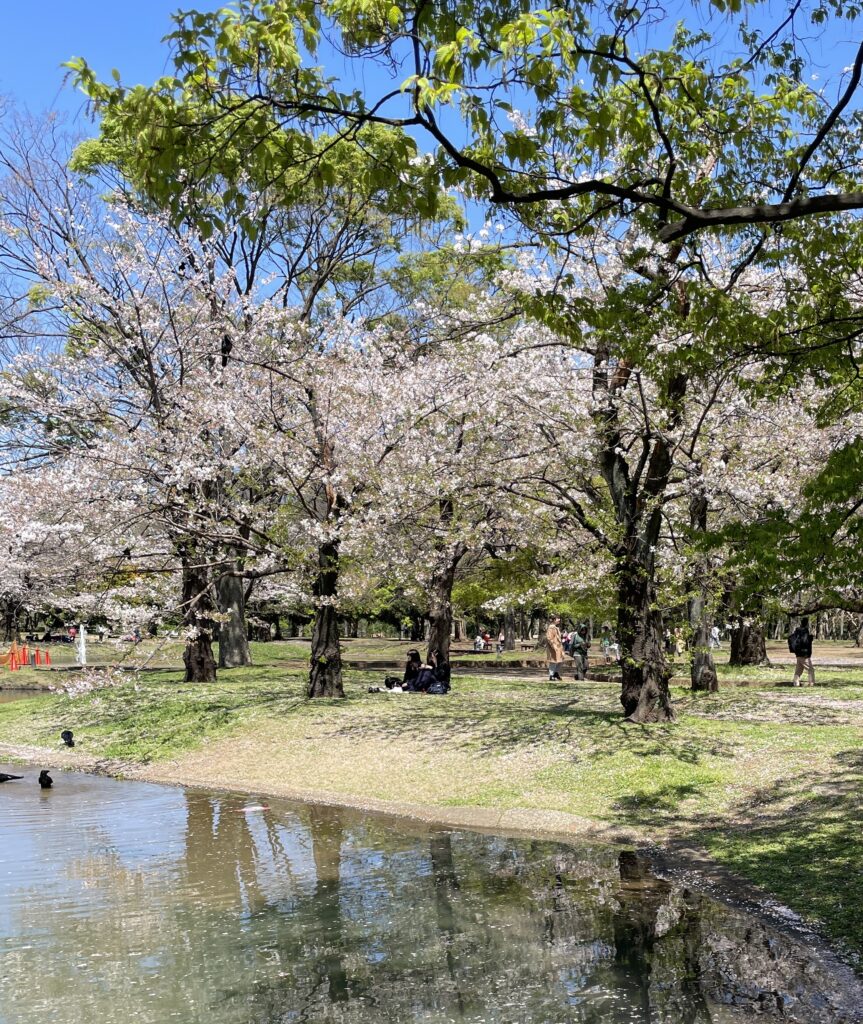
Cherry blossom season in late March through mid-April and autumn foliage peak in November are the two periods when Japan hotel prices reach their annual maximum, and when rooms disappear fastest.
Hotels in Kyoto and Tokyo during cherry blossom peak week can cost three to four times their off-season rates.
The same ryokan charging ¥15,000 per person in January charges ¥40,000 or more during sakura peak.
And these aren’t just expensive, they’re sold out entirely at any price if you wait too long.
If either of these windows is your travel period, book accommodation at least four to six months in advance.
This isn’t optional advice, it’s the difference between having good options and having no options.
Outside these peak windows, advance booking of two to four weeks is generally sufficient for most destinations.
Visit During Shoulder Season to Save on Everything
May, after Golden Week ends, and October before foliage peaks are Japan’s two best shoulder season windows, and the savings across accommodation, flights, and crowds are significant.
Mid-to-late May offers excellent weather across Central Japan with temperatures of 17-24°C, cherry blossom crowds gone, and hotel rates noticeably below their April peak. The landscape is vivid fresh green and genuinely beautiful in its own right.
October brings cooling temperatures and the beginning of autumn color before the November peak crowds arrive.
Hotels are available at reasonable rates, popular temples are accessible without the wall-to-wall visitor volume of November, and the weather across Central Japan is outstanding.
For travelers with any flexibility on dates, shoulder season delivers 80% of the peak season experience at significantly lower cost.
Eat Ramen, Soba, and Udon at Local Shops
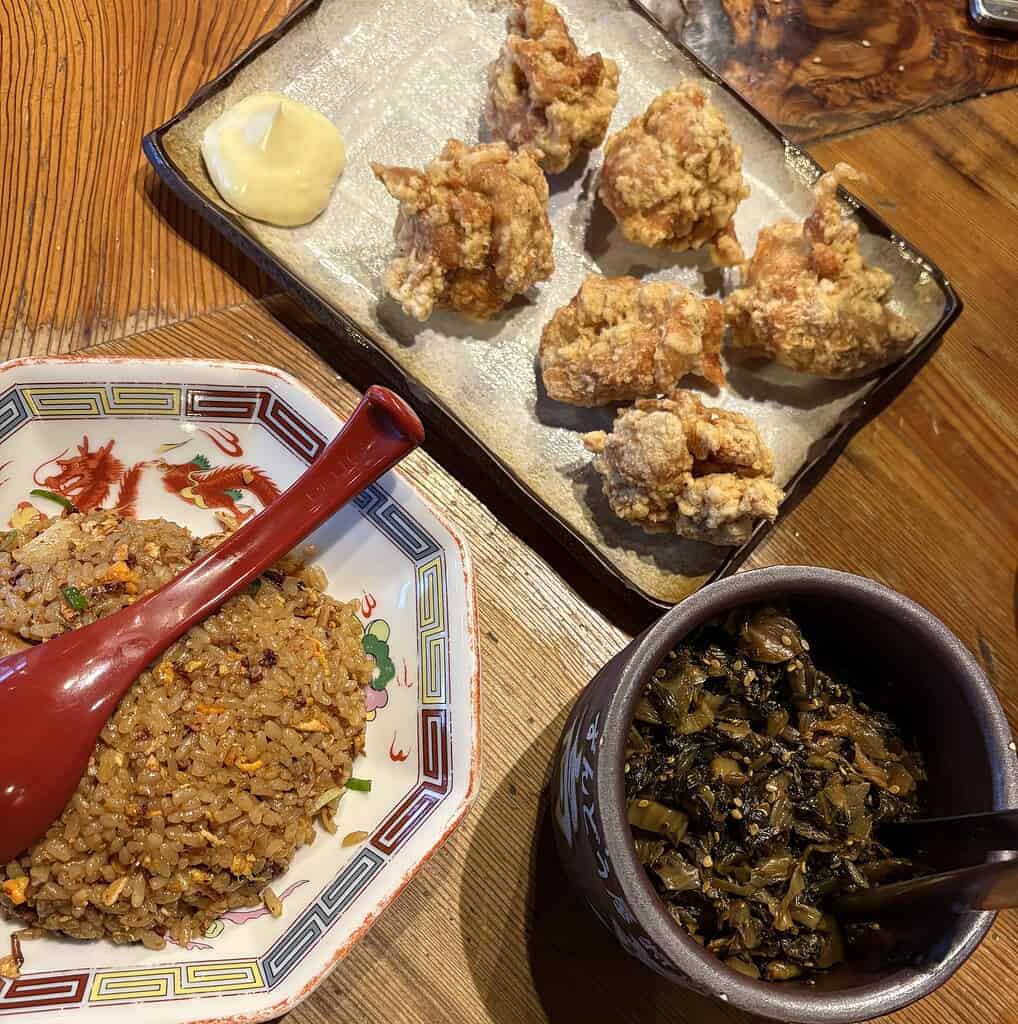
Japan’s noodle culture is one of the best budget food systems in the world, and eating ramen, soba, and udon at local shops is genuinely excellent value.
A bowl of ramen at a neighborhood shop costs ¥800-1,200. A cold soba set lunch runs ¥600-1,000. A bowl of udon at a standing counter is ¥300-600.
All of it is freshly made, deeply satisfying, and the quality at these price points outperforms restaurant meals twice the cost in most countries.
The best noodle shops often have no English menu, a ticket machine at the entrance, and seating for fewer than fifteen people.
In case your wondering the one in this photo is in Tokyo, a Ramen shop in Shinjuku located here.
Use Google Translate’s camera function to read the ticket machine, order by number, and eat at the counter. The system is straightforward once you’ve done it once.
Regional variations make this worth pursuing across the country. Tonkotsu ramen in Fukuoka tastes nothing like shoyu ramen in Tokyo.
Soba in Nagano is different from soba in Kyoto. Eating local noodles in each region is one of the best budget food strategies in Japan.
Get an Airalo eSIM Before You Land
Data connectivity from the moment you land in Japan is essential for transit navigation, Google Translate, and finding your way around, and sorting it before you arrive is significantly cheaper and easier than airport alternatives.
Airalo is one of the best eSIM options for Japan. You set it up entirely through the Airalo before leaving home, purchase a Japan data plan, and arrive with data already active.
No airport queues, no language barriers at a phone counter, no SIM card fumbling after a long flight.
Japan data plans on Airalo start at approximately $4.50 for 1GB and scale to $16 for 10GB, competitive pricing for reliable coverage across major cities and tourist areas.
If your phone doesn’t support eSIM, physical SIM cards are available at Narita and Haneda airports from multiple vendors.
DTAC alternatives don’t apply here, in Japan, look for IIJmio, OCN, or airport SIM vending machines for reliable tourist options.
Either way, arriving in Japan without data is a genuinely bad idea. The transit system alone requires a working connection to navigate efficiently.
Visit Free Temples and Shrines

Japan has thousands of temples and shrines, and a significant number of the most impressive ones are completely free to enter.
Fushimi Inari in Kyoto, the famous thousands-of-torii-gates shrine, is free and open 24 hours. Meiji Jingu in Tokyo is free. Senso-ji in Asakusa is free to enter the main grounds.
Countless neighborhood shrines and temple precincts across every city in Japan charge nothing.
The paid attractions, Kinkakuji (¥500), Kiyomizudera (¥500), Todaiji in Nara (¥600), are worth paying for.
But padding your itinerary with free shrines and temple walks alongside the paid headline attractions means you experience Japan’s spiritual and architectural culture at a fraction of what visitors who pay for everything spend.
Early morning visits to free shrines like Fushimi Inari before the crowds arrive are consistently among the most memorable Japan experiences, and they cost nothing.
Splurge on Premium Food in Osaka, Not Tokyo

If there’s one city in Japan where your fine dining budget goes furthest, it’s Osaka, and this is one of the most underused budget hacks for visitors who want to splurge without wrecking their finances.
Omakase sushi, premium Wagyu beef, kaiseki dinners, high-end teppanyaki, all of these exist in Tokyo too, but Osaka consistently prices them lower.
A Wagyu dinner that costs ¥15,000-20,000 per person in Tokyo regularly comes in at ¥8,000-12,000 in Osaka for equivalent quality.
Omakase counters with multi-month waitlists in Tokyo are often walk-in experiences in Osaka’s Namba and Shinsaibashi districts.
Beyond the headline splurges, Osaka’s everyday premium food scene delivers extraordinary value. Fresh crab, high-grade toro, fugu, and the city’s legendary takoyaki and okonomiyaki culture all sit at price points that feel almost unreasonable for what you get.
If you’re allocating one or two premium food experiences to your Japan budget, be in Osaka when you spend that money. You’ll get significantly more for it every single time.
Take the Airport Train or Limousine Bus — Not a Taxi
The taxi or private transfer from Narita Airport into central Tokyo costs ¥20,000-30,000 ($130-200 USD).
The Narita Express (N’EX) train takes approximately 60 minutes and costs ¥3,070 to Shinjuku. The Airport Limousine Bus reaches major Tokyo hotels for ¥3,200.
That gap, ¥3,000 versus ¥25,000 for the same journey, is one of the largest single budget wins available on any Japan trip and it happens before you’ve even checked in.
From Haneda Airport, which is significantly closer to central Tokyo, the Tokyo Monorail or Keikyu Line reaches the city for ¥300-650 depending on your destination. Even a taxi from Haneda is more reasonable than Narita given the shorter distance.
Research your specific airport and destination before arrival. Know which train or bus you’re taking, which platform, and roughly how long it takes.
Arriving prepared eliminates the temptation to take a taxi simply because you don’t know the alternative.
Stay in Capsule Hotels or Hostels
Japan’s capsule hotels and hostels represent some of the best budget accommodation value in any developed country, and the quality is genuinely high.
A capsule hotel pod in Tokyo or Kyoto costs ¥3,000-5,000 ($20-33) per night. You get a sleeping space, privacy curtains, USB charging, and usually shared bathroom facilities that are immaculately clean. The experience is distinctly Japanese and worth having at least once regardless of budget.
Hostels in major cities run ¥2,500-4,500 for dorm beds and ¥6,000-9,000 for private rooms.
Japanese hostels consistently rank among the cleanest and best-managed in the world, the quality floor is higher than hostels in most other countries.
For travelers comfortable with either option, the nightly savings compared to business hotels compound significantly across a two-week trip and free up budget for food, activities, and the inevitable Donki shopping session.
Eat Lunch Sets Instead of Dinner
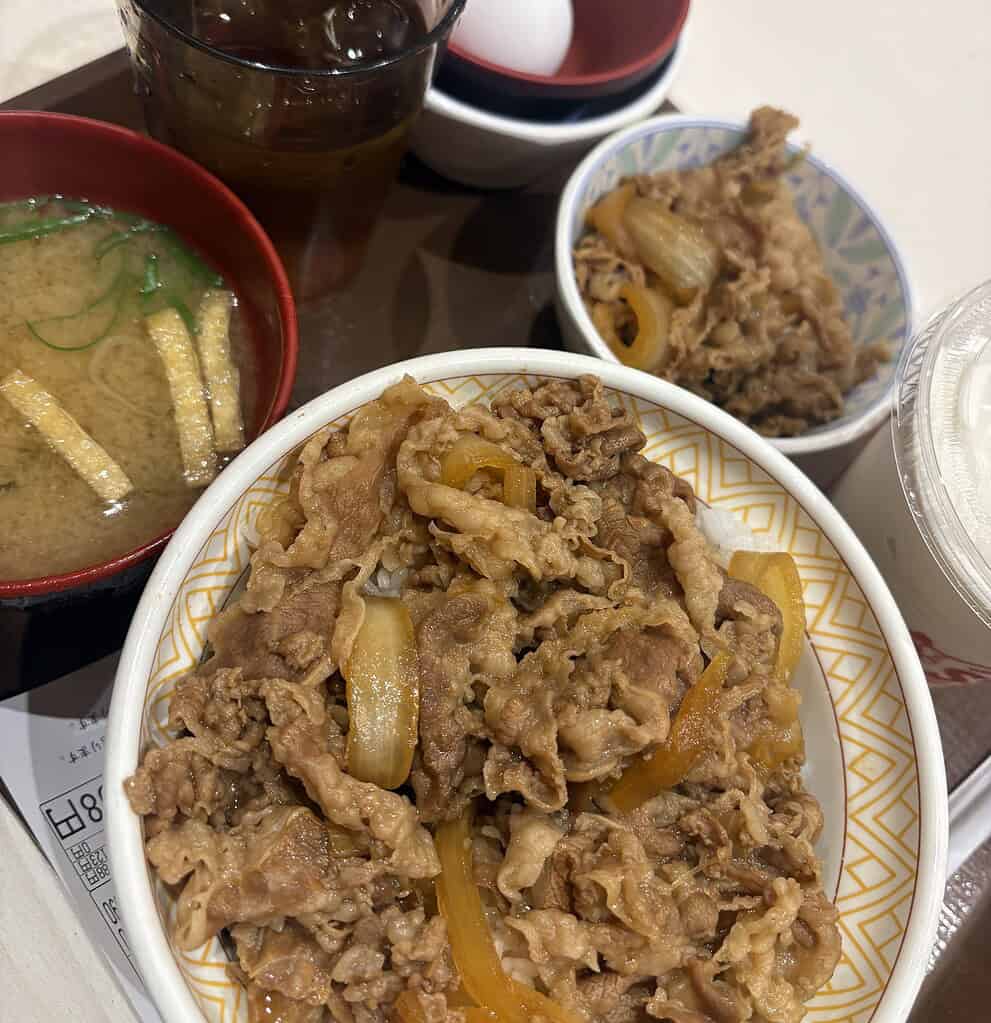
Japanese restaurants that would cost ¥3,000-5,000 per person at dinner frequently offer lunch sets, teishoku, for ¥800-1,500 covering multiple courses from the same kitchen using the same ingredients.
This is one of the most consistent and significant budget strategies in Japan. A kaiseki-adjacent restaurant in Kyoto offering a ¥1,200 lunch set is serving the same quality food as its ¥6,000 dinner menu.
The portions are slightly smaller and the setting slightly less formal, but the cooking is identical.
Seek out upscale or well-reviewed restaurants specifically for lunch rather than dinner. Check Google Maps reviews filtered for lunch.
Many Japanese food experiences that seem out of budget at dinner are entirely accessible at midday.
Skip the Department Store Food Halls for Daily Eating
Japan’s department store basement food halls, depachika, are extraordinary and worth visiting once as a cultural experience. They are not where you should be buying daily meals.
The same quality bento, sushi set, or prepared food available at a depachika for ¥1,500-2,500 is available at a convenience store for ¥500-800 or at a local restaurant for ¥800-1,200. The depachika premium is real and consistent.
Visit one for the experience, the visual presentation alone is genuinely extraordinary. Buy something once as a treat.
Then return to convenience stores, standing restaurants, and local lunch sets for your regular eating.
Use 100 Yen Shops for Cheap Essentials
Japan’s 100 yen shops, Daiso, Seria, CanDo, sell an extraordinary range of practical items for ¥100-300 each, and stocking up on travel essentials here saves meaningful money compared to convenience store or pharmacy prices.
Travel-size toiletries, kitchen items, stationery, storage bags, cables, phone accessories, snacks, seasonal items, all available at 100 yen shops at prices that make pharmacy and convenience store equivalents look expensive.
If you forgot something at home, need a replacement, or want to stock up on Japanese snacks and small gifts to bring back, 100 yen shops are the first stop rather than the tourist souvenir shops that charge multiples of the same item.
Daiso has locations throughout Japan including inside most major shopping centers and near popular tourist areas.
Walk Between Attractions Instead of Taking Taxis
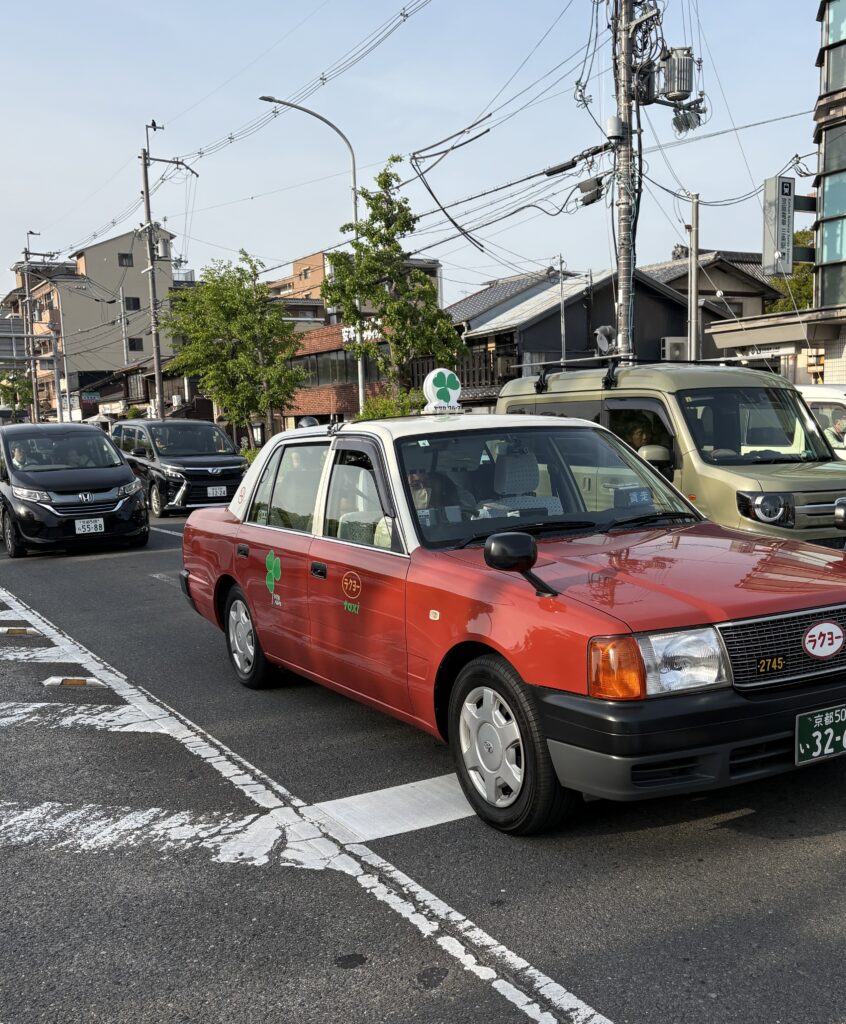
Japan’s major tourist cities are designed for walking, and walking between attractions instead of taking taxis or transit for short distances eliminates a consistent budget drain.
In Kyoto, the distance between Kinkakuji and Ryoanji is a 15-minute walk. The Philosopher’s Path connecting Ginkakuji to Nanzenji is a 2-kilometer walk that’s the entire point of the experience. Most of central Kyoto’s major temple districts are walkable from each other.
In Tokyo, Asakusa to Ueno is a 20-minute walk. Harajuku to Shibuya is 15 minutes. Shinjuku to the Meiji Shrine area is 15-20 minutes.
These are journeys that tourists frequently take taxis for without realizing how walkable they are.
Use Google Maps to check walking times before reflexively opening the transit app. Japan’s cities are safe, well-signed with increasing English, and genuinely pleasant to walk through.
The money saved and the things you notice walking versus sitting in transit make it worth the extra time.
Shop at Donki (Don Quijote) for Souvenirs
Don Quijote, universally called Donki, is Japan’s most entertaining discount variety store and consistently the cheapest place to buy souvenirs, snacks, cosmetics, and gifts to bring home.
The same matcha Kit-Kats, Japanese cosmetics, regional snacks, and character goods sold at tourist souvenir shops near major temples and attractions are available at Donki for 30-50% less.
The tax-free counter for foreign visitors processes the consumption tax refund on eligible purchases, present your passport and the savings add up meaningfully across a shopping session.
Donki stays open until midnight or 24 hours depending on location. The layout is deliberately chaotic and navigating it becomes its own experience.
Budget time for it the same way you budget time for a museum, you will spend longer than planned and leave with more than intended.
Book Ryokan on Weekdays Not Weekends

If a traditional Ryokan stay is on your Japan itinerary, and it should be booked during weekday nights versus weekend nights saves meaningful money at most properties.
Ryokan in Japan, particularly those in popular areas like Hakone, Kyoto’s outskirts, and onsen towns, charge higher rates on Friday and Saturday nights when domestic Japanese tourism peaks.
The same room and the same kaiseki dinner experience costs noticeably less Sunday through Thursday.
Structuring your ryokan night for a midweek stay rather than a weekend also means the experience is quieter, less crowded at the onsen, and more intimate overall. The practical and budgetary advantages align in the same direction.
Travel With a Wise Card
Most bank-issued cards charge foreign transaction fees of 2-3% on every purchase plus unfavorable exchange rates that quietly inflate every transaction across a Japan trip. Across two weeks of spending, these fees accumulate into a significant amount.
A Wise card eliminates foreign transaction fees and converts at close to mid-market exchange rates on every transaction.
You can hold Japanese yen in your Wise account, spend directly from that balance, and avoid the spread that banks build into every currency conversion.
For ATM withdrawals, Wise allows a certain amount of fee-free monthly withdrawals before small fees apply.
Combined with the strategic withdrawal approach below, it’s one of the most practical financial tools for Japan travel.
Set a Daily Budget Before You Land

The single most effective budget travel habit for Japan is also the simplest: decide your daily spending limit before you arrive and track it every day.
Japan makes overspending feel completely justified because the quality at every level is extraordinary. The Wagyu beef stick is worth it. The ceramics shop in Kyoto is worth it.
The extra night you add because leaving feels wrong is worth it. None of these individual decisions are mistakes, but they add up fast without a framework.
Set a realistic daily budget that covers accommodation, food, transport, and a shopping allowance.
Track your actual daily spend in a notes app before bed. Adjust the next day if needed.
Most Japan overspending isn’t dramatic, it’s the cumulative effect of dozens of small justified purchases across two weeks.
A daily number keeps that in check without preventing any individual decision that genuinely matters.
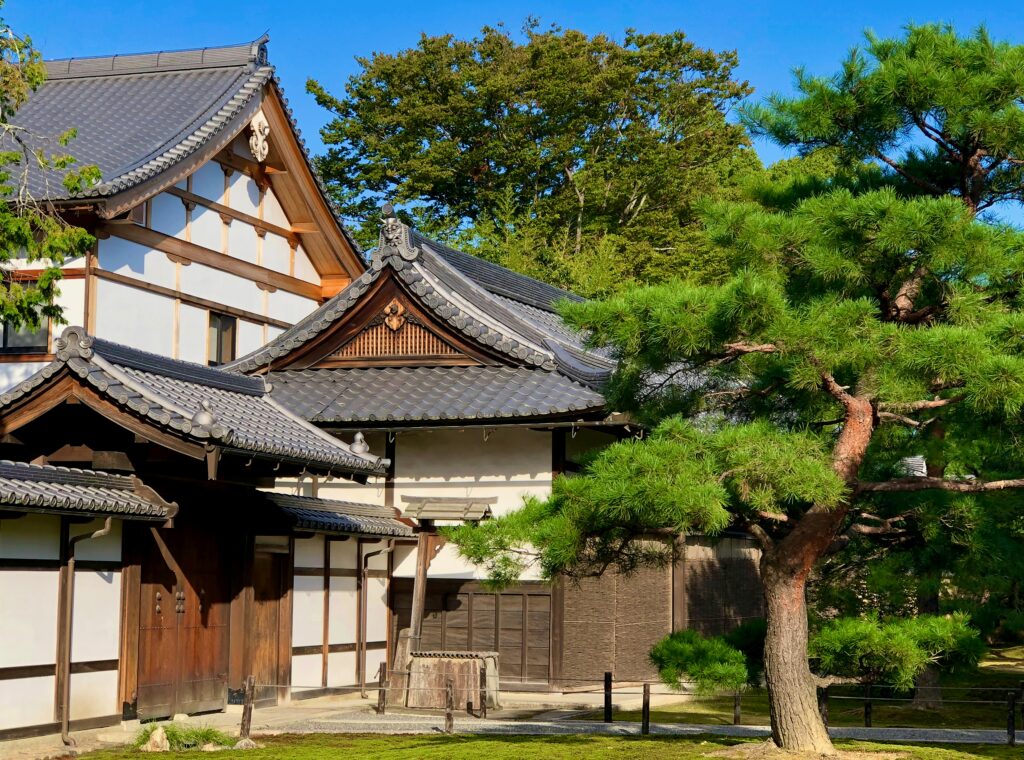
Final Thoughts on Japan Budget Travel Tips
Japan is not a cheap destination. But it’s also not the wallet-draining experience its reputation suggests if you approach it with some intentionality.
The yen’s current favorable exchange rate for international visitors makes this one of the better moments financially to visit Japan in years.
The convenience store food system means you can eat extraordinarily well for very little.
Free temples, walkable cities, and shoulder season windows mean the experience doesn’t require spending at every turn.
Get the Suica card. Eat standing sushi. Take the airport train. Spend too long in Donki. Set your daily budget and mostly stick to it.
Japan will reward you regardless of how much you spend. Spend smart and it rewards you even more.

How much money do you need per day in Japan on a budget?
Budget travelers to Japan should sue hostels, convenience stores, and public transit can manage on $80-120 USD per day.
Mid-range travelers typically spend $150-250 per day. Both figures exclude international flights and Shinkansen costs.
Is the JR Pass worth it in 2026?
Only if your itinerary involves multiple long-distance Shinkansen journeys. Since the October 2023 price increase the 7-day pass costs around ¥50,000 ($330 USD).
Calculate your specific route costs individually before buying, for single-region trips, individual tickets are almost always cheaper.
What is the cheapest time to visit Japan?
January and February offer the lowest hotel rates and smallest crowds. Mid-to-late May and October are the best shoulder season windows, good weather, manageable crowds, and meaningfully lower prices than cherry blossom and autumn foliage peak periods.
Is Japan more expensive than Thailand or Bali?
Yes, significantly. Japan runs roughly three to four times more expensive than Thailand daily.
However the current weak yen makes Japan noticeably more affordable for visitors spending USD, CAD, or GBP than it was two to three years ago.
