
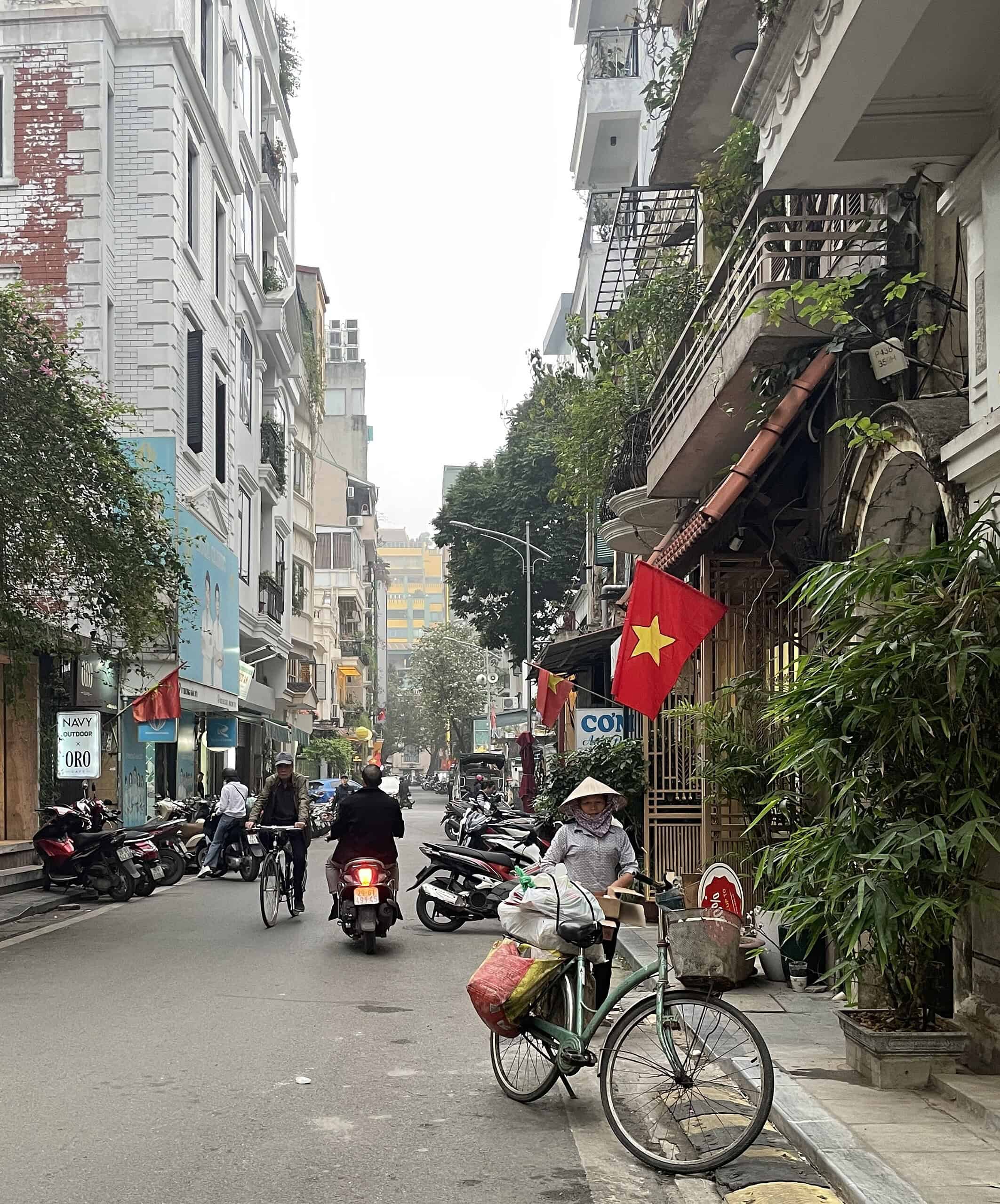
Best & Worst Time to Visit Vietnam by Region
The best time to visit Vietnam is one of those questions that doesn’t have a clean answer, and anyone who gives you one probably hasn’t spent enough time in the country.
Vietnam stretches over 1,600 kilometers from north to south, and the weather across that distance behaves in ways that frequently surprise first-time visitors.
What makes February ideal for Hoi An can make Hanoi feel gray and drizzly. What makes October a nightmare on the Central Coast can make Ho Chi Minh City perfectly pleasant.
The country runs on three distinct regional weather systems, and booking without understanding which one applies to your destination is one of the most common planning mistakes visitors make.
I’ve traveled through Vietnam across different seasons, and every single time the timing shaped the experience more than I anticipated.
Southern Vietnam
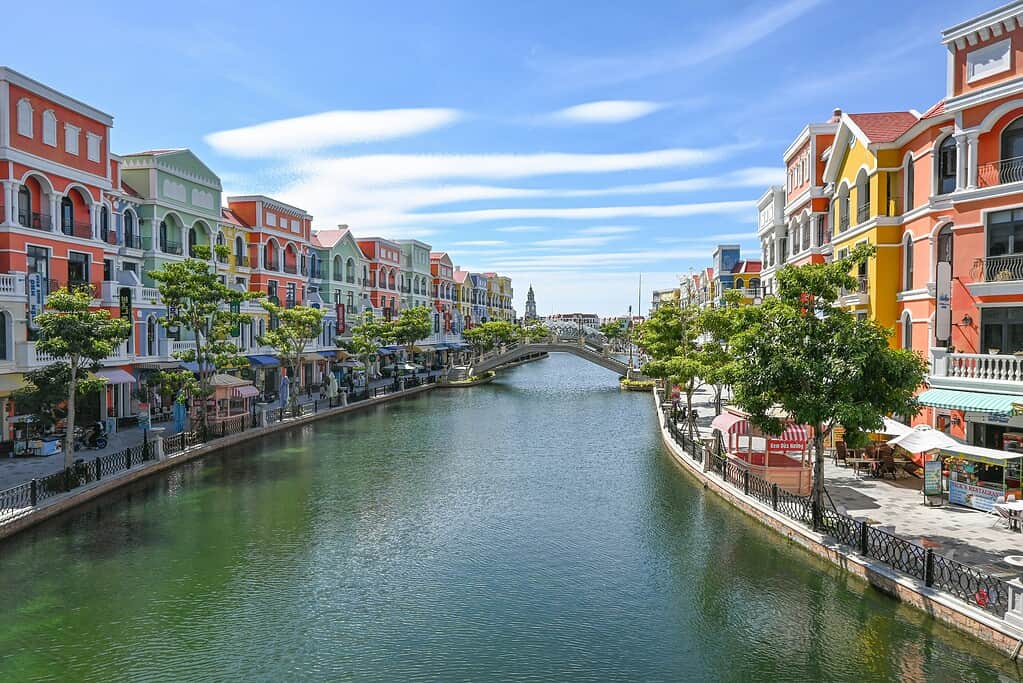
Southern Vietnam, Ho Chi Minh City, the Mekong Delta, and Phu Quoc, runs on one of the most straightforward weather patterns in the country.
Two seasons, clearly defined, with a dry season that genuinely delivers and a wet season that’s more manageable than most people expect.
Dry Season: November – April
November
The dry season arrives and the shift is immediate. Skies clear, humidity drops, and temperatures settle around 25–32°C making full days outdoors genuinely comfortable.
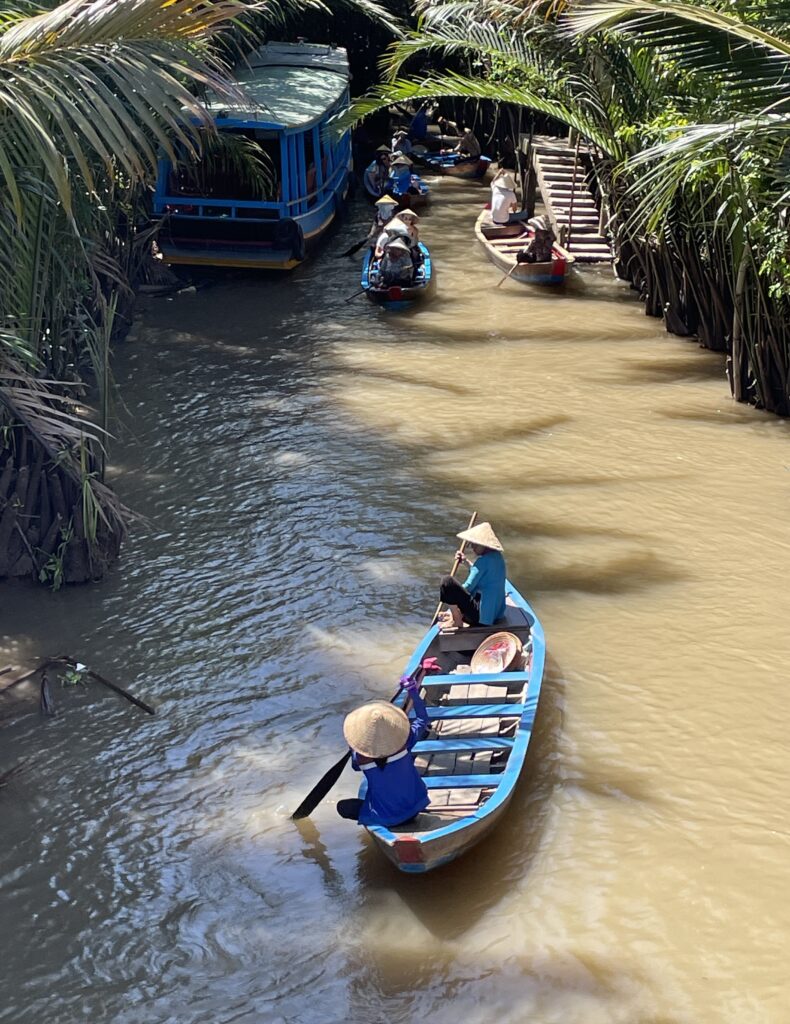
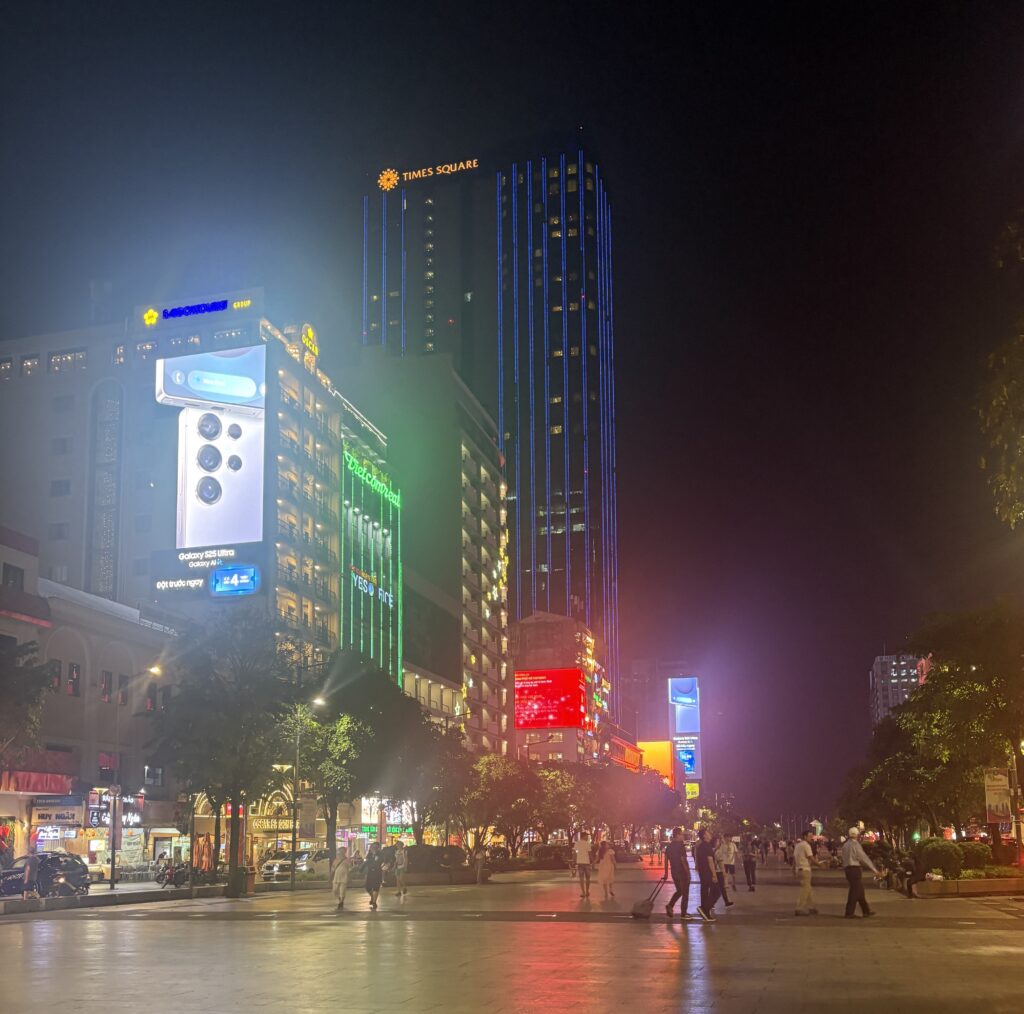
Ho Chi Minh City is excellent for sightseeing, Phu Quoc’s beaches calm down, and the Mekong Delta is at its most photogenic.
Early November still carries shoulder-season pricing before high season rates fully kick in, one of the better value windows of the year.
December
Peak season in full effect. Temperatures of 25–33°C, minimal rain, and consistent sunshine make it the most reliably comfortable month across the south.
Phu Quoc is at its absolute best with calm seas and warm water. The trade-off is cost and crowds, book flights and accommodation well in advance for the Christmas and New Year window.
January
Holiday crowds thin from December while conditions remain identical. Temperatures sit at 24–32°C with blue skies and negligible rainfall.
Phu Quoc diving is outstanding, the Mekong Delta floating markets are operating in ideal conditions, and Ho Chi Minh City sightseeing is as comfortable as it gets all year.
February
Dry season conditions continue reliably with temperatures of 24–32°C. Tet, the Vietnamese Lunar New Year, Falls in January or February and significantly impacts the country.
Many businesses close, transport books out weeks ahead, and prices spike. Plan everything well in advance if Tet overlaps with your visit, it’s chaotic but culturally extraordinary.
March
Temperatures climb toward 33–38°C and the heat becomes a real planning consideration. Phu Quoc remains excellent for beach holidays, warm water and thinning crowds from the February peak.
Ho Chi Minh City sightseeing is best done in early morning and late afternoon to avoid the intense midday heat.
April
The hottest month in the south with temperatures hitting 35–38°C regularly. Crowds have dropped significantly from peak season and hotel prices are at their dry season low.
Phu Quoc’s west coast still holds calm seas before the southwest monsoon fully arrives. Good value for heat-tolerant travelers.
Wet Season: May – October
May
Wet season arrives with afternoon and evening rains becoming regular. Temperatures sit around 28–34°C with rising humidity.
Phu Quoc’s seas begin getting rough as the southwest monsoon arrives. Hotel prices drop noticeably and popular destinations lose the tourist volume that defines December through February.
June
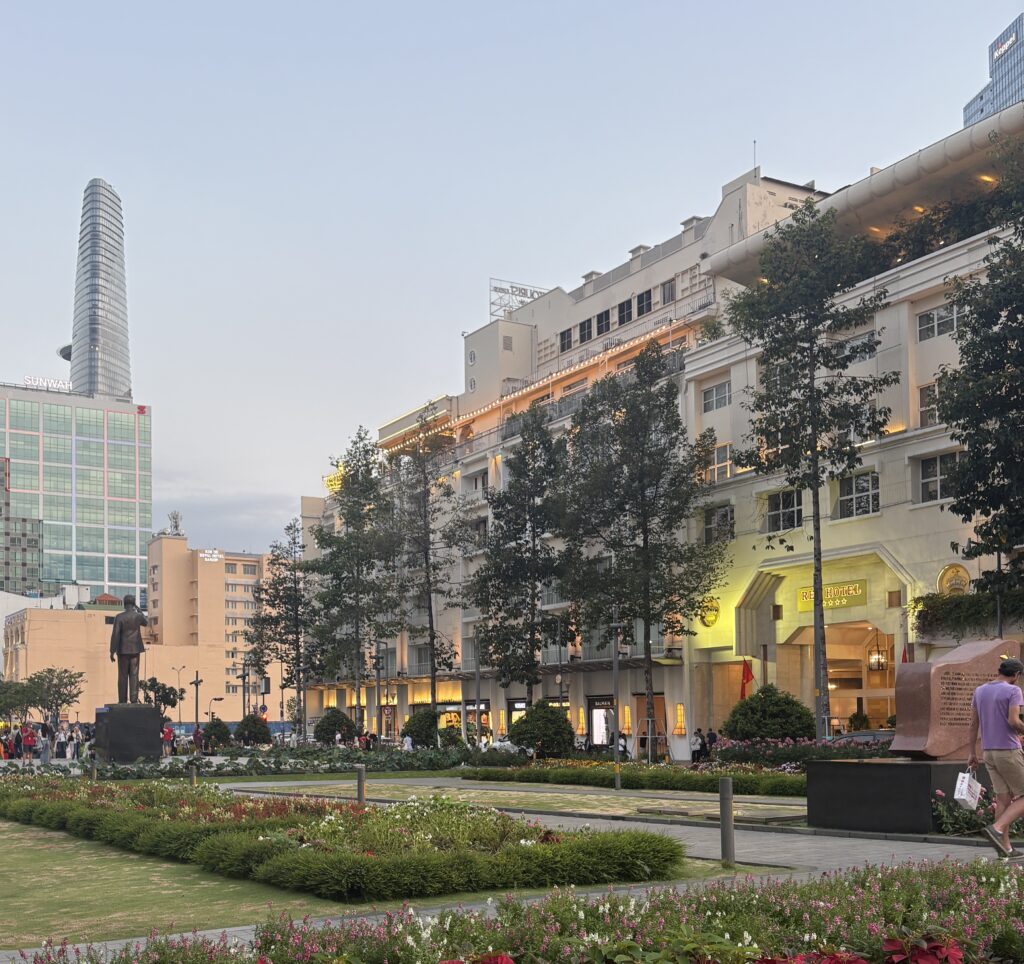
Solidly wet season with heavy afternoon downpours and temperatures of 27–33°C. Ho Chi Minh City’s cultural attractions, markets, museums, street food, operate completely regardless of rain.
Phu Quoc is not recommended in June with rough seas and persistent wind making beach conditions poor.
July & August
The heart of wet season. Rain is heavy and frequent, humidity peaks, and flooding can occur in low-lying Ho Chi Minh City areas after particularly heavy downpours.
Accommodation prices are at their annual low. Skip Phu Quoc entirely, conditions don’t support a beach holiday during these months.
September
Among the wettest months in the south. Frequent heavy rain, gray skies, and persistent humidity define the month.
Ho Chi Minh City functions normally but outdoor sightseeing is difficult to plan around. Rock-bottom prices and minimal crowds for travelers focused purely on urban exploration.
October
The transition begins. Early October is still firmly wet season but by late October rainfall decreases and conditions start improving toward the dry season threshold.
A reasonable value month if you have flexibility and are happy to work around variable weather in the first half of the month.
Central Vietnam
Central Vietnam, Da Nang, Hoi An, and Hue, operates on a weather calendar that frequently surprises visitors, particularly those arriving from the south expecting similar conditions.
The dry season here runs almost opposite to what you’d find in Ho Chi Minh City, and the wet season brings a typhoon risk that deserves serious attention before you book.
Dry Season: February – August
February
The dry season properly establishes itself and Central Vietnam transforms. Temperatures settle around 20–28°C and Hoi An’s Ancient Town starts looking exactly like every travel photo you’ve seen.
Crowds haven’t fully built yet and accommodation pricing is reasonable before the March-April peak.
March
Central Vietnam hits its stride. Temperatures climb to a comfortable 22–30°C, rainfall is minimal, and the coastline between Da Nang and Hoi An operates in near-ideal conditions.
One of the strongest months across the region for combining beach time with cultural sightseeing.

April
Peak month for Central Vietnam and the conditions justify it. Temperatures of 25–33°C, clear skies, and calm seas make it the region’s finest window.
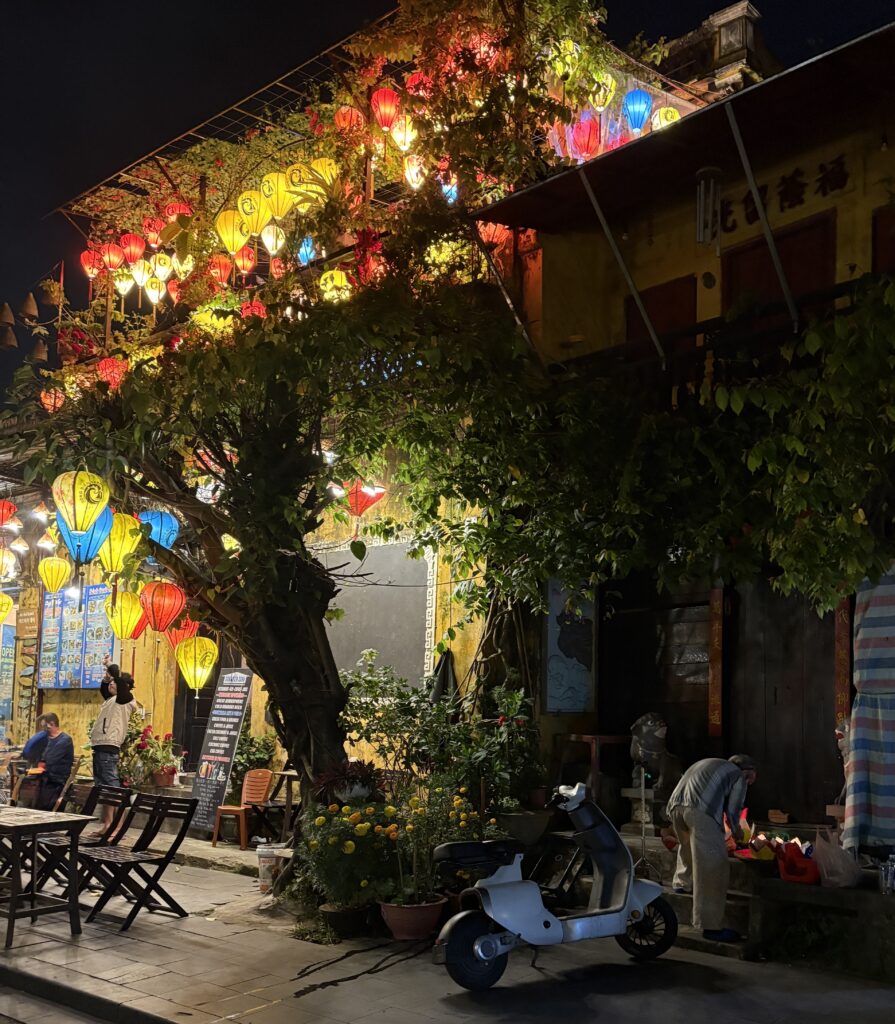
Hoi An’s Ancient Town is as beautiful as it gets, lantern-lit streets, river boat rides, and day trips to My Son in genuinely excellent weather. Book accommodation well in advance.
May
Good conditions continue with temperatures of 26–34°C and still-minimal rainfall. Heat builds noticeably toward midday.
Da Nang’s beaches are excellent, warm water and reasonable crowds before the Vietnamese domestic summer peak arrives in June.
June
Hot across Central Vietnam with temperatures regularly hitting 33–38°C. Rainfall remains low and skies are generally clear but midday heat is genuinely challenging for outdoor sightseeing.
The region gets busy with domestic Vietnamese summer tourism, book ahead for weekends in Hoi An and Da Nang.
July & August
The hottest months with temperatures reaching 35–38°C. Structure your days around the heat, early morning sightseeing, beach afternoons, evening exploration of Hoi An’s Ancient Town when temperatures drop and lanterns come on.
Despite the heat both months are busy with domestic tourism and the evenings are vibrant.
Wet & Typhoon Season: September – January
September
Wet season arrives and the shift is significant. Rainfall increases rapidly through the month and typhoon season begins for Central Vietnam.
Temperatures drop slightly to 25–32°C but humidity rises substantially. Travel insurance with weather disruption coverage is strongly recommended from September onward.
October
One of the most challenging months to visit Central Vietnam. Rainfall peaks, typhoon activity is at its most frequent, and flooding in Hoi An’s Ancient Town, which sits in a flood-prone river valley, is a regular occurrence. Streets can fill with knee-deep water after heavy rain events. Avoid if possible.
November
The wettest month across Central Vietnam and the peak typhoon risk window. Heavy rainfall, gray skies, and the possibility of serious storm activity define the month.
While the south celebrates its dry season return and the north enters cool season, Central Vietnam is at its worst. Adjust your itinerary if you have any flexibility at all.
December
A transitional month. Early December still sees significant rainfall while late December brings noticeably improving conditions as the dry season begins establishing itself.
Positioning your Central Vietnam days in the final week of December is a smart hedge if this is your only window.
January
Conditions continue improving from December with rainfall decreasing noticeably. Temperatures are cooler at 18–25°C, ideal for sightseeing in Hoi An and Hue without heat fatigue.
By late January Central Vietnam is transitioning toward its February dry season and conditions become increasingly reliable.
Northern Vietnam
Northern Vietnam, Hanoi, Halong Bay, Sapa, and Ninh Binh, operates on four loosely defined seasons that don’t map onto the simple dry-wet split of the south.
Getting the timing right here delivers some of the most extraordinary experiences Vietnam offers.
Best Months: October – April
October
One of the finest months in Northern Vietnam. Summer heat breaks, skies clear, and temperatures settle into a comfortable 20–28°C.
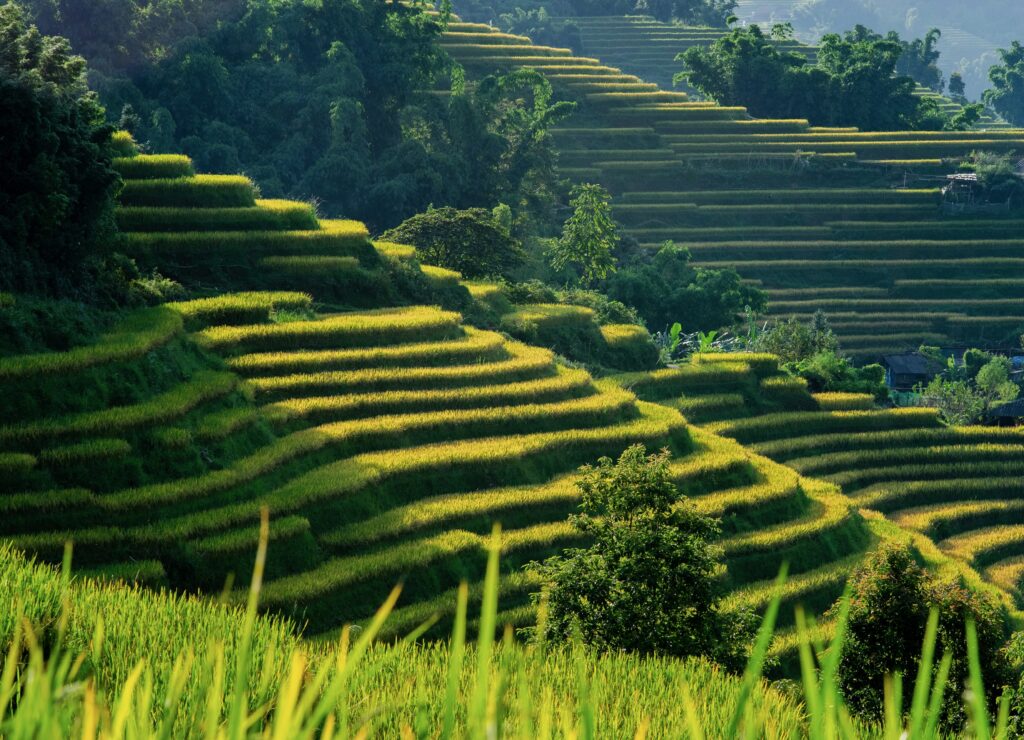
Sapa’s rice terraces turn golden during harvest season, arguably the most spectacular single sight in Vietnam during this month. Halong Bay is excellent with calm seas and clear skies.
November
Consolidates October’s excellent conditions. Temperatures of 18–26°C in Hanoi with clear skies and low humidity. Halong Bay overnight cruises are at their most comfortable.
Sapa trekking delivers clear mountain views that summer haze obscures entirely. One of Northern Vietnam’s strongest months overall.
December
Noticeably cooler with Hanoi averaging 15–22°C. Sapa drops significantly lower, below 5°C at night with occasional frost at higher elevations.
Pack proper layers for mountain travel. Halong Bay takes on a misty winter atmosphere that’s completely different from summer and genuinely beautiful in its own way.
January
The coldest month in the north. Hanoi averages 15–20°C but persistent humidity makes the cold feel more cutting than the numbers suggest.
Sapa occasionally sees snow at the highest elevations, extraordinary when it happens. Pack proper winter layers for any northern travel in January.
February
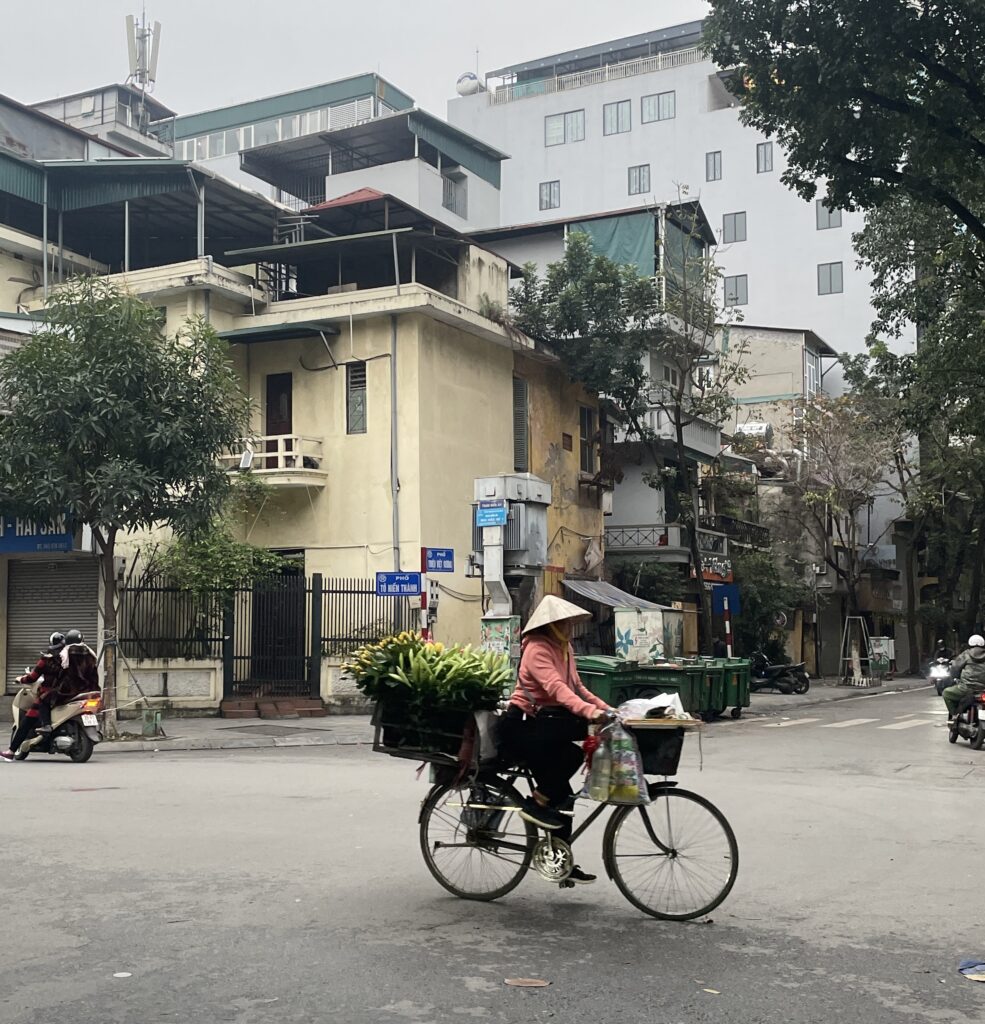
Cold and gray with a fine drizzle settling over Hanoi and the north through much of the month. Temperatures of 16–22°C.
Tet falls in January or February, Hanoi during Tet is culturally extraordinary with temples full, Hoan Kiem Lake decorated, and the city carrying a festive energy unlike any other time of year.
March & April
The transition back toward warmth. Temperatures climb from 18–24°C in March toward 22–30°C in April.
Sapa sees wildflowers blooming across mountain valleys. Halong Bay improves with calming seas. Hanoi in April is one of the more pleasant times to be in the city before summer heat arrives in May.
Note that April marks the beginning of the hot humid season in the north, if this is your window, prioritize early April over late.

Hot & Humid Season: May – September
May & June
Temperatures climb rapidly toward 30–35°C with rising humidity that makes Hanoi feel significantly hotter than the thermometer suggests.
Regular afternoon thunderstorms bring temporary relief. Halong Bay is operational but hot on deck. Sapa is lush and green as rice planting season begins.
July & August
The hottest and most humid months. Hanoi regularly hits 35–38°C. Halong Bay is busy with domestic tourism. Sapa sees heavy rain but the landscape is extraordinarily green.
Cultural attractions in Hanoi, the Old Quarter, Temple of Literature, Vietnam Museum of Ethnology, are all indoor-friendly and operate normally regardless of conditions.
September
Temperatures ease slightly toward 28–33°C but humidity remains high. The early harvest season begins in Sapa in late September as the rice terraces start their transformation from green toward gold, a preview of October’s spectacular peak. The last month of hot season before October’s welcome transition arrives.
November & April: Vietnam’s Shoulder Season
Of all the months in the Vietnamese calendar, November stands alone as the one month where conditions align positively across all three regions simultaneously.
In the south, November marks the triumphant return of the dry season, clear skies, calm seas, and Phu Quoc at its most beautiful.
In the north, November signals the beginning of the cool season’s finest window, comfortable temperatures, and the clear mountain views in Sapa.
And in Central Vietnam, November is when the typhoon season is winding down and the dry season is just weeks away from establishing itself properly.
If you’re visiting Vietnam for the first time and have flexibility on timing, November is the answer. It’s as close to a universally correct month as Vietnam offers.
April is more complicated. For the south, April is the tail end of dry season, still good beach conditions, thinning crowds, and lower prices than January.
For Central Vietnam, April is the absolute peak, the finest weather the region offers all year. But for Northern Vietnam, April marks the beginning of the hot and humid season.
Hanoi in late April is already warming toward uncomfortable summer levels, and Sapa loses the cool mountain clarity that makes it extraordinary in October and November.
The takeaway: if Central Vietnam is your priority, build your trip around April. If Northern Vietnam is your priority, avoid late April entirely and aim for October through early March instead.
Air Quality & Burning Season in Vietnam
Vietnam doesn’t have a burning season equivalent to Northern Thailand in terms of scale or predictability, but air quality is a real consideration, particularly in Hanoi that most travel guides don’t address honestly.
Hanoi regularly records poor to unhealthy AQI levels throughout the year, driven by traffic emissions, industrial activity, and seasonal agricultural burning in surrounding provinces.
October through March tends to see the worst readings as cooler, stagnant air traps pollutants close to ground level.
The city’s famous winter mist can look atmospheric while registering badly on AirVisual.
Ho Chi Minh City’s air quality is generally better than Hanoi but still worth monitoring, particularly during the dry season when dust and emissions accumulate without rain to clear the air.
For travelers with respiratory conditions or sensitivity to air quality, download AirVisual before your trip and check it daily in Hanoi.
On bad days, limiting time outdoors and wearing a quality mask is a practical consideration, not an overreaction.
Which Region Should You Visit First?
For first-time visitors, Central Vietnam is where I’d start, and it’s not a close call. Hoi An, Da Nang, and Hue offer the most well-rounded experience in the country.
Ancient history, incredible food, beautiful beaches, and manageable distances between major sights all within the same region.
It’s genuinely accessible for every type of traveler. Time your visit between February and August and Central Vietnam delivers an experience that’s hard to match anywhere in Southeast Asia.
From there, the decision depends on your timeline.
One week: stay in one region. Rushing between north and south in seven days means spending more time on planes and buses than actually experiencing Vietnam.
Two weeks: combine Central Vietnam with either the south or the north depending on your travel month. November through April, add the south. October through February, add the north.
Three weeks: do all three. South to north or north to south, following the country’s natural geography and giving each region the time it deserves.
Whatever your timeline, build your trip dates around Central Vietnam’s weather window first. Get that right and everything else falls into place.

Final Thoughts on the Best and Worst Time to Visit Vietnam
Vietnam rewards travelers who understand its regional complexity rather than treating it as one destination with one weather pattern.
The south is the most straightforward, November through April is excellent and wet season is more manageable than feared.
The central region requires the most careful timing, October through December can seriously disrupt a trip if you’re not prepared.
The north has four distinct seasonal personalities, with October, November, March, and early April being its finest windows.
For first-time visitors wanting reliable conditions across multiple regions, November through February covers the south and north well while steering clear of the central region’s worst weather.
Add Hoi An and Da Nang in February through April when Central Vietnam is genuinely at its best. Get the regional timing right and Vietnam will give you everything it promises.

What is the best month to visit Vietnam overall?
November, the south enters dry season, the north begins cool season, and conditions are broadly good across the country.
The exception is Central Vietnam, plan Hoi An and Da Nang for February through April instead.
Is Central Vietnam safe to visit during typhoon season?
Typhoon season runs September through November with October and November carrying the highest risk. February through August is strongly preferable.
If visiting during typhoon season, book refundable accommodation and carry travel insurance with weather coverage.
Does air quality affect travel in Vietnam?
In Hanoi, yes. The city experiences elevated pollution year-round with worse readings in cooler months.
Download AirVisual app on your phone before your trip and check it daily. Ho Chi Minh City is generally better but worth monitoring during dry season.
Can you visit Sapa in winter?
December and January bring genuine cold, single digit temperatures at night with occasional frost and rare snowfall at the highest elevations.
Pack proper winter layers. The misty mountain atmosphere in winter has a quiet beauty that the busier October harvest season doesn’t offer.
