
Tet in Vietnam: 13 Things That’ll Surprise You
Tet in Vietnam is one of the most extraordinary cultural experiences in Southeast Asia, and one of the most misunderstood by the visitors who find themselves in the country when it happens.
Tet is Vietnam’s Lunar New Year and the most important holiday in the Vietnamese calendar. It’s not a one-day event.
It’s a week-long national celebration that transforms the country in ways that affect every aspect of travel, transport, accommodation, food, business hours, and the general atmosphere of wherever you happen to be.
I’ve experienced Tet in Vietnam multiple times across different cities, and every single time it surprised me in ways I didn’t anticipate, even after knowing what was coming.
The first time is genuinely extraordinary. The subsequent times teach you things the first one didn’t.
Whether you’re planning to visit during Tet intentionally or you’ve just realized your travel dates overlap with it, here’s what you actually need to know.
Airport Lines Are Absolutely Chaotic in the 48 Hours Before Tet
If your travel dates put you in or through a Vietnamese airport in the 48 hours before Tet begins, prepare yourself for a level of airport chaos that goes beyond the usual busy travel period.
Tet is the single biggest domestic travel event in Vietnam’s calendar. Millions of Vietnamese people travel home to their families in the days leading up to the holiday, by plane, by bus, by train, by any means available.
The airports in Ho Chi Minh City, Hanoi, and Da Nang absorb an extraordinary volume of this movement simultaneously.
I flew from Saigon to Da Nang a day or two before Tet and the lines were unlike anything I’d experienced at a Vietnamese airport.
Check-in queues stretched far beyond what the terminal was designed to handle. Security was slow. Gates were packed.
If you’re flying domestically in Vietnam in the 48-72 hours before Tet, arrive at the airport significantly earlier than you normally would. Build buffer time into your entire day. And if your itinerary is flexible, consider adjusting your travel dates to avoid this window entirely.
Transport Books Out Weeks in Advance

The airport situation is just one part of a broader transport reality during Tet, everything books out, and it books out early.
Domestic flights between major cities fill up weeks before the holiday. Train tickets on the Reunification Express between Hanoi and Ho Chi Minh City sell out faster during Tet than at any other time of year.
Bus services between cities operate at capacity. Even ride-share and taxi availability in major cities tightens as drivers head home for the holiday.
If your travel dates fall anywhere near the Tet window, typically late January or early February depending on the lunar calendar, book every transport leg as far in advance as possible.
Leaving domestic flights or trains until two weeks out during this period is a genuine risk.
The travelers who get caught out are almost always the ones who didn’t realize how seriously Vietnam takes this holiday until they were already trying to book.
The Holiday Atmosphere Builds Weeks Before Tet Actually Starts
One of the most surprising things about Tet for first-time visitors is how early the energy starts building, and how much of the experience happens before the holiday itself.
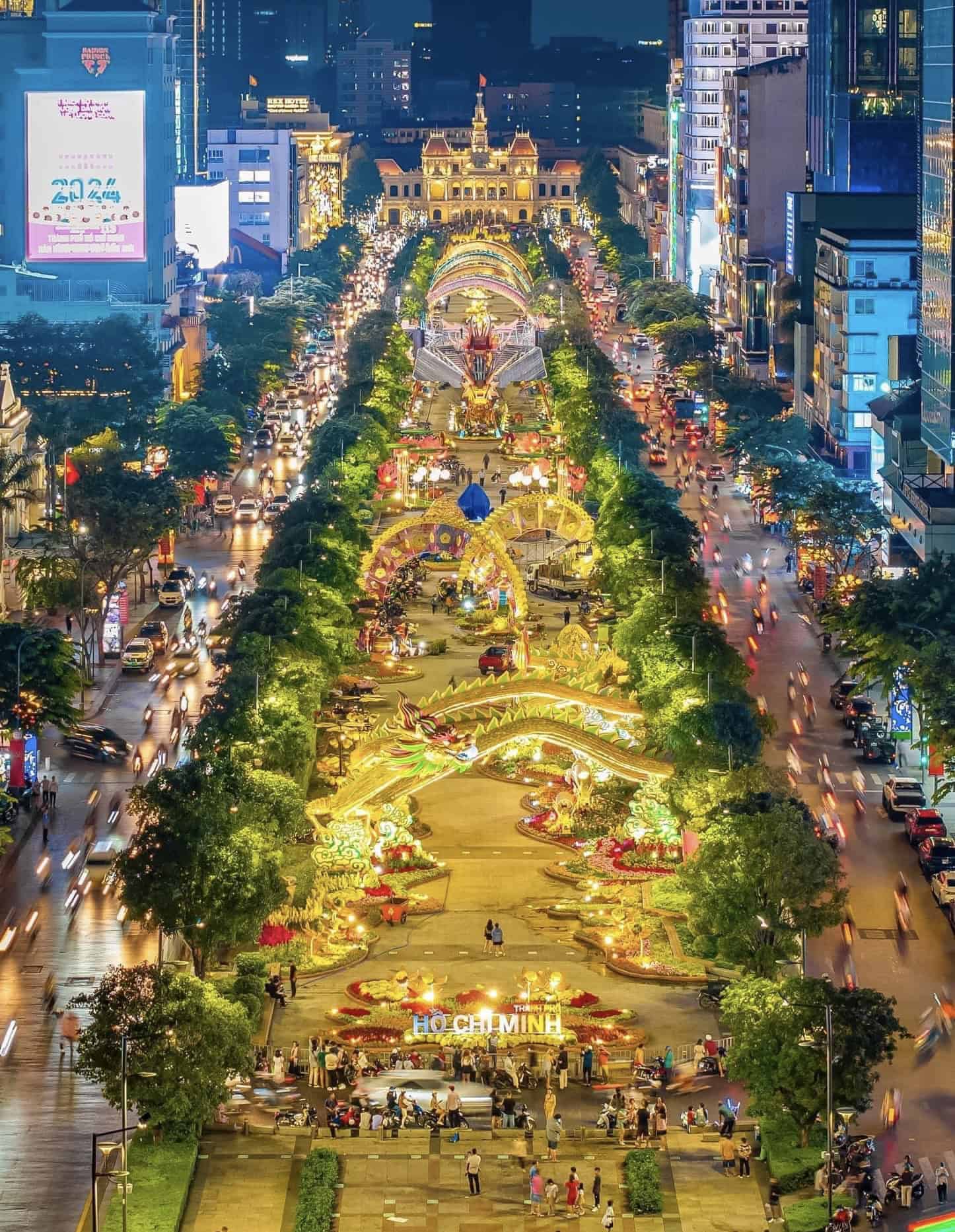
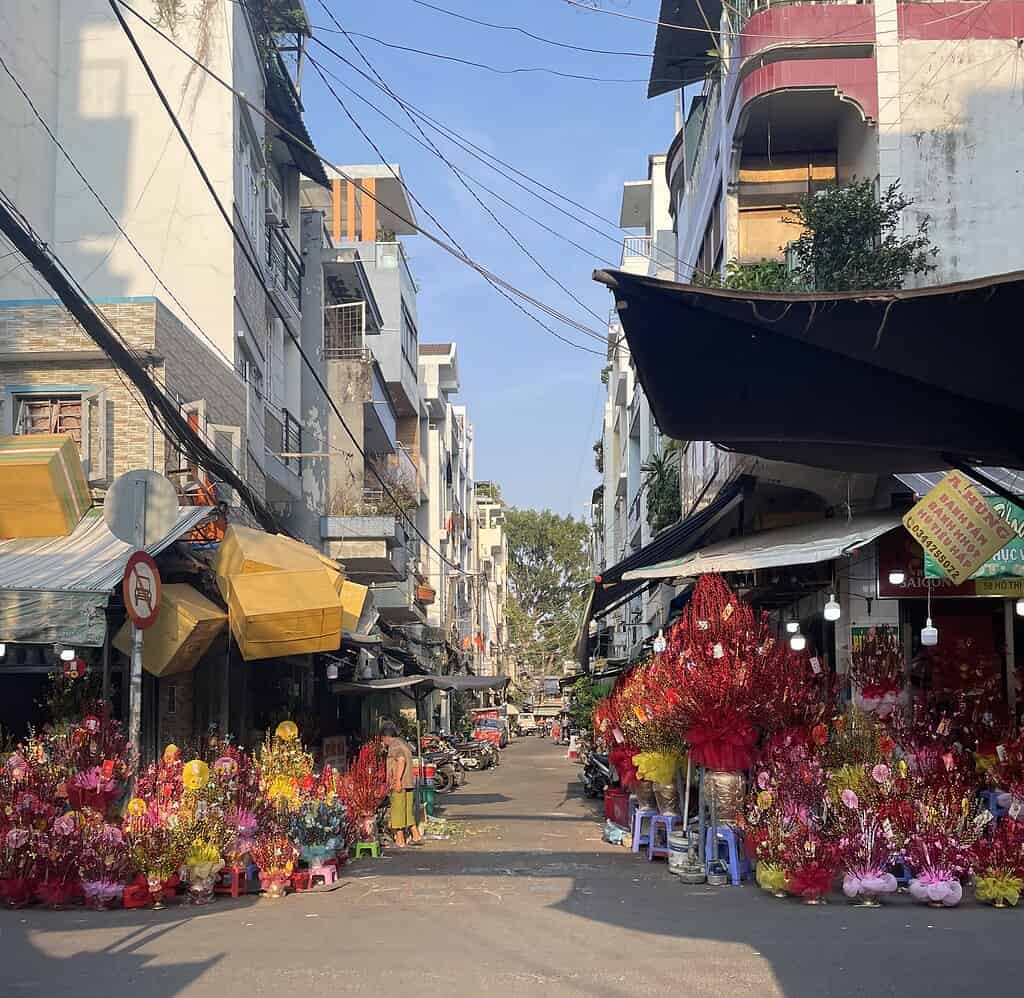
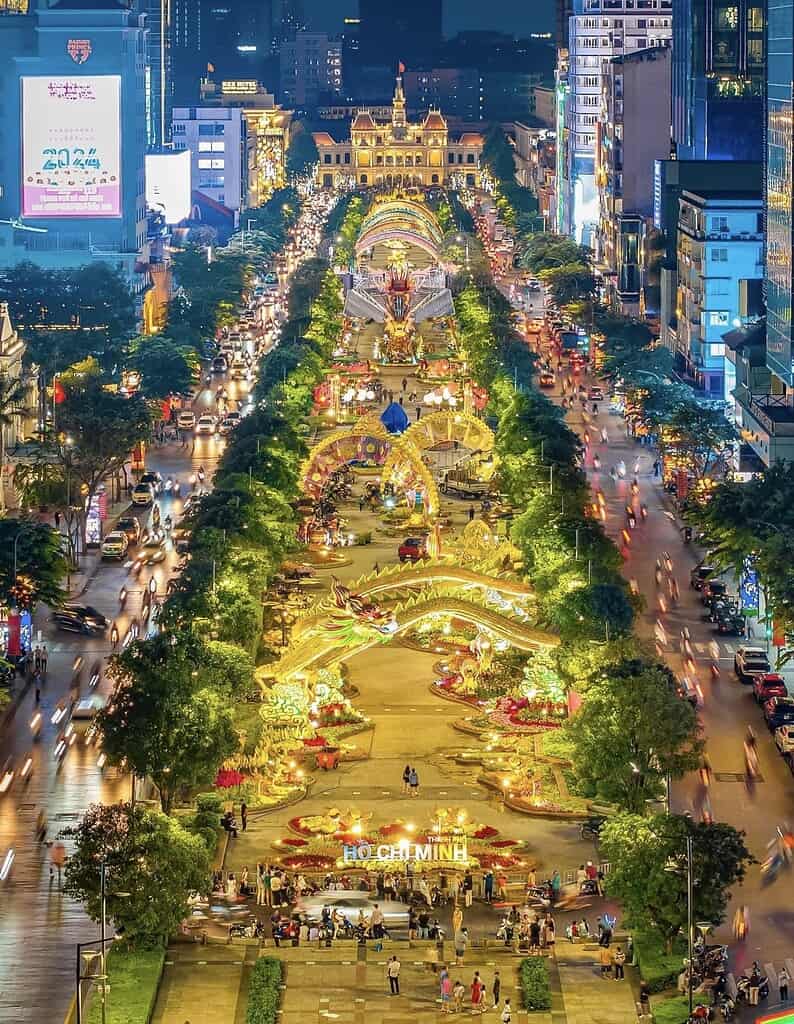
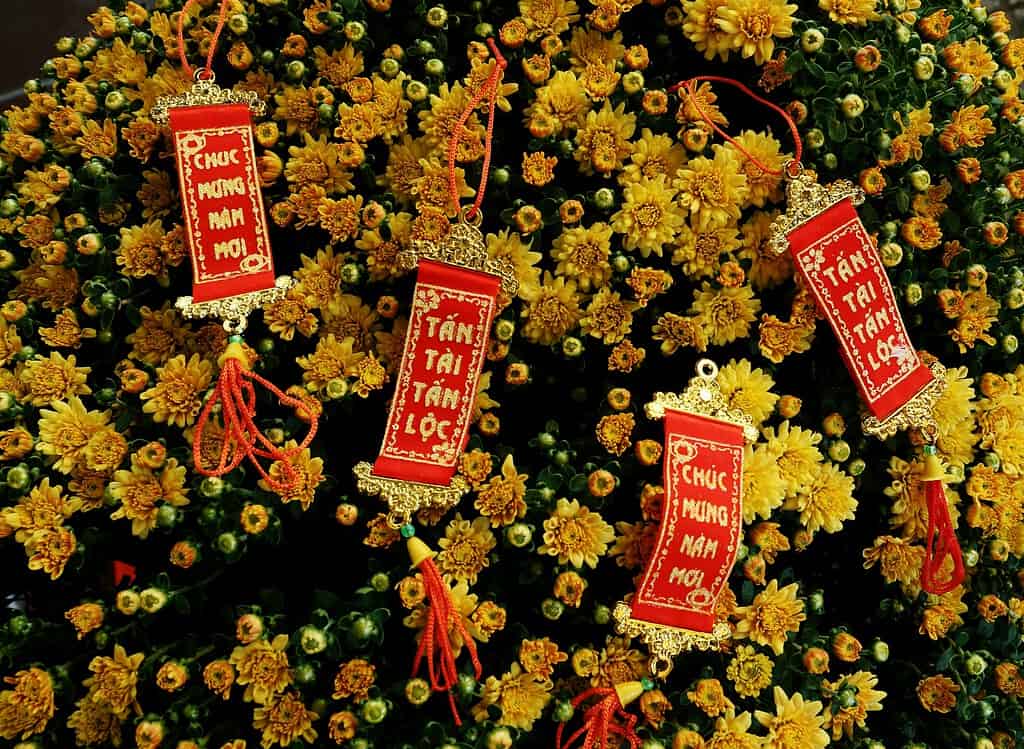
In the three to four weeks leading up to Tet, Vietnam transforms visibly. Markets fill with flowers, yellow ochna blossoms in the south, peach blossoms in the north, that are bought specifically for home decoration. Streets light up with decorations.
Shopping areas become noticeably busier as families stock up on gifts, food, and new clothing for the holiday. The general atmosphere of cities like Ho Chi Minh City and Hanoi shifts into something festive and anticipatory in a way that’s genuinely infectious.
This pre-Tet period is actually one of the most enjoyable times to be in Vietnam if you’re visiting around the holiday.
The energy is celebratory without the disruption that the holiday itself brings. Markets are extraordinary. Streets are decorated.
The country feels alive in a specific way that doesn’t exist at any other time of year.
Shopping Gets Hectic and the Sales Are Real
In the weeks before Tet, Vietnam’s shopping scene goes into a mode that’s comparable to the Christmas retail rush in Western countries, and the sales during this period are genuinely significant.
Malls, markets, clothing stores, and electronics shops run Tet promotions that attract serious shopping crowds.
The combination of sales, gift-buying, and families stocking up on everything from food to clothing to household items creates a shopping atmosphere that ranges from energetic to genuinely overwhelming depending on where you are.
Markets selling Tet-specific items, flowers, decorative plants, traditional foods, gift sets, operate on extended hours and at intense volume in the days before the holiday.
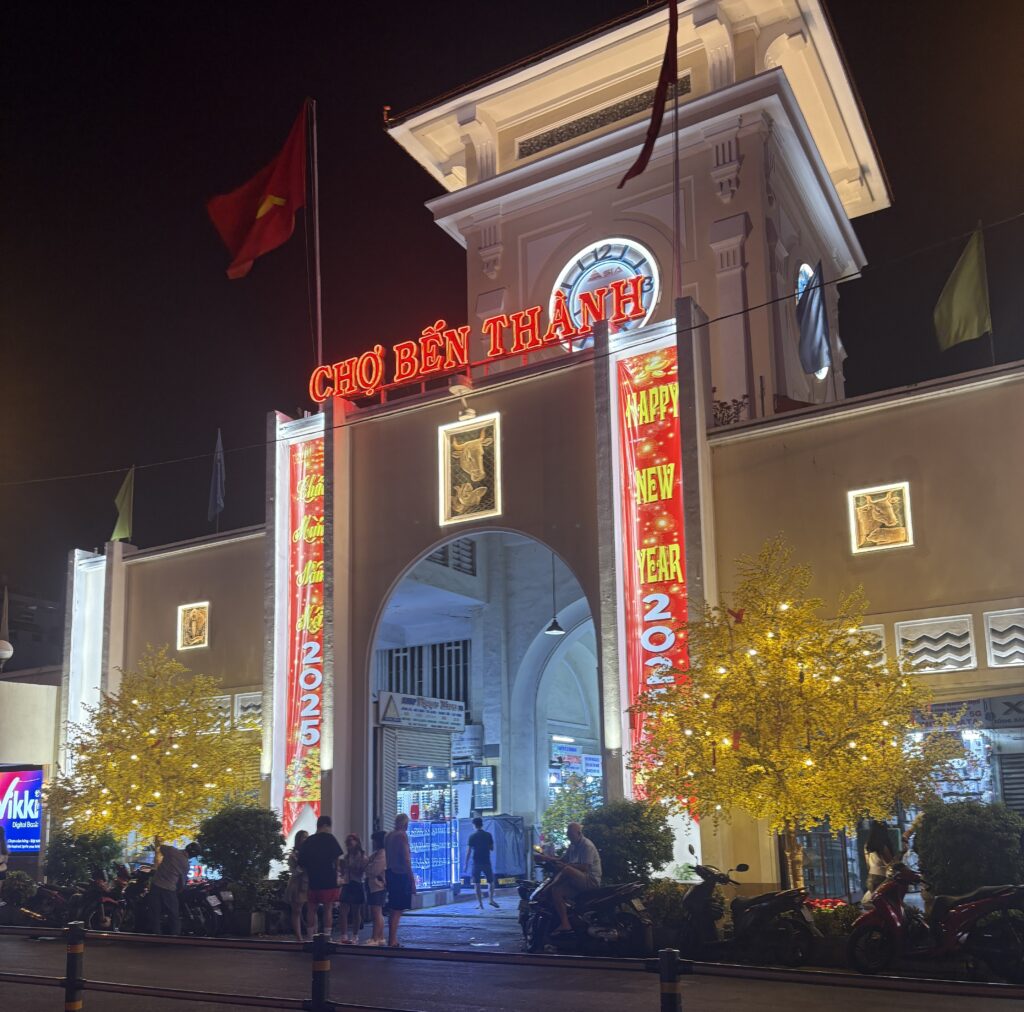
Ben Thanh Market in Ho Chi Minh City and the flower markets along Nguyen Hue Boulevard are worth visiting specifically during this period for the atmosphere alone.
If you enjoy shopping, this is an excellent time to be in Vietnam. If you find crowded retail environments stressful, factor the pre-Tet shopping intensity into your daily planning.
Cities Get Noticeably Busier in the Lead Up
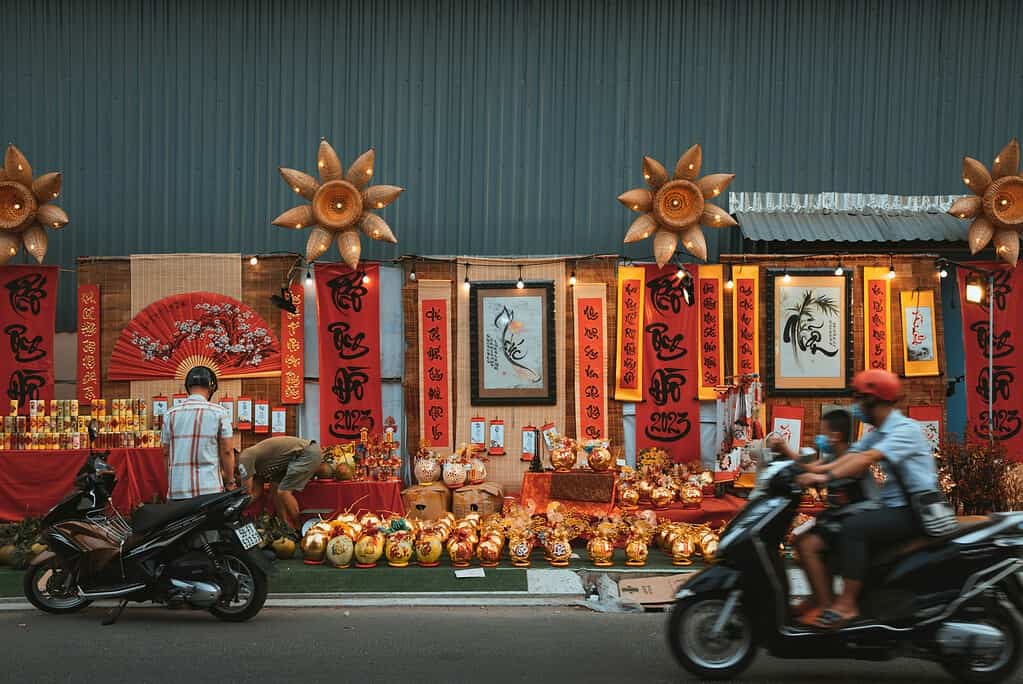
Beyond the shopping, the general urban energy of Vietnam’s major cities ramps up significantly in the weeks before Tet in ways that affect everyday movement.
Motorbike traffic in Ho Chi Minh City, already among the densest in the world, intensifies as people run errands, visit family, and prepare for the holiday.
Streets in central Hanoi fill with flower vendors and decoration stalls that reduce the already narrow sidewalk space. Restaurants and cafés that are normally easy to walk into require waits.
This is part of the experience rather than a problem to be solved. The pre-Tet bustle in a Vietnamese city is one of those travel moments that reminds you why experiencing a place during its most culturally significant period is worth the inconvenience.
Just account for it in your timing. Getting anywhere in a major Vietnamese city in the week before Tet takes longer than usual.
Most Businesses Close — But It’s More Complicated Than You Think

This is where Tet catches visitors most off guard, and the reality is more nuanced than “everything closes.”
The general pattern: many smaller independent businesses, local restaurants, street food stalls, and family-run operations close for Tet and remain closed for several days after, sometimes up to a week or more. The holiday is taken seriously across the country and staff return home to their families.
But it varies significantly by location and business type. I was in Saigon during Tet and while many places were closed, others reopened after a day or two. Malls in Ho Chi Minh City stayed open throughout.
Larger hotels and international-facing businesses continued operating. Some restaurants that Google Maps listed as open were closed when I arrived, and some listed as closed were actually open.
The north tends to observe Tet more strictly than the south. In Hanoi, closures are more widespread and last longer. In Ho Chi Minh City, the commercial pragmatism of the south means things come back faster.
Don’t rely on Google Maps for accurate hours during Tet. Confirm directly wherever possible and always have a backup option.
Prices Spike Across Accommodation and Flights
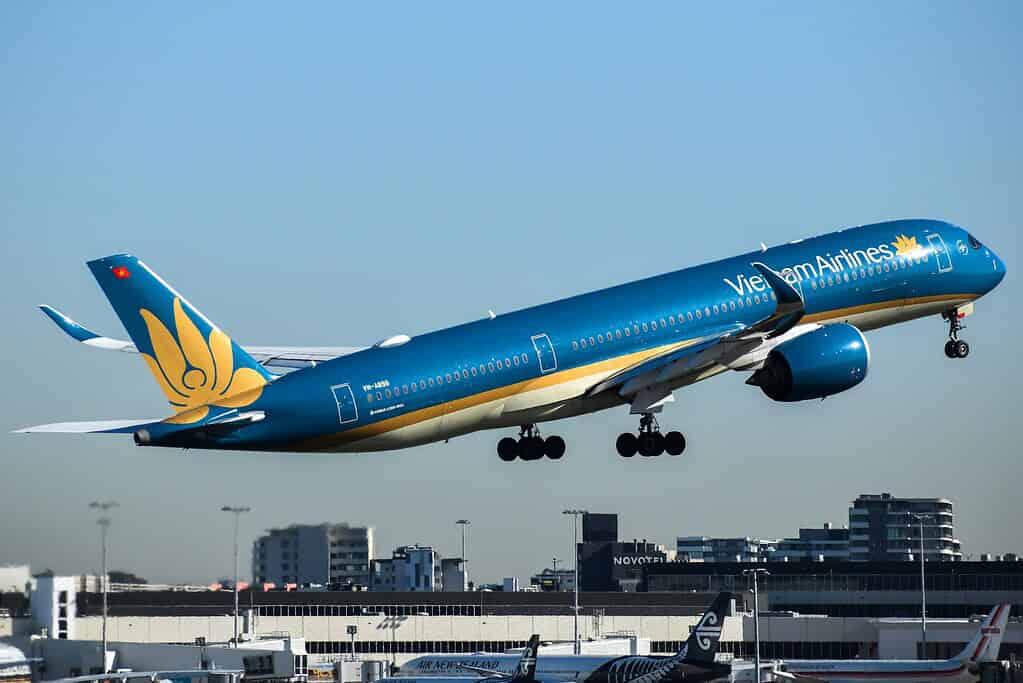
Tet is peak demand for Vietnamese domestic tourism, and pricing reflects that reality across every category of travel spend.
Hotel rates in major cities and popular destinations increase noticeably during the Tet window.
Domestic flight prices, already elevated due to demand, reach their annual high around the holiday. Even everyday costs, taxis, some restaurants that remain open, can carry informal holiday surcharges.
The travelers who manage this best are the ones who book accommodation early two to three months in advance for the Tet window, and treat the transport booking with the same urgency they’d apply to a peak Christmas travel period back home.
If budget is a primary concern and your dates are flexible, the weeks immediately following Tet offer a notable drop in both prices and crowds as the country returns to normal. That window is worth considering as an alternative to the holiday itself.
Tet Is Celebrated Differently Across Vietnam
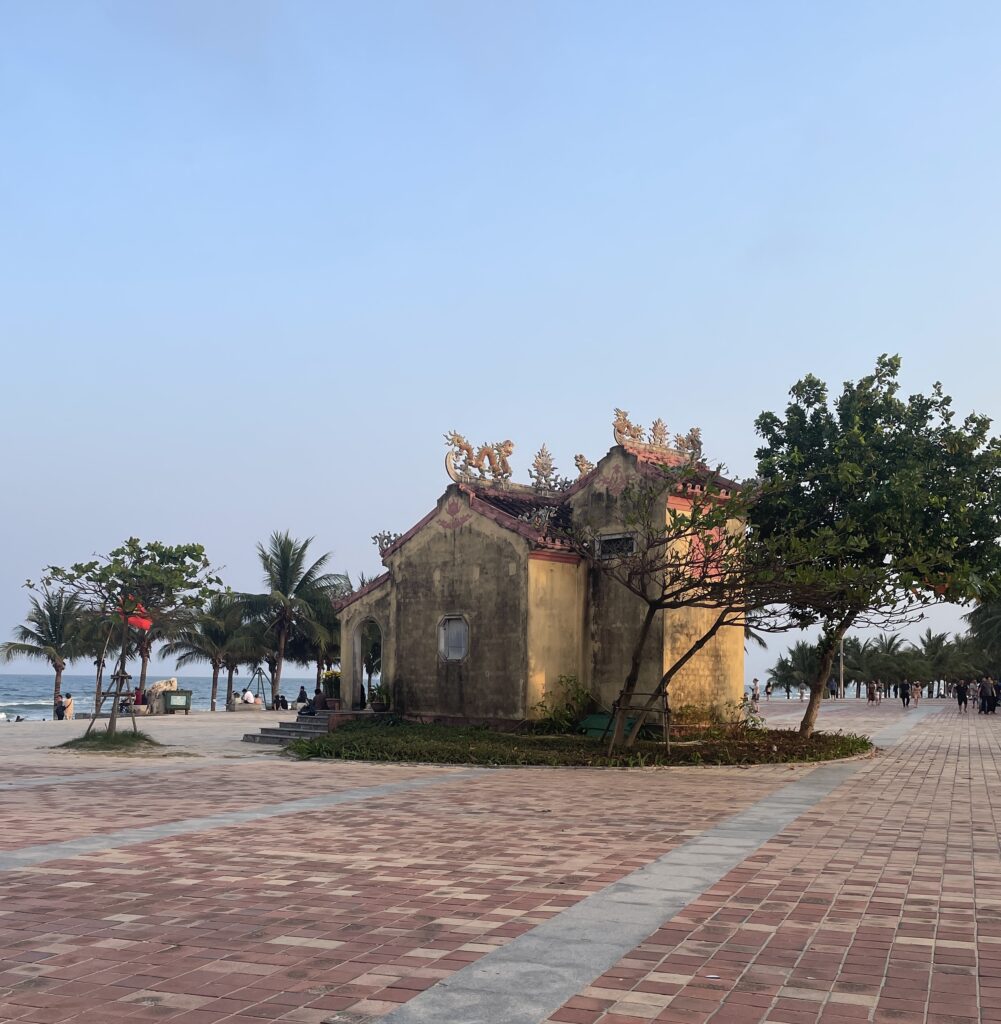
Vietnam is a long country with distinct regional cultures, and the way Tet is celebrated varies meaningfully between north, central, and south in ways that affect the visitor experience.
In the north, Hanoi and surrounding areas, Tet is observed more traditionally and more seriously. Family gatherings are formal, temple visits are central to the holiday, and the city quiets in a way that feels genuinely different from its normal intensity.
The cooler winter temperatures in Hanoi during Tet add a specific atmosphere that the south doesn’t have.
In the south, Ho Chi Minh City and the Mekong Delta, the celebration is warmer in both temperature and character. The commercial energy of Saigon means the city bounces back faster and the Tet atmosphere feels more festive and less solemn than the north.
Central Vietnam, Hue in particular, has its own distinct Tet traditions rooted in the city’s imperial history.
The royal ceremonies and specific regional foods of Hue during Tet make it one of the most culturally rich places to experience the holiday.
If experiencing Tet authentically is your goal, understanding these regional differences helps you choose where to be.
The Streets Empty Out on Tet Day Itself
This is one of the most striking and most unexpected aspects of Tet for visitors who’ve been in Vietnam during the pre-holiday rush, the silence that descends on Tet day itself is genuinely surreal.
Ho Chi Minh City, one of the most relentlessly busy cities in Southeast Asia, goes quiet on Tet morning in a way that feels almost eerie.
The motorbike traffic that defines the city’s daily existence essentially disappears. Streets that normally roar with constant movement are calm. The air is cleaner. The noise is gone.
It’s one of the most unusual urban experiences available anywhere in Southeast Asia, a city of millions that pauses simultaneously for a single morning. Walking through central Saigon on Tet morning is something that stays with you.
By afternoon, family celebrations and some street activity return. But that morning quiet is worth waking up early for if you happen to be there.
Street Food and Local Food Stalls Largely Disappear
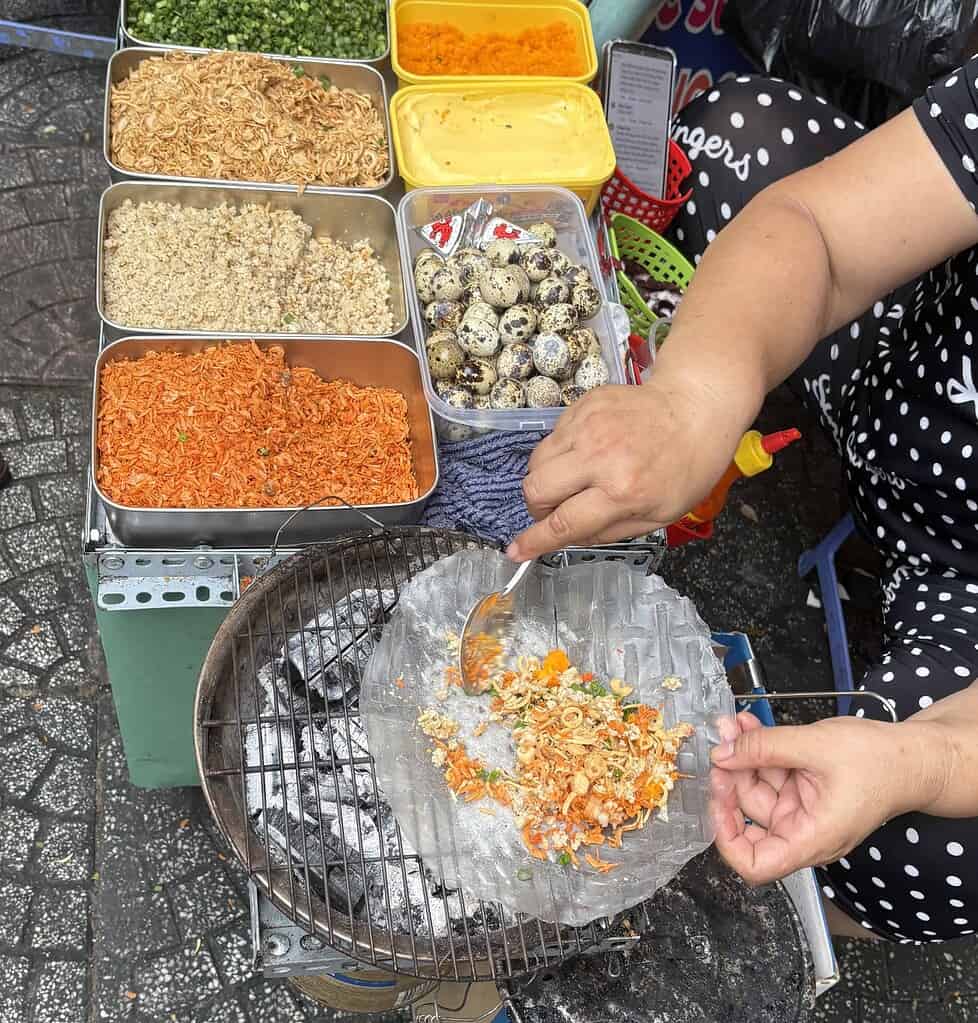
Vietnam’s street food culture is one of the great travel experiences in Asia, and Tet is when it largely shuts down.
The vendors who operate the plastic stool operations, the breakfast pho stalls, the banh mi carts, and the com tam counters are the same people who travel home for Tet.
Their stalls close for the holiday and in many cases remain closed for several days after as owners take extended time with their families.
This is felt most acutely in the first two or three days of Tet when the street food landscape that defines Vietnamese cities is largely absent.
Larger restaurants, hotel restaurants, and mall food courts fill the gap but they’re a different experience from the street food culture that most visitors specifically travel to Vietnam for.
If street food is a central part of why you’re visiting Vietnam, Tet timing is worth factoring seriously into your decision about when to go.
Fireworks at Midnight Are on Another Level
Vietnam’s Tet midnight fireworks are not the modest municipal display that the phrase “fireworks show” might suggest.
They are large-scale, extended, city-wide events that represent one of the most spectacular New Year celebrations in Southeast Asia.
Major cities, Ho Chi Minh City, Hanoi, Da Nang, coordinate fireworks displays at central locations that draw enormous crowds.
The display in Ho Chi Minh City along the Saigon River is particularly impressive. In Hanoi, Hoan Kiem Lake becomes the focal point for both the fireworks and the crowds that gather around it.
Position yourself near a main display location well before midnight. The crowds build significantly in the final hour and finding a good viewing spot late is difficult.
Rooftop bars with views of major display locations book out in advance, worth reserving if midnight fireworks are a priority.
Locals Travel Home and Tourist Areas Change Character
One of the less obvious but genuinely interesting aspects of Tet is what happens to Vietnam’s tourist areas when the domestic Vietnamese population leaves for the holiday.
A significant portion of the staff, vendors, and locals who give tourist destinations their authentic character return to their home provinces for Tet.
The result is a version of places like Hoi An, Da Nang, and Ho Chi Minh City that’s noticeably more international and less locally Vietnamese than at any other time of year.
For some visitors this is a non-issue. For travelers who specifically value the authentic local character of Vietnamese destinations, visiting during Tet means experiencing a version of those places that’s missing a significant part of what makes them worth visiting.
This is one of the reasons experienced Vietnam travelers often recommend against first visits during Tet, you’re not seeing the place at its most representative.
Tet Traditions Are Worth Experiencing at Least Once

Beyond the logistical challenges, Tet has cultural and ceremonial dimensions that are genuinely extraordinary to witness and, if you’re fortunate enough to be invited, to participate in.
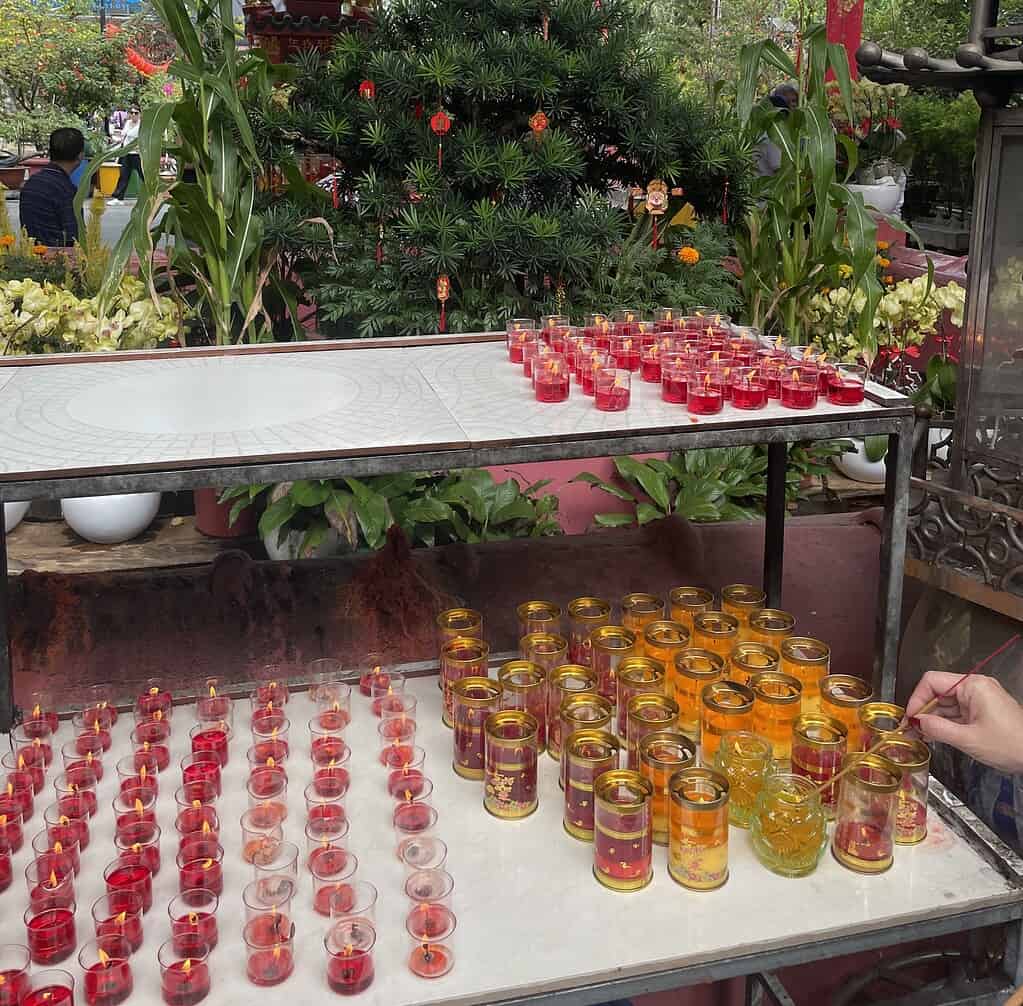
Temple visits on Tet morning are one of the most atmospheric experiences in Vietnam. Pagodas fill with families burning incense and making offerings for the new year.
The smell of incense, the sound of prayers, and the visual of thousands of people moving through temple grounds in their best clothing is something that doesn’t exist at any other time of year.
The lion and dragon dances that move through neighborhoods and businesses in the days after Tet are spectacular, loud, colorful, and deeply rooted in traditions that predate modern Vietnam.
Flower markets in the nights before Tet are among the most beautiful market experiences in Southeast Asia.
If you can experience Tet in Vietnam once with realistic expectations about the disruptions, do it. The cultural richness of the holiday is genuine and worth the inconvenience.
My Thoughts on Tet in Vietnam
I’ve experienced Tet in Vietnam multiple times and my honest take has evolved significantly from the first visit to the most recent.
The first time was in Saigon and it was genuinely magical. The flower markets, the ceremonies, the city coming alive in a way I’d never seen.
It reminded me of Christmas back home, that collective energy of a place preparing for something that deeply matters to the people who live there. Extraordinary to witness.
But visiting more recently, the novelty fades and the inconveniences become more apparent. Businesses closed, hours unreliable, Google Maps pointing me to places that were locked and dark.
If you are going to visit during Tet, my honest recommendation is to time your arrival toward the end of the holiday rather than the beginning. The first few days are the most disruptive.
By the tail end, things come back to life and you get the festive atmosphere without the full shutdown.
One more thing worth saying, and this matters. Never call Tet “Chinese New Year.” That’s a significant cultural mistake that won’t be received well.
Tet is distinctly and deeply Vietnamese, its own celebration with its own origins, traditions, foods, ceremonies, and meaning that are entirely separate from Chinese New Year.
The two holidays share some timing and broad similarities but they are not the same thing, and Vietnamese people are proud of that distinction.
Call it Tet. Call it Vietnamese New Year. “Lunar New Year” works as a general term. Chinese New Year does not. Enjoy Tet in Vietnam!
When does Tet happen in Vietnam?
Tet falls on the first day of the Vietnamese Lunar New Year, typically between late January and mid-February depending on the year.
The holiday period extends for at least a week with the days immediately before and after Tet being the most disruptive for travel.
Should first-time visitors avoid Tet?
Not necessarily. If experiencing Vietnamese culture at its most concentrated is your goal, Tet is worth visiting once.
If experiencing Vietnam’s street food, local life, and authentic city energy is the priority, timing your visit outside Tet gives you a more representative experience.
What stays open during Tet in Vietnam?
Major hotels, malls, and larger international-facing businesses typically remain open. Smaller restaurants, street food stalls, local shops, and family-run operations close for several days.
The south, particularly Ho Chi Minh City, reopens faster than the north. Don’t rely on Google Maps for accurate hours during Tet.
Is it safe to travel in Vietnam during Tet?
Tet doesn’t create safety concerns for travelers. The main practical challenges are transport congestion in the days before the holiday, business closures during it, and reduced street food availability.
Plan ahead, book transport early, and manage expectations around what the country looks like during its biggest holiday.
