
24 Thailand Budget Travel Tips to Know
Thailand has a reputation for being affordable, and it is. But affordable doesn’t mean your budget can’t get away from you fast if you’re not paying attention.
Street food is cheap. Accommodations can be cheap. Local transport is definitely cheap.
But then you start adding up airport taxis, tourist-priced restaurants, overpriced beach clubs, spontaneous boat trips, shopping hauls, and a hotel upgrade you justified. And suddenly you’re spending twice what you planned.
The difference between a genuinely budget Thailand trip and an expensive one comes down to knowing where the money actually goes and making deliberate choices about where to spend versus where to save.
I’ve been to Thailand more times than I can count, and every trip has taught me something new about how to stretch the budget without sacrificing the experience. These are the Thailand budget travel tips that actually make a difference.
Use Grab for Every Taxi Journey

Grab is Thailand’s most reliable and transparent ride-hailing app, and using it for every taxi journey is one of the most consistent ways to save money across your trip.
Regular taxis in Thailand, particularly in Bangkok and tourist areas, are notorious for refusing to use the meter, quoting inflated flat rates, or taking unnecessarily long routes. Without a reference point, it’s easy to overpay without realizing it.
Grab shows you the price before you confirm. The fare is locked in, the route is tracked, and you have a record of the journey.
It’s faster, more reliable, and almost always cheaper than negotiating with a street taxi.
Download Grab before you land and set up your payment method. It works in Bangkok, Chiang Mai, Phuket, and most major tourist areas across Thailand.
Using it consistently from day one prevents the slow drain of overpaid taxi rides that adds up significantly across a full trip. Other options to look for affordable rides is LineMan and InDrive!
Eat Street Food and Local Markets — Every Day

Eating at street stalls and local markets isn’t just the budget option in Thailand. It’s the best option, full stop.
Pad thai from a street cart costs 50-80 THB ($1.50-2.50). A plate of khao man gai (chicken rice) at a local shophouse is 60-80 THB.
Fresh mango sticky rice from a market vendor is 60-100 THB+. Som tam from a market stall is 50-70 THB.
All of it is fresher, more authentic, and genuinely better than the tourist-facing restaurant version that costs four times as much.
The mistake most visitors make is eating at restaurants with English menus in tourist areas when the best and cheapest food is at the stalls and markets a few streets away.
Find where locals eat. Follow the lunch crowds. Eat at busy stalls with high turnover, the food is fresher and the price is lower.
Budget travelers who eat street food and market meals for most of their trip consistently spend under $15-20 a day on food, including snacks and drinks.
7-Eleven Is Your Best Friend
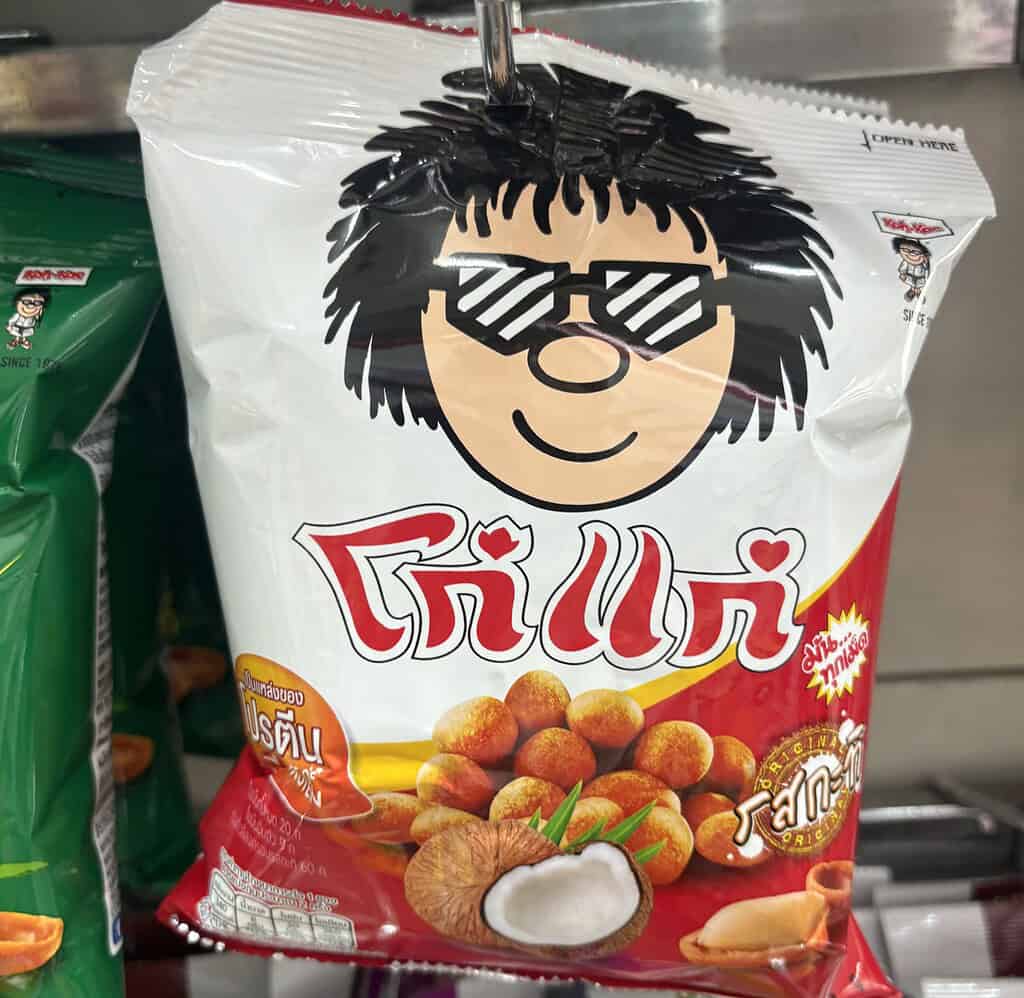
Thai 7-Eleven is not the same as 7-Eleven back home. Not even close. There’s a 7-Eleven on almost every block in Bangkok, Chiang Mai, Phuket, and every tourist area in the country.
They sell cold drinks, iced coffee, sandwiches, fresh-made meals, snacks, toiletries, SIM cards, phone chargers, and about a thousand other things you’ll need at some point.
For budget travelers, 7-Eleven solves multiple daily problems cheaply. A cold water bottle is 7-10 THB. An iced coffee is 25-40 THB. A ready-made rice or noodle meal is 35-55 THB. A sandwich is 25-45 THB.
You will stop in multiple times a day without planning to. My mom visited Thailand for the first time and joked that 7-Eleven should sponsor the trip.
By day two she had a favorite snack and a daily routine. That’s just how Thailand works. Embrace it, it keeps costs down and the snacks are genuinely good.
Book Accommodation During Low Season for Maximum Savings
Thailand’s low season, May through October, brings significantly lower accommodation prices across the board, sometimes 40-60% less than high season rates for the same properties.
Hotels and guesthouses that charge $80-100 per night in December and January drop to $30-50 during low season.
Beachfront bungalows that are fully booked in February are available at half price in June.
Yes, low season means rain. But rain in Thailand is usually short afternoon downpours rather than all-day events. Mornings are often clear, beaches are emptier, and the landscape is greener.
For budget travelers who can work around variable weather, low season accommodation savings are substantial.
Book Accommodation Early for High Season
If high season is your only option, December through April, book accommodation at least two to three months in advance.
Last-minute bookings during peak season result in either paying premium prices or settling for whatever’s left.
The best value guesthouses and mid-range hotels in popular destinations like Chiang Mai, Krabi, and Koh Lanta fill up fast once the dry season begins.
Booking early locks in better rates, gives you more options, and means you’re not scrambling on arrival. High season in Thailand is genuinely busy. Don’t leave accommodation to chance.
Use Domestic Budget Airlines for Long Distances

For longer distances, Bangkok to Phuket, Bangkok to Chiang Mai, or any journey over 700 kilometers, domestic budget airlines are often cheaper and always faster than the bus or train when booked two to three months in advance.
AirAsia, Nok Air, and Thai Lion Air operate extensive domestic networks with fares that frequently come in under $30-40 USD on popular routes when booked early. Bangkok to Phuket by bus takes 11-14 hours and costs roughly $15-20.
Bangkok to Phuket by budget airline takes one hour and costs $25-40 booked in advance, the time saved makes the marginal extra cost worth it.
Book domestic flights two to three months ahead for the best prices, especially for travel during high season when demand is highest and fares climb fast.
Negotiate Tuk-Tuk Prices Before You Get In
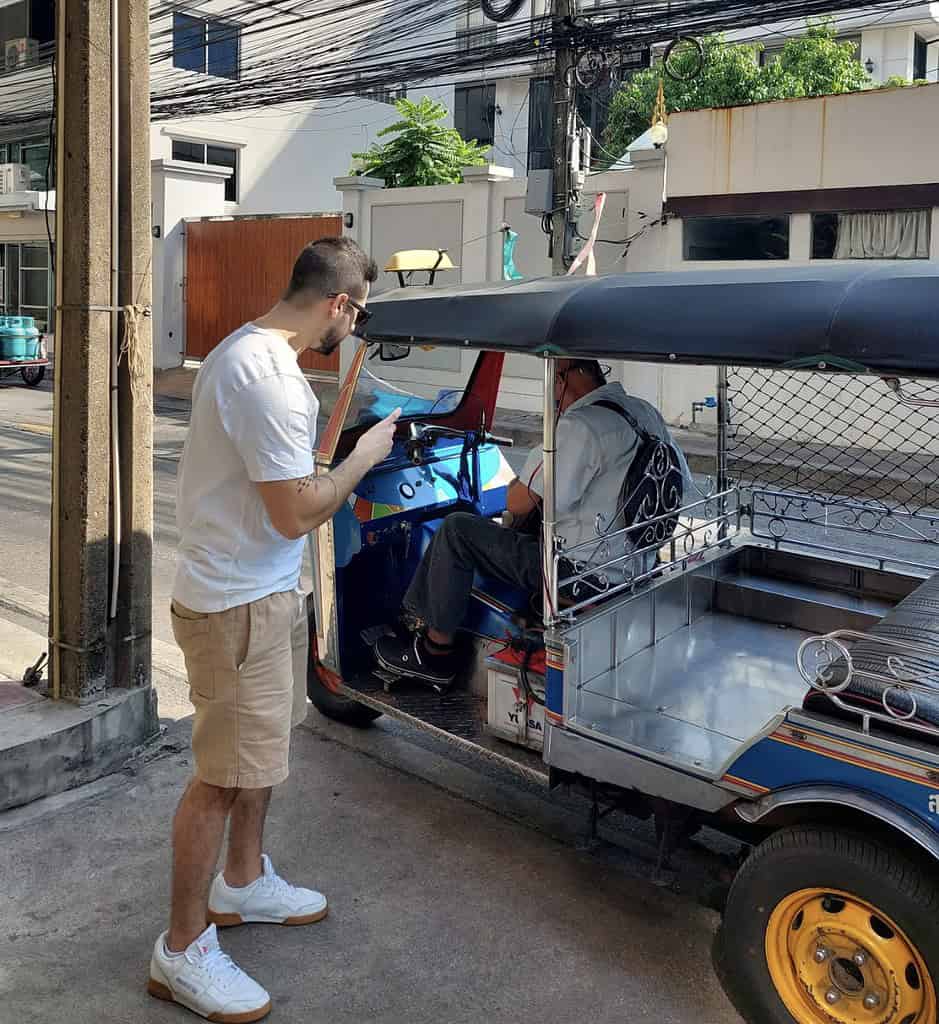
Tuk-tuks are iconic, fun, and part of the Thailand experience. They’re also a consistent source of tourist overcharging if you don’t negotiate before getting in.
There is no meter on a tuk-tuk. The driver quotes whatever they think you’ll pay. In tourist areas, the opening price is often two to three times what a fair fare would be.
The only leverage you have is the negotiation before you commit, once you’re in, the price is whatever they say.
Always ask the price before sitting down. Use Grab as a reference point for what a similar journey should cost.
Offer about 60-70% of the opening quote and negotiate from there. Be prepared to walk away, that’s usually when the price drops.
Tuk-tuks are worth taking for the experience. Use Grab for practicality, tuk-tuks for fun, and always negotiate the fare first.
Rent a Scooter Outside of Cities
In beach towns, island destinations, and smaller towns where traffic is manageable, renting a scooter dramatically reduces your daily transport costs compared to taxis and tuk-tuks.
A scooter rental in Koh Lanta, Krabi, Pai, or similar destinations costs 200-300 THB ($6-9) per day.
The freedom to explore at your own pace, stopping at beaches, viewpoints, and local restaurants without negotiating a fare every time, is genuinely transformative for both the experience and the budget.
Always wear a helmet regardless of what other tourists around you are doing. Check the bike thoroughly before you ride and photograph any existing damage. Never leave your passport as a deposit, offer cash or a copy of your ID instead.
For beach destinations and smaller towns, a scooter is the single best value transport decision you can make. For Bangkok and Chiang Mai city centers, stick to Grab.
Visit Temples for Free or Near Free

Thailand has over 40,000 Buddhist temples, and the vast majority are free to enter or charge minimal entry fees of 20-50 THB.
The major tourist temples, Wat Pho in Bangkok (200 THB), the Grand Palace (500 THB), Doi Suthep in Chiang Mai (30 THB), are worth the entry fees and represent some of the most extraordinary architecture in Southeast Asia.
But beyond the headline attractions, hundreds of beautiful, active, and historically significant temples across the country welcome visitors at no cost.
In Chiang Mai’s Old City alone, dozens of temples are within walking distance and completely free.
In Bangkok, wandering into a neighborhood wat that locals use for daily prayer is a more authentic cultural experience than many of the ticketed tourist attractions, and it costs nothing.
Budget the entry fees for the headline temples. Everything else in Thailand’s temple culture is essentially free.
Avoid Tourist Area Restaurants with Photo Menus
The photo menu outside a restaurant in a tourist area is a reliable indicator of inflated pricing.
These restaurants are designed to extract maximum spend from visitors who don’t know what things should cost.
A pad thai at a tourist restaurant in Patong, Khao San Road, or Chiang Mai’s Night Bazaar area costs 180-250 THB.
The same dish at a street stall two blocks away is 60-80 THB, and the street stall version is usually better because the cook makes it all day every day.
Walk past the restaurants with laminated photo menus and English-speaking touts. Find where the locals eat.
Follow the lunchtime crowds. The food will be better and the price will be a fraction of the tourist equivalent.
Get Familiar With Scams in Thailand

Scams in Thailand won’t just ruin your mood, they’ll ruin your budget. And the two often go hand in hand.
The most common ones are also the most expensive: tuk-tuk drivers taking you to commission-based shops instead of your destination, taxi drivers refusing the meter and quoting inflated flat rates, fake tour operators selling substandard trips, and gem scams that convince tourists to buy “investment” stones worth a fraction of what they paid.
None of these are difficult to avoid once you know they exist. Use Grab instead of street taxis. Agree on tuk-tuk prices before getting in.
Book tours through your guesthouse or reputable platforms like Klook and Viator. And if a friendly stranger approaches you with an unsolicited offer that sounds too good, a cheap tour, a special deal, a closed attraction that they happen to know an alternative for—walk away.
A single scam in Thailand can cost you anywhere from a few hundred to several thousand baht depending on how far it goes. Awareness is free.
Staying alert costs nothing. Both protect your budget more reliably than almost any other tip on this list.
Book Tours Through Guesthouses and Local Operators
Tours booked through hotel concierges in tourist areas often carry significant markups. The same tour, island hopping, elephant sanctuary, cooking class, is frequently available at lower prices through your guesthouse, a local tour agency on a side street, or platforms like Klook and Viator where pricing is transparent and competitive.
Always get two or three quotes before booking any activity. The price difference between the first quote you receive and what you find with 20 minutes of comparison shopping is often 200-500 THB per person. Across a week of activities that adds up meaningfully.
For elephant sanctuaries specifically, research what the program actually involves before booking. Ethical operators that prioritize elephant welfare exist at various price points, don’t assume the cheapest option is automatically fine.
Travel Light to Avoid Baggage Fees on Budget Airlines
Budget airlines in Thailand, AirAsia, Nok Air, Thai Lion Air, price domestic flights on a base fare that includes cabin baggage only.
Checked luggage is an add-on that can cost as much as the base ticket if added at the airport rather than during booking.
If you’re doing multiple domestic flights across Thailand, traveling light enough to avoid checked baggage saves a significant amount.
A 7-10 kg cabin bag is sufficient for most Thailand trips given the heat and casual dress code.
If you do need checked luggage, always add it during the online booking process rather than at the airport. Airport baggage add-ons are priced to punish last-minute decisions.
Stay in Guesthouses Over Hotels
Thailand has one of the best guesthouse networks in Southeast Asia, and staying in locally-run guesthouses rather than international hotel brands saves significant money while providing a more authentic experience.
A clean, comfortable, air-conditioned private room in a Thai guesthouse costs 300-600 THB ($9-18) per night in most destinations outside peak season.
Hostels in major destinations like Bangkok, Chiang Mai, and Phuket are excellent and well-reviewed. Hostel dorm beds run 200-400 THB ($6-12) per night in most cities.
For the price of a budget hotel room in most Western countries, you can stay in a genuinely comfortable mid-range guesthouse in Thailand with breakfast included. The value gap between Thailand and home is real and dramatic.
Use the BTS Skytrain and MRT in Bangkok

Bangkok’s traffic is legendary, and not in a good way. A taxi journey across the city during rush hour that should take 20 minutes can take 90 minutes and cost 200-400 THB.
The BTS Skytrain and MRT subway system cover most of Bangkok’s major tourist areas and cost 16-44 THB per journey depending on distance. They’re fast, air-conditioned, and completely unaffected by street traffic.
Plan your Bangkok accommodation near a BTS or MRT station. Get a Rabbit Card (BTS) or stored-value MRT card at any station to avoid buying individual tickets every journey.
Using the rail systems consistently in Bangkok is one of the most effective single cost reductions available in the city.
Bring Sunscreen From Home
Sunscreen in Thailand is expensive by local standards, particularly any Western brand you’d recognize.
A tube of SPF 50 at a Thai pharmacy runs 300-500 THB ($9-15) and quality varies significantly.
Two weeks of Thailand in direct sun and on beaches requires more sunscreen than most travelers pack.
Bringing a sufficient supply from home is a genuine budget tip that most Thailand guides overlook entirely.
Thai pharmacies are excellent and affordable for most medications and personal care items. Sunscreen is the exception, import it from home and save yourself the pharmacy price shock.
Take Songthaews in Chiang Mai

Songthaews, the red shared trucks that operate as informal shared taxis throughout Chiang Mai, are the cheapest way to get around the city and a genuinely local experience.
A songthaew ride anywhere within central Chiang Mai costs 30-50 THB per person. Flag one down, tell the driver where you’re going, and if it’s on their route they’ll nod and you hop in. Locals use them daily.
For routes that don’t work with songthaews, Grab is the next best option. Regular taxis in Chiang Mai often refuse to use meters and quote flat tourist rates, avoid them entirely.
Skip the Tourist Bars and Find Local Spots
Every tourist area in Thailand has two parallel bar scenes: the tourist-priced venues on the main strip and the local spots a few streets in any direction where Thais actually drink.
Beer at a local bar runs 60-80 THB. Beer at a tourist bar on Walking Street or Bangla Road runs 150-200 THB.
The local bar has no light-up signs, no English touts, and usually significantly better atmosphere.
Ask your guesthouse staff where locals go to drink. That single question will save you money every evening of your trip.
Don’t Exchange Money at the Airport
Airport currency exchange counters in Thailand offer some of the worst exchange rates you’ll find anywhere in the country.
Exchanging a significant amount at the airport means losing a meaningful percentage before you’ve even left the terminal.
Exchange just enough at the airport for your first taxi and immediate needs, 500-1,000 THB is sufficient.
Then withdraw cash from ATMs once you’re in the city where rates are significantly better.
SuperRich exchange booths in Bangkok offer excellent rates for cash exchange and are significantly better than airport counters or hotel exchanges. Look for them in major shopping areas and tourist districts across the city.
Withdraw Larger Amounts Less Often to Save on ATM Fees
Thai ATMs charge a flat 220 THB ($6-7) fee per withdrawal for foreign cards, regardless of how much you withdraw. This fee is the same whether you take out 1,000 THB or 10,000 THB.
Most travelers instinctively withdraw small amounts frequently. That habit costs significantly more in fees across a two-week trip than withdrawing larger amounts less often.
If you know you’ll need 5,000 THB over the next few days, withdraw it in one transaction rather than five separate ones.
A Wise card loaded with Thai baht before you travel offers close to mid-market exchange rates and minimizes the fee impact further.
It’s one of the most consistently recommended money tools for Thailand travel.
Visit Night Markets for Entertainment and Food

Thailand’s night markets are simultaneously the best food value and the best free entertainment in the country.
Chiang Mai’s Sunday and Saturday Walking Street markets, Bangkok’s Rot Fai and Chatuchak markets, and the various night markets in Phuket, Krabi, and every other destination are free to walk through, excellent for cheap food, and genuinely fascinating as cultural experiences.
A full evening at a Thai night market, eating your way through various stalls, watching local performers, browsing handmade goods, costs whatever you choose to spend on food and is completely free beyond that. Budget 200-300 THB for food and you’ll eat exceptionally well.
Get a Local SIM Card or Airalo eSIM Before You Land
Staying connected in Thailand is both easy and affordable, but sort it before you arrive rather than paying inflated airport prices for a physical SIM.
Airalo is one of the best options for an eSIM, set it up entirely before you leave home through the Airalo app, purchase a Thailand data plan, and arrive with data already active.
No airport queues, no language barriers, no fumbling with a SIM tray after a long flight. If your phone supports eSIM, which most modern smartphones do, this is the most convenient option by far.
Physical SIM cards are available at both Suvarnabhumi and Don Mueang airports from multiple vendors if you prefer.
DTAC, AIS, and True Move all offer tourist SIM packages. Prices are slightly higher than buying in the city but reasonable for the convenience on arrival.
Data is essential in Thailand for Grab, Google Maps, translation, and checking AQI air levels during Northern Thailand visits. Don’t arrive without a plan.
Take the Airport Rail Link Instead of a Taxi From Suvarnabhumi
One of the most consistent budget wins on any Bangkok trip happens before you even leave the airport.
The Suvarnabhumi Airport Rail Link connects directly to Phaya Thai station in central Bangkok in approximately 30 minutes and costs 15-45 THB depending on your stop.
A metered taxi from Suvarnabhumi into central Bangkok costs 300-500 THB plus expressway tolls. A Grab from the airport runs similar or higher depending on traffic and time of day.
The Rail Link is faster than a taxi during peak hours, costs a fraction of the price, and drops you directly into the BTS Skytrain network for onward connections across the city.
It’s one of the easiest and most impactful budget decisions you can make on arrival day.
From Don Mueang Airport, Bangkok’s second airport used by most budget airlines, the A1 and A2 express buses connect to the city for 30 THB, or take the shuttle bus to Don Mueang train station for local trains into the city.
Haggle at Markets But Know When to Stop
Bargaining is expected at night markets, weekend markets, and souvenir stalls across Thailand. The first price quoted is rarely the final price, and vendors expect negotiation.
Start by offering around 50-60% of the asking price and work toward a middle ground. Smile throughout, haggling in Thailand is friendly, not adversarial.
Walking away politely is the most effective negotiating tool, and vendors will often call you back with a better price.
That said, know when to stop. Haggling over 20 THB on a $2 item wastes everyone’s time and goodwill for an amount that genuinely doesn’t matter to you.
Save your negotiating energy for larger purchases, clothing, artwork, longer tuk-tuk rides, where the savings are meaningful.
Fixed-price shops, supermarkets, and 7-Eleven don’t negotiate. Save haggling for markets and street vendors where it’s genuinely expected.

Final Thoughts on Thailand Budget Travel Tips
Thailand is genuinely one of the best value travel destinations in the world, but only if you make intentional choices about how you spend.
The country makes it easy to overspend because everything feels affordable in the moment.
A slightly nicer hotel, a boat trip you didn’t plan for, a few tourist restaurant meals, drinks at a beach club, none of it feels expensive individually. The bill at the end of two weeks tells a different story.
Use Grab. Eat street food, a lot of it. Stay in guesthouses. Drink your Chang from 7-Eleven at sunset. Take the Rail Link from the airport.
These aren’t compromises, they’re the actual Thailand experience, and they’re cheaper than the tourist version in every case.
Travel smart, spend intentionally, and Thailand will reward you with an experience that’s worth every baht you spend on it.

How much money do you need per day in Thailand on a budget?
Budget travelers can comfortably get by on $30-50 USD per day including accommodation, street food, and local transport.
Mid-range travelers typically spend $60-100 per day. Both figures exclude international flights.
Is Thailand cheaper than Bali or Vietnam?
Vietnam is generally 20-40% cheaper than Thailand. Bali sits at a similar overall price point.
Thailand offers better value than most Southeast Asian beach destinations, Koh Samui and Phuket are the exceptions where prices have risen significantly in recent years.
What is the cheapest time of year to visit Thailand?
Low season from May through October offers 40-60% lower accommodation prices than peak season.
November is the sweet spot for value and weather combined, dry season returns but December pricing hasn’t kicked in yet.
Is street food in Thailand safe to eat?
Yes, stick to busy stalls with high turnover where food is cooked fresh in front of you.
Avoid anything sitting out in the heat for extended periods. Pack basic stomach medication, most travelers eat street food throughout their entire trip without issues.
