
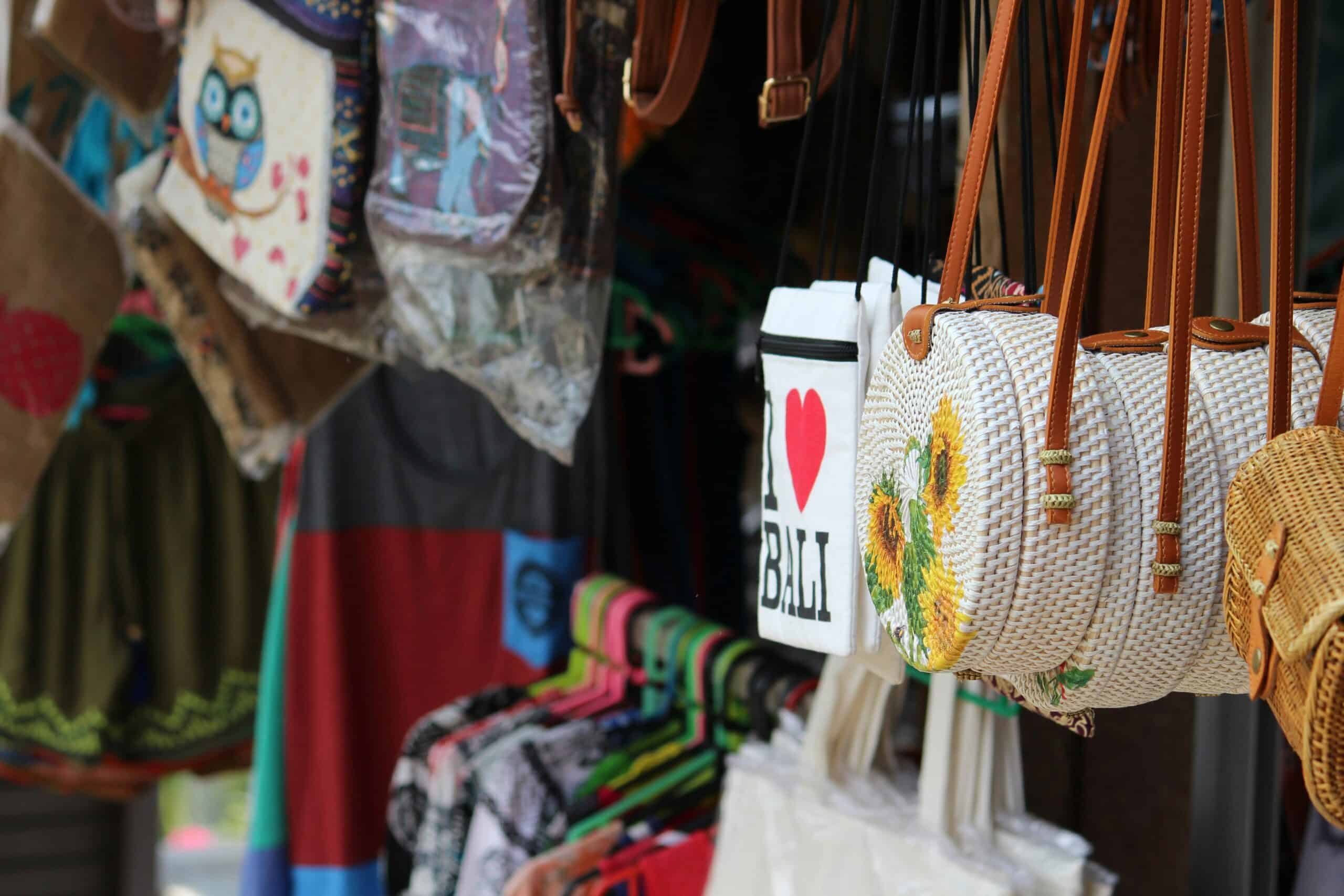
19 Best Bali Souvenirs & Things to Buy
One of the best parts of traveling is bringing a piece of the country home with you, and in Bali, the shopping is just as memorable as the temples, rice terraces, and beaches.
From artisan villages outside Ubud to bustling local markets, Bali is full of handmade treasures you won’t find anywhere else.
Whether you’re after a meaningful gift, a cultural keepsake, or something delicious to bring back, there’s no shortage of options here.
I’ve put together this list of the best Bali souvenirs to buy, covering everything from classic items like wood carvings and silver jewelry to more unexpected finds like local honey and handwoven songket.
Some are practical, some are decorative, and some are simply delicious, but all of them capture a piece of Balinese culture.
If you’re building out your Bali itinerary, this guide will help you shop smart while supporting local artisans along the way.
Balinese Wood Carvings
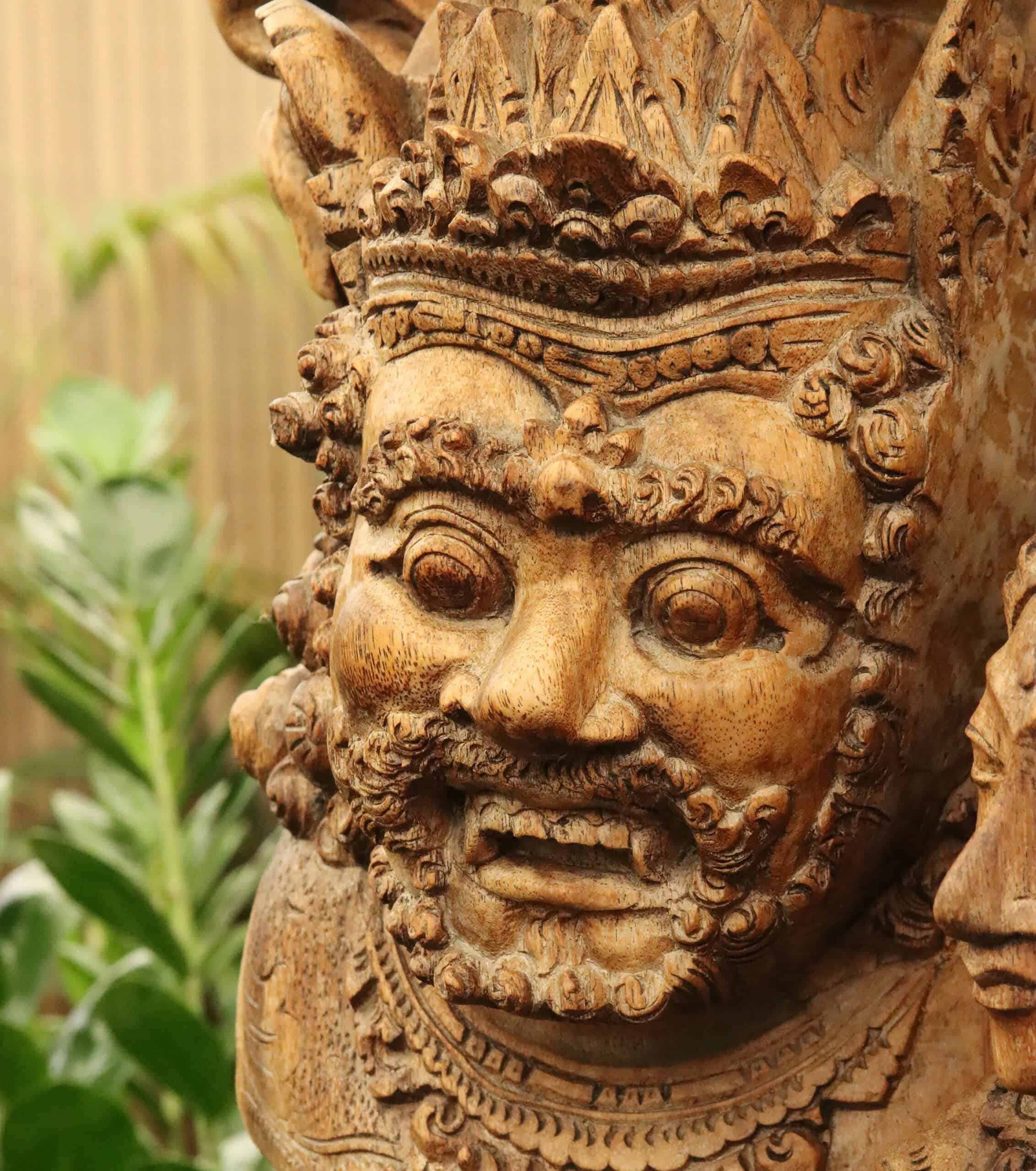
Bali’s wood carving tradition runs deep, and nowhere is that more visible than in the village of Mas, just outside Ubud, where entire streets are lined with workshops carving everything from small figurines to large decorative panels.
The craftsmanship ranges from traditional Hindu deities and Garuda figures to more contemporary abstract pieces, all shaped from local hardwoods like suar and hibiscus wood.
Prices vary enormously depending on size and detail, so a small carved elephant or turtle makes an affordable and packable souvenir, while larger panels are better suited to shipping home.
Visiting Mas directly lets you watch the carving process and buy straight from the source rather than a marked-up shop in a tourist area.
Batik Textiles
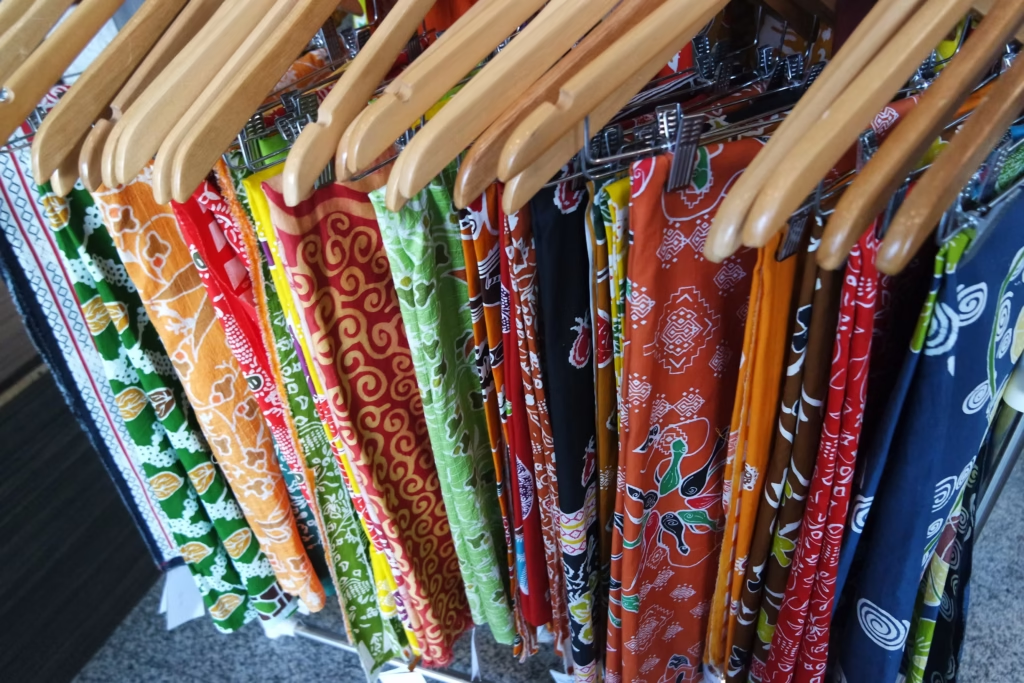
Batik is one of Indonesia’s most recognizable textile traditions, and while it’s more closely associated with Java, Bali has its own vibrant take on the wax-resist dyeing technique, often incorporating brighter colors and nature-inspired motifs.
You’ll find batik sarongs, scarves, shirts, and larger fabric panels throughout Bali’s markets, ranging from mass-produced stamped versions to genuinely hand-drawn pieces that take days to complete.
The hand-drawn versions cost considerably more but hold their color and pattern quality far longer.
Ubud’s art market and several boutique shops around Seminyak carry a solid range of both styles, so it’s worth comparing before you commit to a price.
Silver Jewelry from Celuk
Celuk village, a short drive from Ubud, has been Bali’s silverworking center for generations, and it remains one of the best places in the world to buy handcrafted silver jewelry directly from the workshops that make it.
Rings, necklaces, bangles, and earrings here range from simple, elegant designs to elaborate filigree work that takes real skill to produce.
Many workshops let you watch silversmiths at work, which adds context to whatever piece you end up choosing.
Prices are generally set by weight and craftsmanship, and buying directly in Celuk tends to be noticeably cheaper than picking up similar pieces in Seminyak or Kuta.
Songket Woven Fabric
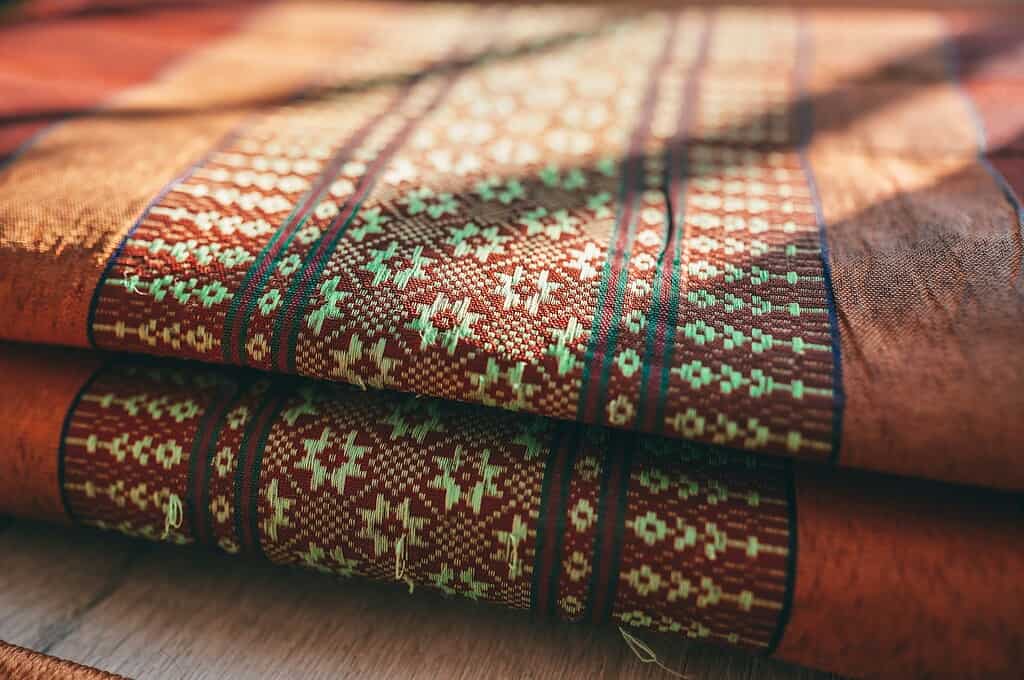
Songket is a luxurious handwoven fabric incorporating gold or silver metallic threads into the weave, traditionally reserved for ceremonial clothing and special occasions across Bali.
The weaving process is slow and labor intensive, often taking weeks to complete a single piece, which explains why authentic songket carries a higher price tag than standard batik or sarongs.
The patterns are intricate and often symbolic, tied to specific villages or ceremonial purposes.
If you want a textile souvenir that’s genuinely rare and distinctly Balinese rather than something you’d find across Southeast Asia generally, songket is the one to seek out.
Balinese Masks
Barong and topeng masks are central to Balinese dance and storytelling, representing characters from religious epics and local mythology, and they make some of the most visually striking souvenirs available on the island.
Barong masks, depicting the lion-like protective spirit, are elaborately decorated with gilded details, mirrors, and sometimes real hair.
Topeng masks used in traditional dance dramas are more varied in character and expression, ranging from noble figures to comic ones.
These are decorative pieces rather than something you’d wear, and they make a genuine statement piece hung on a wall back home. Ubud has several specialty shops and craft centers where you can see mask carving demonstrated in person.
Rattan Bags & Baskets
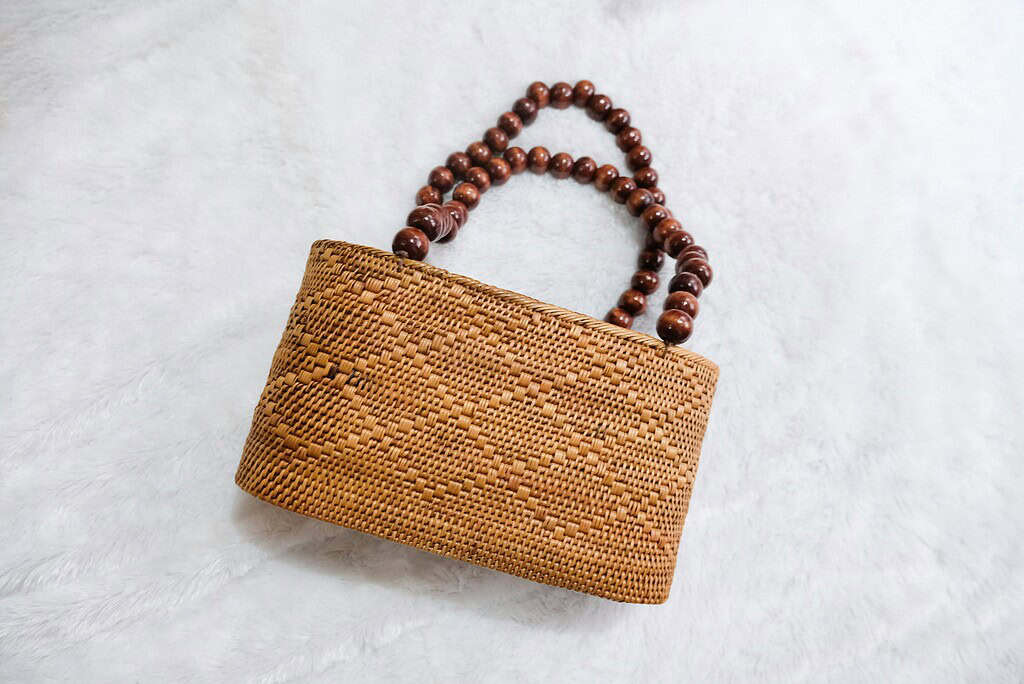
Bali’s rattan bags have become genuinely popular well beyond Southeast Asia, and buying them here at source prices rather than a Western boutique markup is one of the smartest souvenir moves available.
Woven from natural rattan and often finished with leather straps or tassel details, these bags range from small clutch styles to larger tote and beach bag formats.
Quality varies significantly between vendors, so check the weave tightness and stitching before buying, since the cheaper versions can fray quickly.
Markets throughout Ubud and Canggu carry extensive rattan selections, and prices drop noticeably once you’re willing to negotiate.
Sarongs
The sarong is one of the most practical and versatile things you can buy in Bali, doubling as beachwear, a temple covering, and a lightweight throw for cooler evenings.
You’ll find them in every market on the island, ranging from simple solid colors to elaborate batik and ikat prints.
Quality cotton versions hold up far better over time than the thinner synthetic blends aimed purely at quick tourist sales, so it’s worth feeling the fabric before buying.
Since many temples require visitors to cover their legs, a sarong is genuinely useful during your trip rather than just something you pack away for later.
Kopi Luwak & Balinese Coffee
Bali’s coffee scene doesn’t get the same attention as Vietnam or Ethiopia’s, but the highland regions around Kintamani produce genuinely excellent beans, and Kopi Luwak, the famous civet coffee, originates from this part of Indonesia.
Kopi Luwak carries a premium price due to its unusual processing method, and it’s worth knowing that ethical sourcing varies significantly between plantations, so ask about the civets’ living conditions before buying from any specific producer.
Standard Balinese arabica and robusta beans, meanwhile, are excellent value and make a far more practical everyday souvenir.
Coffee plantation tours around Ubud typically include tastings and a chance to buy beans directly, which is generally a better experience than a market stall purchase.
Balinese Spa & Massage Products
Bali’s spa culture is genuinely world class, and bringing some of it home in the form of massage oils, body scrubs, and traditional Balinese boreh paste is one of the more universally appreciated souvenirs on this list.
Coconut oil, frangipani, and lemongrass are common bases across the island’s spa product lines, and many smaller producers use traditional Balinese herbal recipes passed down through generations.
These products are lightweight, pack easily, and appeal to almost anyone regardless of their travel interests.
Ubud in particular has a concentrated cluster of spa boutiques selling locally made products at fair prices, well worth browsing after a treatment of your own.
Balinese Paintings
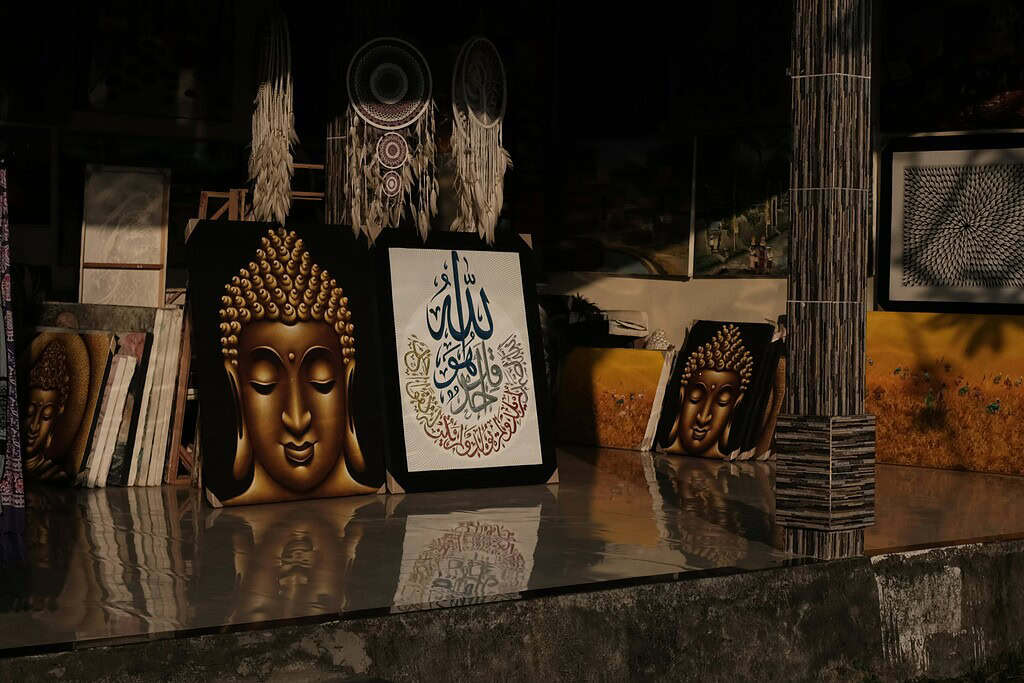
Ubud has been Bali’s artistic heart for decades, and its gallery and market scene reflects a genuinely diverse painting tradition, from classical Kamasan style religious scenes to more modern, abstract interpretations of island life.
Prices range enormously depending on the artist and size, with market stalls offering affordable smaller works and dedicated galleries carrying higher-end pieces from established painters.
Look closely at brushwork and detail before buying, since mass-produced prints are sometimes sold alongside genuine originals at similar price points.
The Ubud art market is the easiest starting point, though a walk through the surrounding gallery streets often turns up more distinctive work.
Bali Spices & Seasoning Blends
Balinese cooking relies heavily on base genep, a rich spice paste built from turmeric, galangal, shallots, and chili that underpins much of the island’s cuisine, and bringing some home is a genuinely practical souvenir for anyone who cooks.
Markets sell pre-made spice pastes alongside individual dried spices like nutmeg, cloves, and cinnamon, much of which is grown locally in Bali’s highland regions.
Vacuum-sealed or well-packaged spice blends travel far better than loose ingredients, so check packaging quality before buying.
Several cooking schools around Ubud sell their own house spice blends, giving you a way to recreate dishes you tried during a class once you’re home.
Balinese Dried Fruits
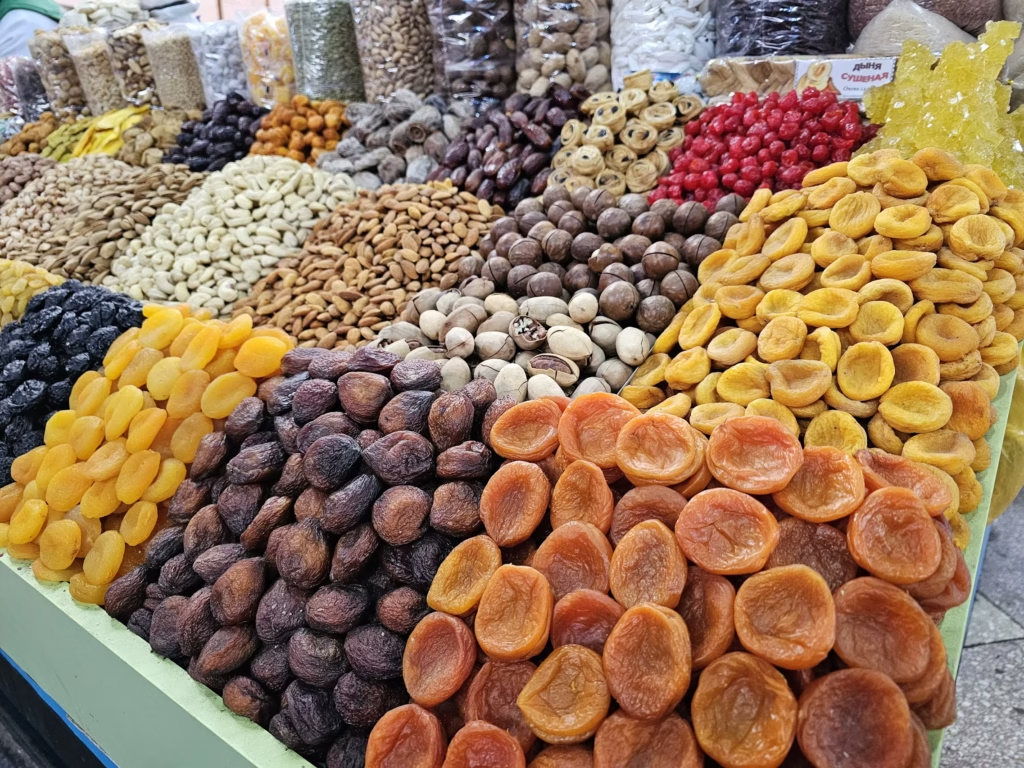
Bali’s tropical fruit growing conditions produce some genuinely excellent dried fruit, and it’s one of the more overlooked souvenirs available on the island despite being cheap, light, and easy to pack.
Dried mango, jackfruit, and salak, the distinctive snakeskin fruit native to Indonesia, are among the standout options, with flavor far more concentrated and interesting than what you’d typically find in Western supermarkets.
Quality varies between vendors, so buying from busier stalls with higher turnover generally means fresher stock.
These make an easy, universally appreciated gift for anyone back home who isn’t necessarily looking for a decorative souvenir.
Balinese Honey
Bali’s forest and highland regions produce genuinely distinctive raw honey, often harvested from wild bees rather than commercial hives, giving it a more complex flavor profile than mass-produced honey back home.
Look for honey sold in glass jars with clear labeling on origin and harvest region, since quality and authenticity vary significantly between vendors.
Some smaller producers around Munduk and the northern highlands sell direct from small-scale operations, and the flavor difference compared to supermarket honey is genuinely noticeable.
It’s a small, practical souvenir that avoids the fragility of glass jars in most cases, provided you pack it carefully.
Bamboo Sunglasses & Accessories
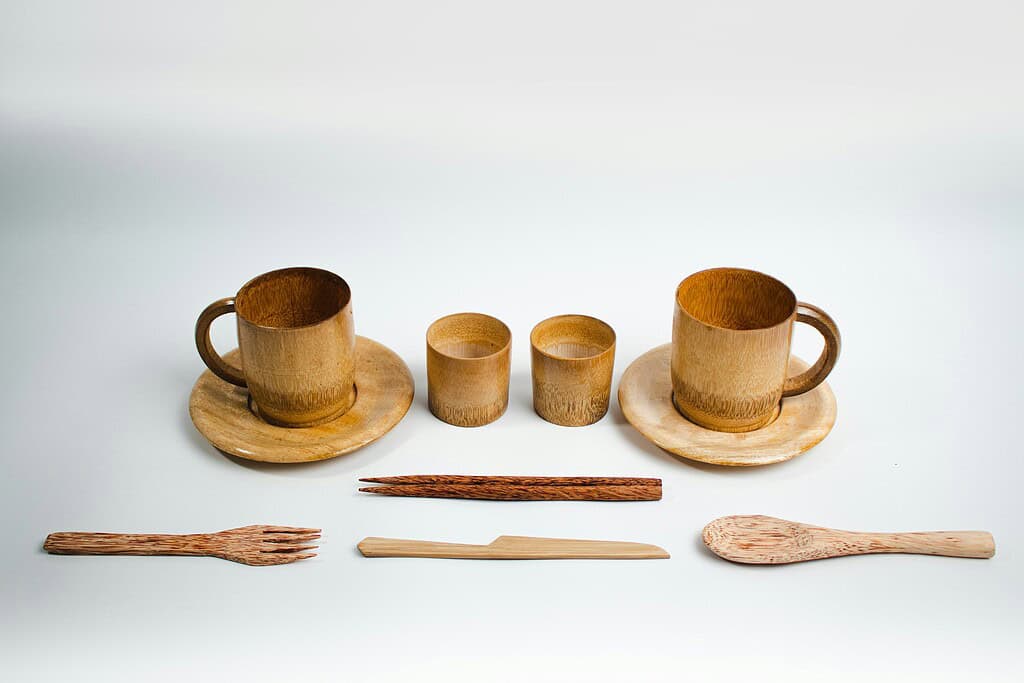
Bali’s sustainable design scene has grown considerably in recent years, and bamboo sunglasses have become one of the more distinctive accessories to come out of that movement, blending eco-conscious materials with genuinely stylish design.
Beyond sunglasses, you’ll find bamboo and wooden watches, phone cases, and small accessories throughout markets in Canggu and Seminyak specifically, areas known for their design-forward, sustainability-focused shops.
Quality construction matters here, so check hinges and finishing before buying, since cheaper versions can feel flimsy.
These make a genuinely unique gift for anyone who appreciates design details rather than typical tourist trinkets.
Traditional Balinese Clothing
Beyond sarongs, Bali offers a wider range of traditional clothing worth considering, including the kebaya, a fitted traditional blouse worn by women during ceremonies, and the udeng, the traditional headscarf worn by men.
Markets and specialty shops sell both everyday casual versions and more elaborate ceremonial pieces intended for temple visits and special occasions.
Fabric quality and embroidery detail vary considerably, so it’s worth trying pieces on where possible rather than buying based on display alone.
These pieces work well as decorative items back home even if you never plan to wear them for their intended ceremonial purpose.
Natural Skincare & Beauty Products
Bali’s beauty industry has grown into something genuinely impressive, with numerous small producers making natural soaps, oils, and skincare using local ingredients like coconut, turmeric, and coffee grounds.
Turmeric-based products in particular are popular for their brightening properties, reflecting a skincare tradition rooted in centuries of Balinese beauty rituals.
Packaging and shelf life vary between brands, so check expiration dates on anything containing natural oils, which have a shorter usable window than commercial products.
Ubud and Canggu both have a strong concentration of small-batch beauty producers selling directly to visitors at reasonable prices.
Ceramics & Pottery
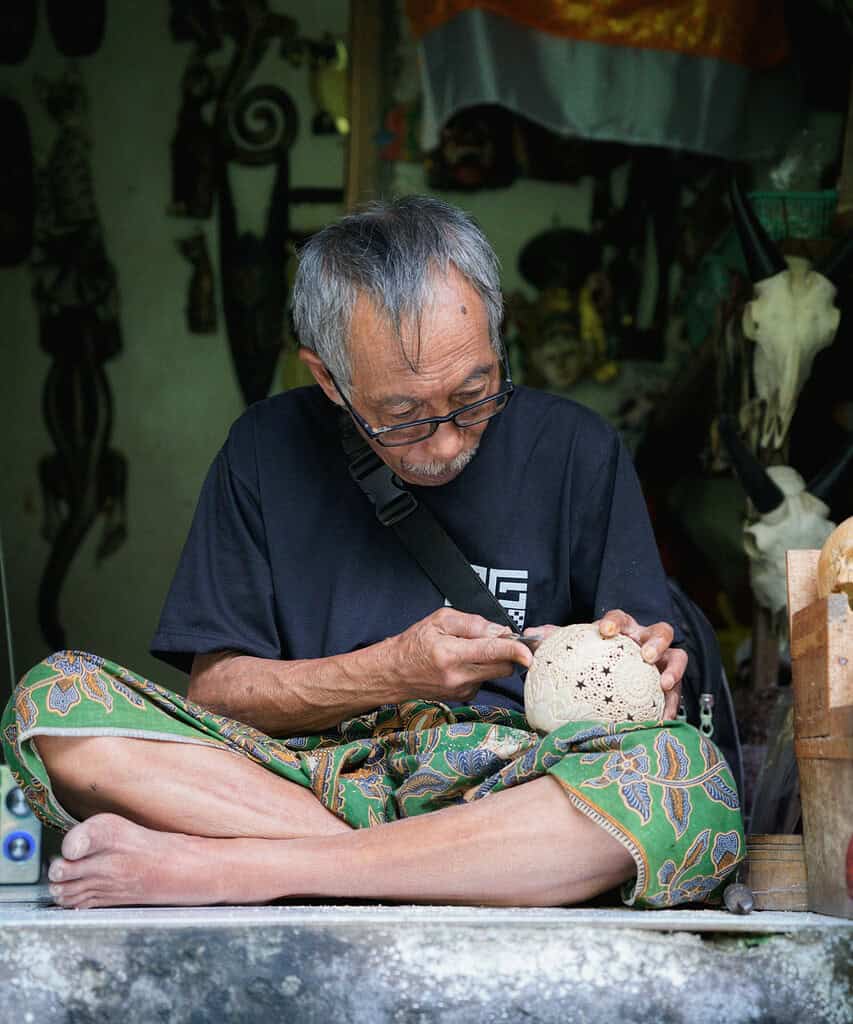
Bali has a long tradition of pottery and ceramics, particularly in villages like Pejaten in Tabanan, where entire communities have specialized in ceramic production for generations.
You’ll find everything from decorative plates and bowls to more sculptural pieces, often finished with distinctive glazes in earthy tones or bright tropical colors.
Breakage during travel is the main practical concern here, so it’s worth asking vendors about shipping options for larger or more fragile pieces rather than trying to pack them yourself.
Smaller items like mugs or small bowls travel considerably easier in carry-on luggage if you’re set on bringing something back yourself.
Bali Snacks & Local Treats
Bali’s food scene extends naturally into its snack culture, and bringing some home is an easy, affordable way to share a taste of the island with people who couldn’t make the trip.
Look for pia Legong, a flaky pastry filled with mung bean or chocolate, alongside local coffee candies and tropical fruit chips sold at markets and supermarkets across the island.
These travel well in sealed packaging and rarely require refrigeration, making them one of the more practical souvenirs on this entire list.
Local supermarkets in Ubud and Denpasar tend to have a wider selection than tourist-facing shops, often at considerably better prices.
Balinese Incense
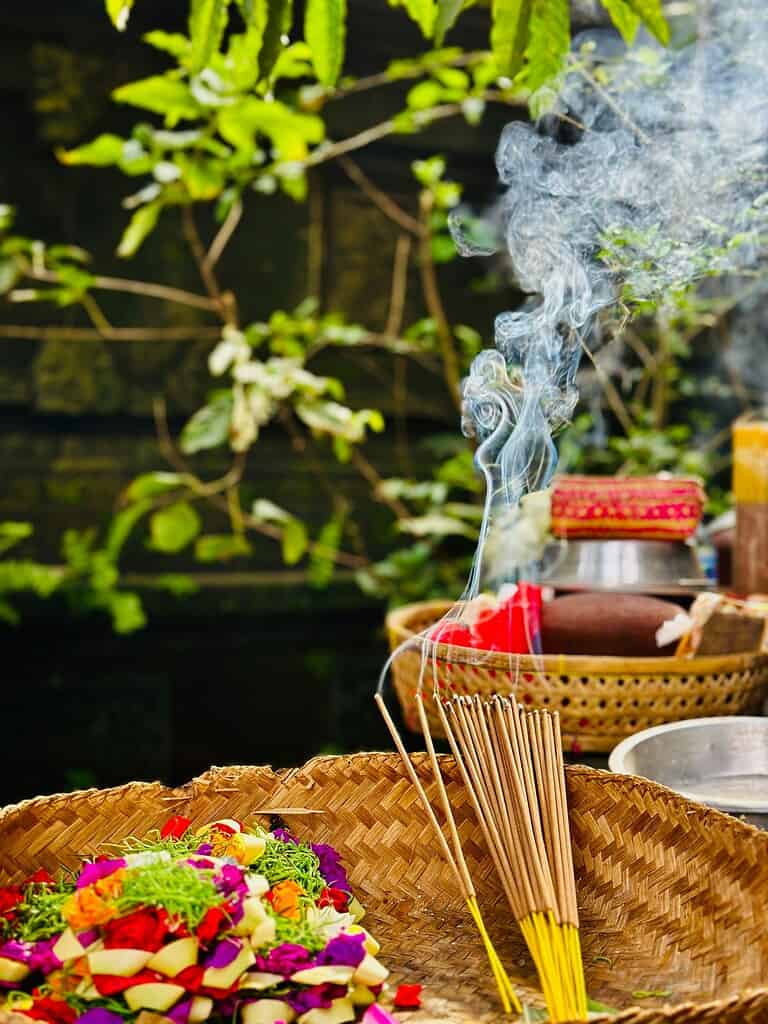
Incense plays a genuine daily role in Balinese Hindu practice, used in the small canang sari offerings placed outside homes and businesses each morning, and it makes for an inexpensive, distinctly Balinese souvenir.
Sandalwood, frangipani, and jasmine are among the most common scents, sold in bundles at markets throughout the island.
Quality ranges from mass-produced incense aimed squarely at tourists to more traditional handmade versions sold at temple supply shops, generally at similarly low prices either way.
It’s light, cheap, and easy to pack in bulk, making it one of the simplest gifts on this list to bring home for multiple people.
Where to Buy Souvenirs in Bali
Knowing what to buy is only half the equation, knowing where to shop makes the whole experience better.
Bali offers a mix of artisan villages, sprawling markets, and boutique shops, each with its own distinct character.
Ubud Art Market remains the most reliable all-around option, carrying textiles, wood carvings, jewelry, and paintings under one roof, with prices that respond well to polite negotiation.
Artisan Villages like Mas for woodcarving, Celuk for silver, and Batuan for painting let you buy directly from the source, often at better prices than markets closer to the tourist strip.
Canggu and Seminyak lean more toward boutique, design-forward shopping, with a strong concentration of sustainable and locally made beauty and accessory brands.
Whichever area you shop in, it helps to already be familiar with common scams in Bali and general tourist mistakes in Bali to avoid, since overpaying for souvenirs is one of the most common ways visitors lose money without realizing it in the moment.
Final Thoughts on What to Buy in Bali
Shopping in Bali is more than picking up souvenirs, it’s a genuine window into the island’s craftsmanship and daily culture.
From handwoven textiles and silver jewelry to spice blends and honey, the variety here reflects just how much skill and tradition Bali has to offer beyond its beaches and temples.
Personally, I’d avoid cramming all your shopping into the last day or two. Give yourself time midway through your trip once you’ve had a sense of what genuinely interests you, and once you know the best time to visit Bali for your itinerary, you can plan a slower shopping day around it rather than rushing.
As for where to base yourself for the best access to markets and villages, Ubud is hard to beat given its central location near most of the artisan villages mentioned above, and it’s worth checking a guide on where to stay in Bali if you haven’t settled on an area yet.
Pairing a shopping day with one of the best Bali day tours covering nearby villages is often the easiest way to see the craftsmanship in person rather than just browsing a market stall.
At the end of the day, it’s not about filling your suitcase, it’s about finding a handful of meaningful pieces that connect you back to Bali long after the trip ends.
What are the best souvenirs to buy in Bali?
Some of the best options include silver jewelry from Celuk, wood carvings from Mas, batik and songket textiles, natural spa products, and local coffee. Practical items like spices, honey, and dried fruit also make easy, well-loved gifts.
Where is the best place to shop for souvenirs in Bali?
Ubud is the top choice thanks to its art market and proximity to artisan villages like Mas and Celuk.
Canggu and Seminyak are better suited to boutique, design-focused shopping if you’re after something more contemporary.
Is it cheap to shop in Bali?
Generally, yes the markets and artisan villages are affordable compared to Western prices, and bargaining is common and expected.
Boutique shops in Canggu and Seminyak run higher, closer to what you’d pay at home for similar quality.
Can I bring Balinese food products through customs?
Most packaged snacks, spices, and sealed honey travel fine, but always check your home country’s rules on fresh produce, liquids, and herbal products before packing.
Sealed coffee, dried fruit, and vacuum-packed spice blends are generally safe bets.
