
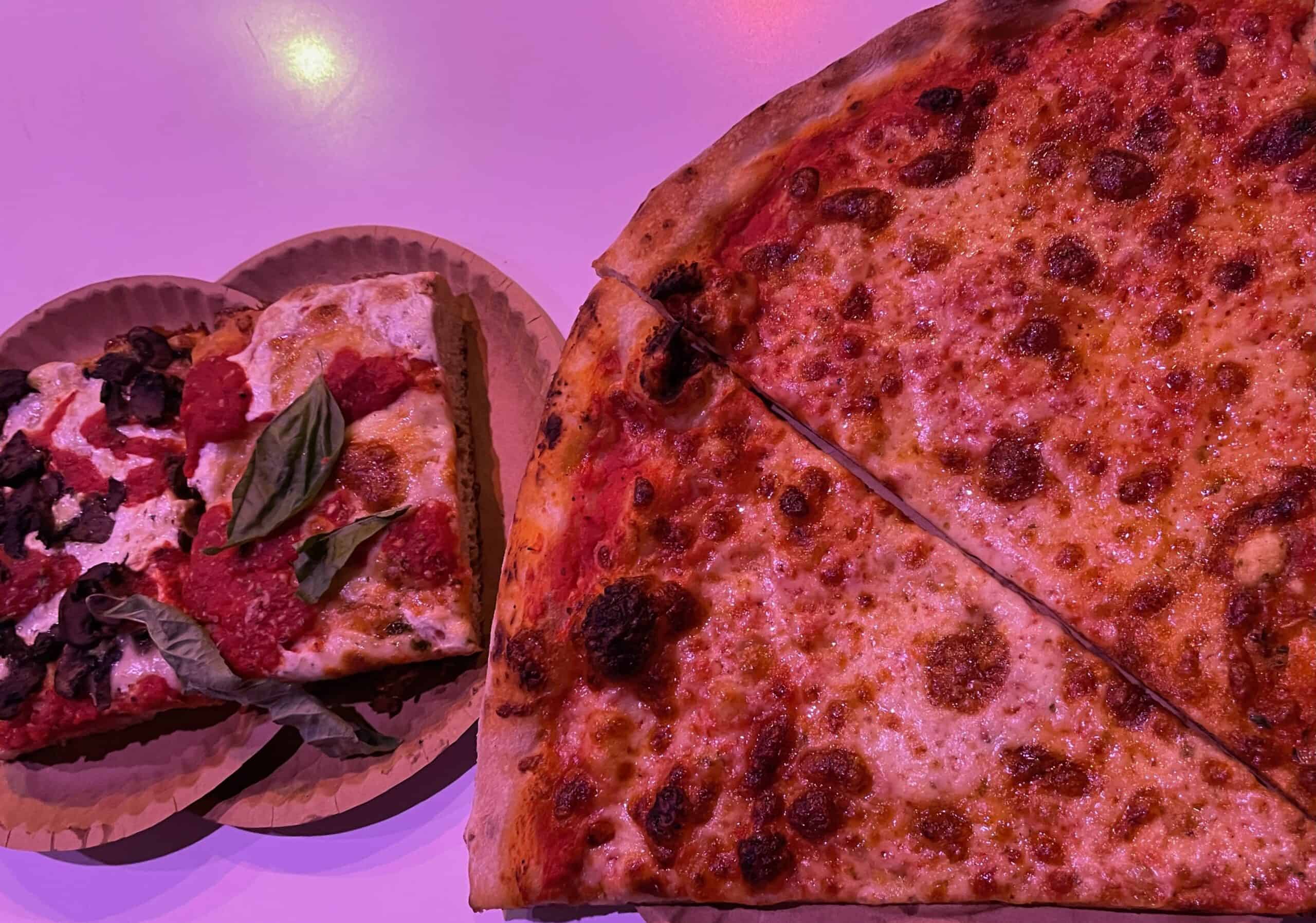
14 Must Try Foods in NYC: Don’t Leave Without
New York City doesn’t have a food scene. It has dozens of them, layered on top of each other across five boroughs, shaped by wave after wave of immigration, neighborhood culture, and a city that takes eating more seriously than almost anywhere else in the world.
The foods on this list aren’t fine dining discoveries or trendy restaurant openings. They’re the specific things you eat in New York that you think about for years afterward.
The bagel that makes every bagel back home taste wrong. The pizza slice that settles the debate about whether New York pizza is actually different.
The bodega sandwich that costs $6 and is better than most $25 meals anywhere else.
I eat pizza every single time I’m there, often multiple days in a row, working through a list of spots that keeps growing. I know exactly where I’m getting my first bagel with lox and cream cheese the moment I land.
I’ve eaten my way through the West Village, SoHo, the Lower East Side, and Koreatown enough times to have strong opinions about all of it.
These are the 14 must try foods in NYC that belong on every visitor’s eating list. Don’t leave without trying all of them!
Bagel with Lox and Cream Cheese

New York bagels are genuinely different from every other bagel in the world, and this is not a marketing claim, it’s a result of the water, the boiling process, and decades of craft that produces a dense, chewy, slightly crispy exterior that no other city has successfully replicated.
Add lox, thinly sliced cured salmon, and cream cheese, and you have one of the great breakfast combinations in existence. The cream cheese provides richness.
The lox provides salt and depth. The bagel holds everything together with a texture that’s simultaneously soft inside and satisfying to bite through.
Russ and Daughters on the Lower East Side is my personal go-to and has been serving the same product since 1914.
The appetizing counter, piled with smoked fish, cream cheese varieties, and freshly baked bagels, is one of the most specific
New York experiences available. Ess-a-Bagel in Midtown, Absolute Bagels on the Upper West Side, and Murray’s Bagels in the West Village are all worth the trip.
Eat it in New York first. Then eat one at home and understand the difference immediately.
New York Pizza

New York pizza is one of the great food arguments in the world, and the argument exists because the pizza actually earns it.
The thin, foldable slice with slightly charred undercarriage, the sauce that’s tangy without being acidic, the cheese that pulls rather than breaks, this is a specific and perfected thing that New York has been doing longer than most modern pizza traditions exist anywhere else.
I eat pizza every single day I’m in New York. Not as a tourist activity, as a genuine daily requirement. The debate about which slice is best is endless and worth having.
Lombardi’s in Nolita claims to be America’s first pizzeria and the coal-fired pie justifies the reputation.
Joe’s in the West Village is the quintessential New York slice, simple, perfect, no frills. Juliana’s and Grimaldi’s under the Brooklyn Bridge draw lines for good reason.
Scarr’s on the Lower East Side has become one of the most talked-about slices in the city.
There is no single best New York slice. There is only the one in your hand right now, which is almost certainly excellent.
Pastrami Sandwich
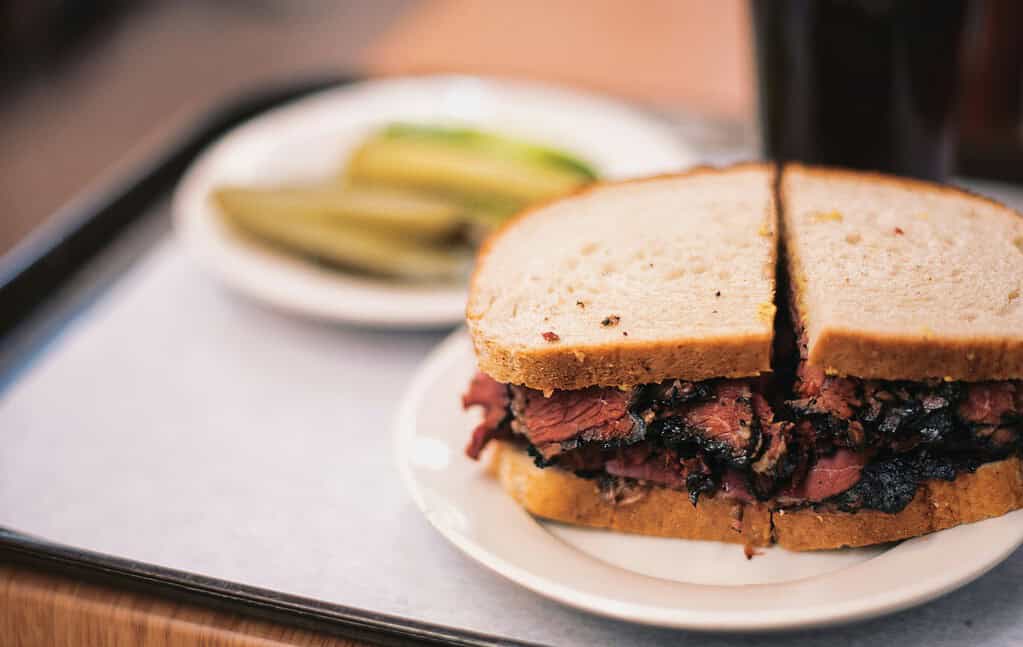
The New York pastrami sandwich is a specific cultural institution, and Katz’s Delicatessen on the Lower East Side is the specific institution that defines it.
Katz’s has been operating since 1888. The pastrami is cured, smoked, and steamed in-house to a texture that’s simultaneously tender and substantial, piled high on rye bread with mustard.
The sandwich weighs approximately one pound. It costs around $25 and is worth every dollar because nothing about it is negotiable, not the bread, not the mustard, not the volume of meat.
The ordering system at Katz’s is its own experience. You get a ticket at the door. You approach the counter and tell the cutter what you want.
They hand you a sample slice while they’re cutting. You tip the cutter. You find a table in a room that looks like it hasn’t changed since the 1950s and eat one of the best sandwiches you’ll ever have.
Other excellent pastrami in New York: 2nd Avenue Deli in Midtown, Sarge’s Deli on Third Avenue. But Katz’s is the one you go to first.
Bodega Bacon Egg and Cheese
The bodega bacon egg and cheese is New York’s breakfast sandwich, and if you haven’t had one you haven’t had breakfast in New York.
It costs $4-7 depending on the neighborhood. It’s made to order in about two minutes.
It comes on a kaiser roll or a hero, and the combination of scrambled egg, American cheese melted by the heat of the egg, and bacon, assembled quickly by someone who has made thousands of them and knows exactly what they’re doing, produces something greater than the sum of its parts.
This is what New Yorkers actually eat for breakfast. Not the $22 avocado toast at the trendy café on the next block.
The bodega sandwich, eaten standing at the counter or walking down the street with a $2 bodega coffee in the other hand.
Find the bodega nearest to wherever you’re staying on your first morning and order one before you do anything else. It sets the right tone for everything that follows.
New York Hot Dog
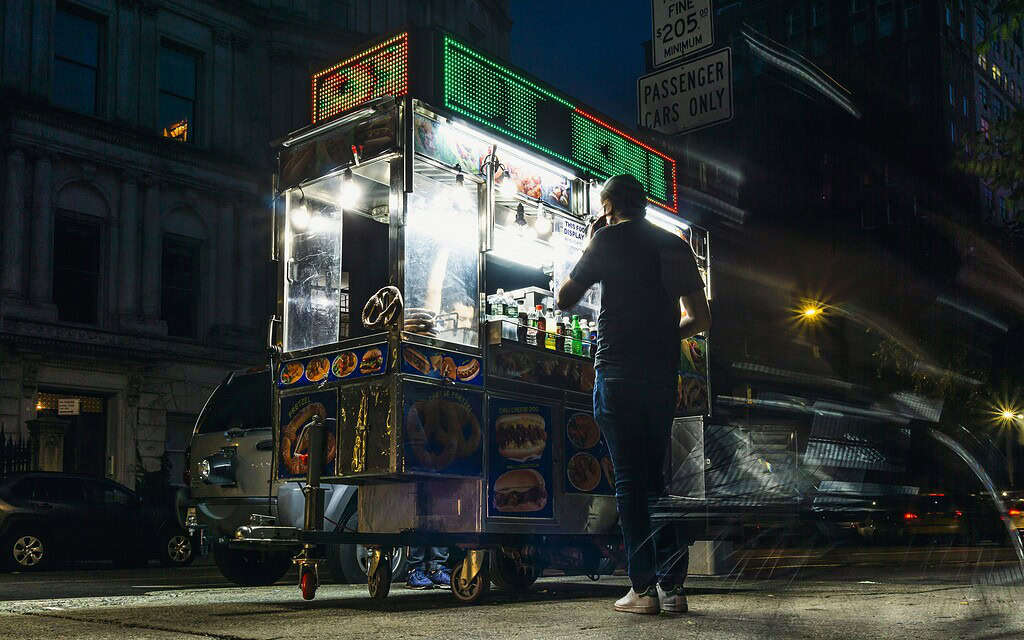
The New York hot dog from a street cart is one of those foods that shouldn’t be as good as it is given the circumstances of its production, and yet reliably delivers.
The classic version is a natural casing dog, the kind that snaps when you bite through it, served on a steamed soft bun with yellow mustard and sauerkraut or onions cooked in a red tomato sauce.
The combination is specific to New York in a way that regional hot dog preparations always are, and it’s worth having at least once from a proper street cart rather than a restaurant.
Gray’s Papaya on the Upper West Side is the institution most associated with the New York hot dog, open 24 hours, serving the same product since 1973, with a devoted following that transcends the economics of the thing.
Papaya King on the Upper East Side predates it and argues for the title of original. Both are worth visiting.
New York Cheesecake
New York cheesecake is its own category of cheesecake, denser, richer, and more aggressively cream cheese-forward than any other version, and eating a proper slice in the city where it was perfected is a different experience from any cheesecake you’ve had elsewhere.
Junior’s in Brooklyn is the institution most associated with New York cheesecake and has been since 1950.
The original location in Downtown Brooklyn is worth the trip, the cheesecake is dense and creamy without being heavy, the crust is thin and barely there, and the slice is the size of something that requires a serious commitment.
Eileen’s Special Cheesecake on Cleveland Place in Nolita is a smaller, more intimate alternative with a devoted following.
Two Little Red Hens on the Upper East Side makes an exceptional version. Veniero’s Pasticceria on East 11th Street has been baking it since 1894.
Wherever you get it, get the plain version first. The classic New York cheesecake doesn’t need fruit topping or caramel sauce. It just needs a fork.
Black and White Cookie
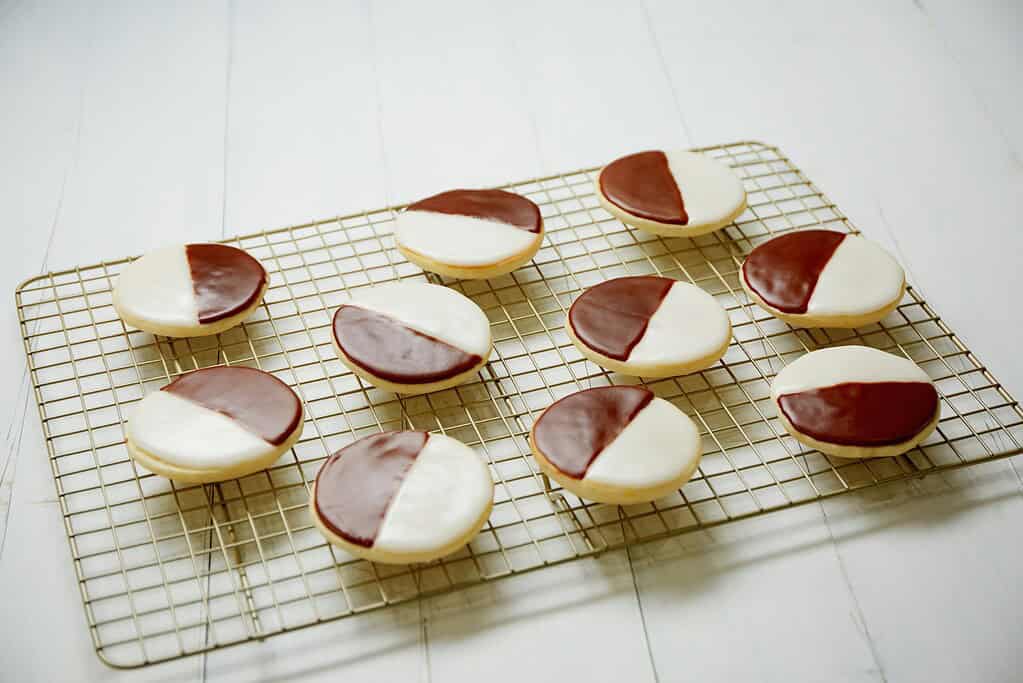
The black and white cookie is one of New York’s most specific and most underrated food experiences, a soft, cake-like cookie the size of a small plate, half-covered in vanilla fondant and half in chocolate fondant, that exists in essentially this exact form almost nowhere outside the city.
It’s not a cookie in the crunchy sense. It’s closer to a small flat cake, tender, slightly lemony, with the fondant providing sweetness without overwhelming the base.
The correct technique, according to anyone who grew up eating them, is to eat both sides in the same bite.
You’ll find them at almost every deli and bakery in the city. Zabar’s on the Upper West Side makes one of the most respected versions.
William Greenberg Desserts on Madison Avenue is another institution. They’re inexpensive, transportable, and one of those specifically New York things that has no real equivalent anywhere else.
Halal Cart Chicken and Rice
The halal cart is one of New York’s great democratic food institutions, available at street carts throughout Midtown and across the boroughs, priced at $8-12, and capable of being one of the most satisfying meals you eat during your entire trip.
The standard order is chicken and rice seasoned grilled chicken over white rice with lettuce, the white garlic sauce that has become its own phenomenon, and as much hot sauce as you can handle.
The combination is specific and perfect. The white sauce is creamy and herby in a way that makes everything it touches better.
The Halal Guys on 53rd Street and 6th Avenue in Midtown is the original and most famous cart, lines form regularly and it has expanded internationally, but the original cart still operates and is worth queuing for.
Carts throughout Midtown operate on the same general template with their own loyal followings. Eat it standing on the sidewalk. That’s the right way to do it!
Chopped Cheese
The chopped cheese is a Harlem and Bronx bodega institution that has slowly gained wider recognition without losing the specific neighborhood character that makes it worth eating.
It’s made on a griddle, ground beef chopped and cooked with onions and peppers, American cheese melted directly into the meat, served on a hero roll with lettuce, tomato, and condiments of your choice.
The result is something between a cheesesteak and a burger that is entirely its own thing.
The most authentic versions come from bodegas in Harlem and the Bronx where it originate, Blue Sky Deli on 110th Street and Lexington Avenue is frequently cited as the original. Hajji’s on 1st Avenue in East Harlem is another essential stop.
If you’ve only ever heard of the chopped cheese as a recently trendy food, eat one at a Harlem bodega and understand that it’s been there all along, feeding the neighborhood long before anyone wrote about it.
Cronuts — Dominique Ansel Bakery

The Cronut, a croissant-doughnut hybrid created by Dominique Ansel in 2013, generated lines around the block when it launched and has maintained enough cultural relevance to still be worth seeking out over a decade later.
Dominique Ansel Bakery is on Spring Street in SoHo, which puts it in one of the best neighborhoods in New York for a morning pastry walk.
The Cronut itself changes flavor monthly, the specific combination of laminated dough, cream filling, and glaze varies depending on when you visit, which gives it a reason to return that most pastry experiences don’t have.
Beyond the Cronut, the bakery is worth visiting for the full pastry case, the kouign-amann, the DKA (Dominique’s Kouign Amann), and the cookie shot are all exceptional.
The Frozen S’more is one of the more visually striking desserts available in the city. Get there early. The Cronut sells out.
Dumplings in Chinatown
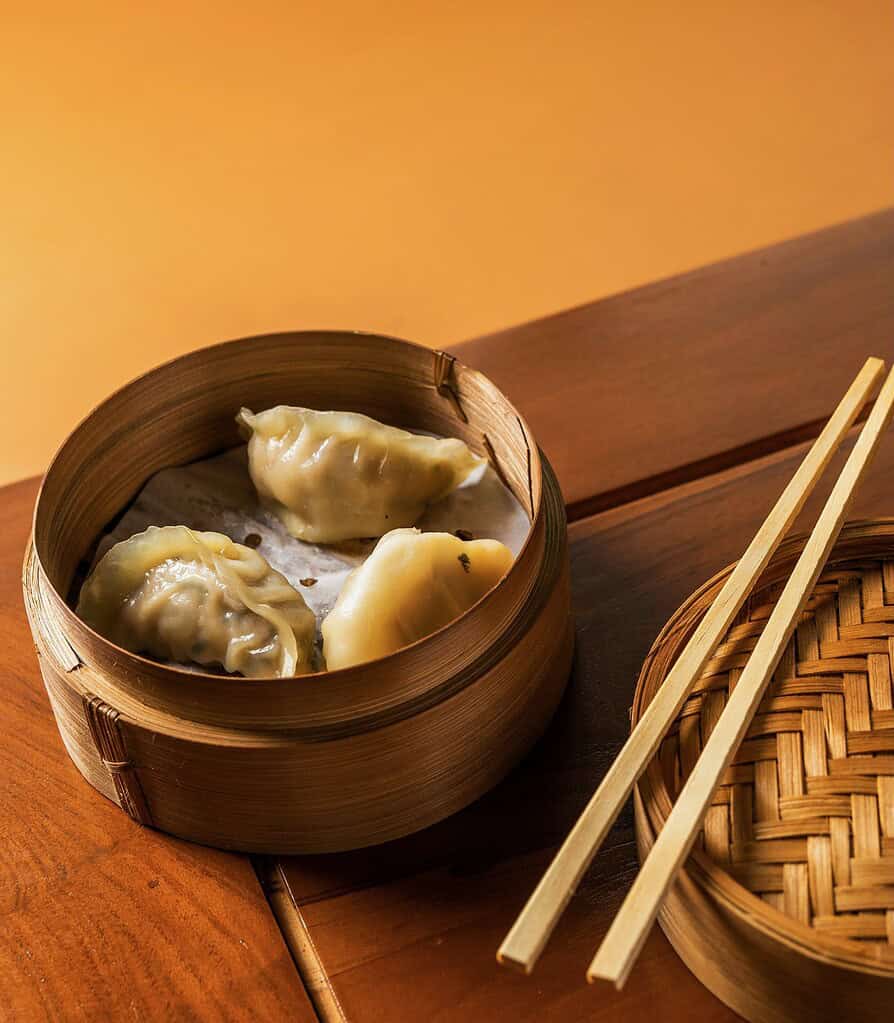
New York’s Chinatown in Lower Manhattan is one of the largest and most authentic in the Western world, and eating dumplings there, fresh, handmade, extraordinarily cheap, is one of the best food value experiences the city offers.
Fried pork dumplings at Prosperity Dumpling on Eldridge Street are the most famous example: five dumplings for $2, pan-fried to a crispy golden bottom, with pork filling that’s been perfected through repetition.
The line moves fast. You eat standing or sitting on whatever surface is available. It’s one of the great New York eating experiences regardless of price.
Vanessa’s Dumpling House on Eldridge Street is another institution. Joe’s Shanghai on Pell Street is the destination for soup dumplings, xiao long bao filled with broth and pork that requires a specific eating technique to avoid wearing the soup on your shirt.
Chinatown is also worth a full afternoon beyond the dumplings, the produce markets, the roast duck hanging in restaurant windows, the bubble tea shops, and the general energy of a neighborhood that operates entirely on its own terms.
Oysters at a Raw Bar
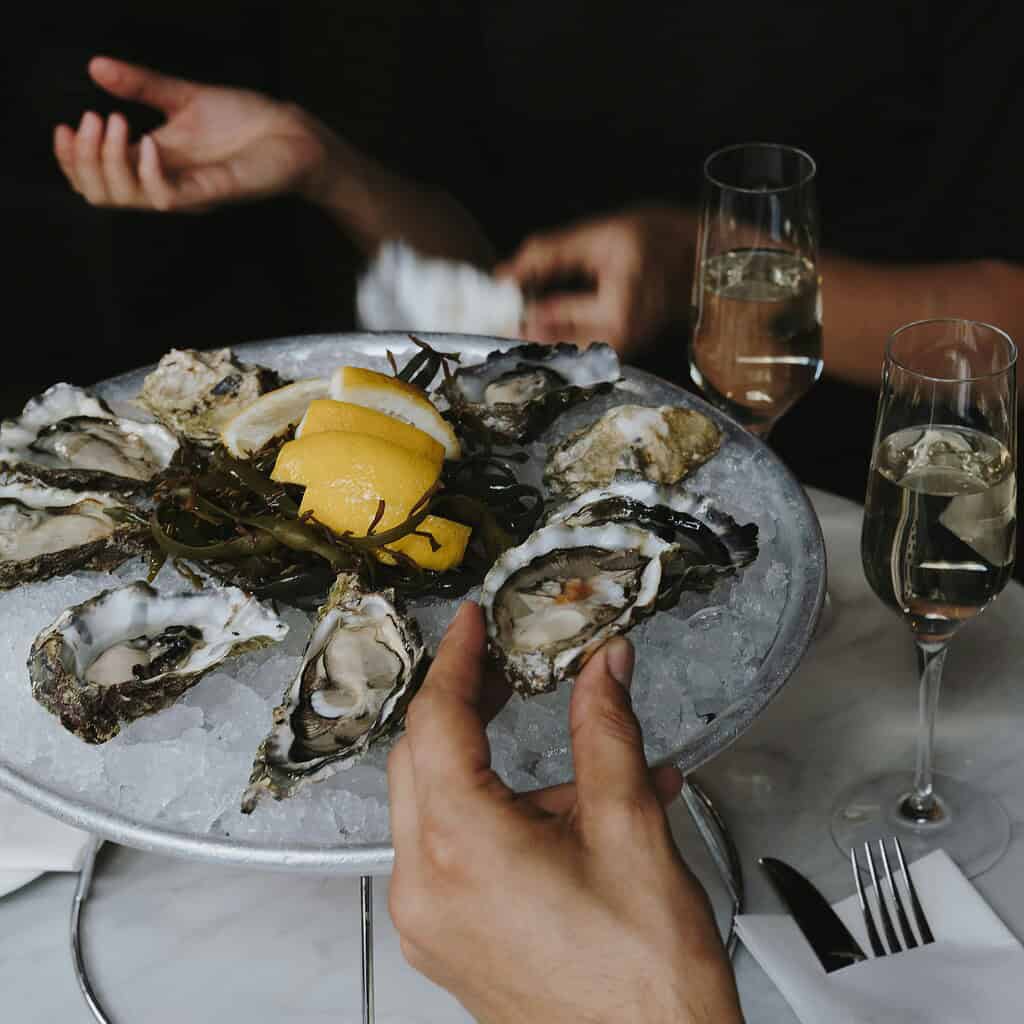
New York has a long and serious oyster culture, and eating oysters at a proper raw bar, cold, fresh, on the half shell with mignonette and a squeeze of lemon, is one of those distinctly New York experiences that rewards the investment.
Grand Central Oyster Bar in the lower level of Grand Central Terminal is the most iconic option, operating since 1913, serving dozens of oyster varieties from both coasts, in a vaulted tile room that is one of New York’s most beautiful dining spaces. The pan roasts and seafood stews are as famous as the raw bar.
For a more neighborhood experience, Maison Premiere in Williamsburg has an extraordinary oyster selection and an absinthe program that makes the whole experience feel slightly New Orleans.
Crave Fishbar on the Upper East Side and the John Dory Oyster Bar in the Ace Hotel are both excellent.
Happy hour oyster specials at a raw bar, $1-2 per oyster between 4 and 6 p.m. at many locations, make this significantly more accessible than the full dinner pricing suggests.
Korean Food in Koreatown
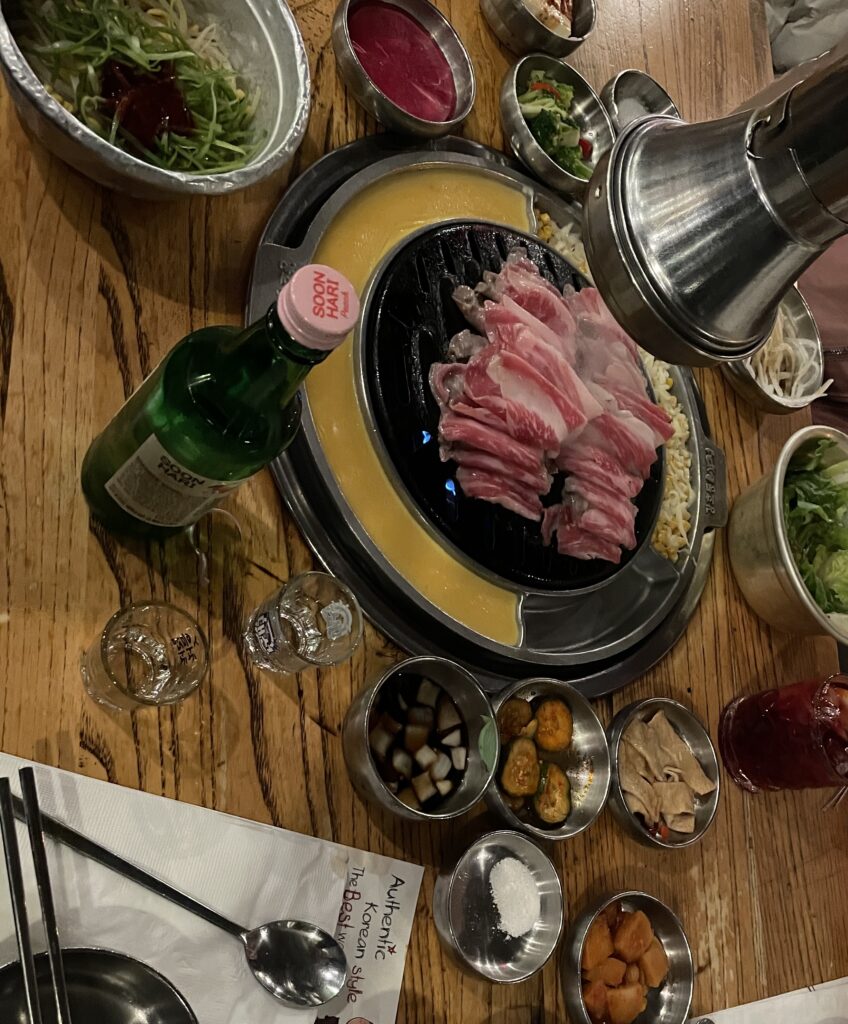
Koreatown in Manhattan runs along 32nd Street between Fifth and Sixth Avenues, and it operates at a completely different intensity from most food neighborhoods in the city, louder, more neon-lit, open later, and delivering one of the most specific and satisfying eating experiences New York has to offer.
Korean BBQ is the anchor experience, tabletop grills, marinated meats, banchan (small side dishes) that arrive continuously, and the specific pleasure of cooking your own food while managing multiple things at once.
Jongro BBQ in the neighborhood is a consistent standout. Kang Ho Dong Baekjeong draws lines for a reason.
Beyond BBQ, Koreatown has excellent Korean fried chicken at places like Turntable Chicken Jazz, exceptional Korean stew houses, and late-night spots that operate until 2 or 3 a.m. serving the kind of food that makes you understand why Korean food has become one of the most celebrated cuisines in the world.
Lobster Roll
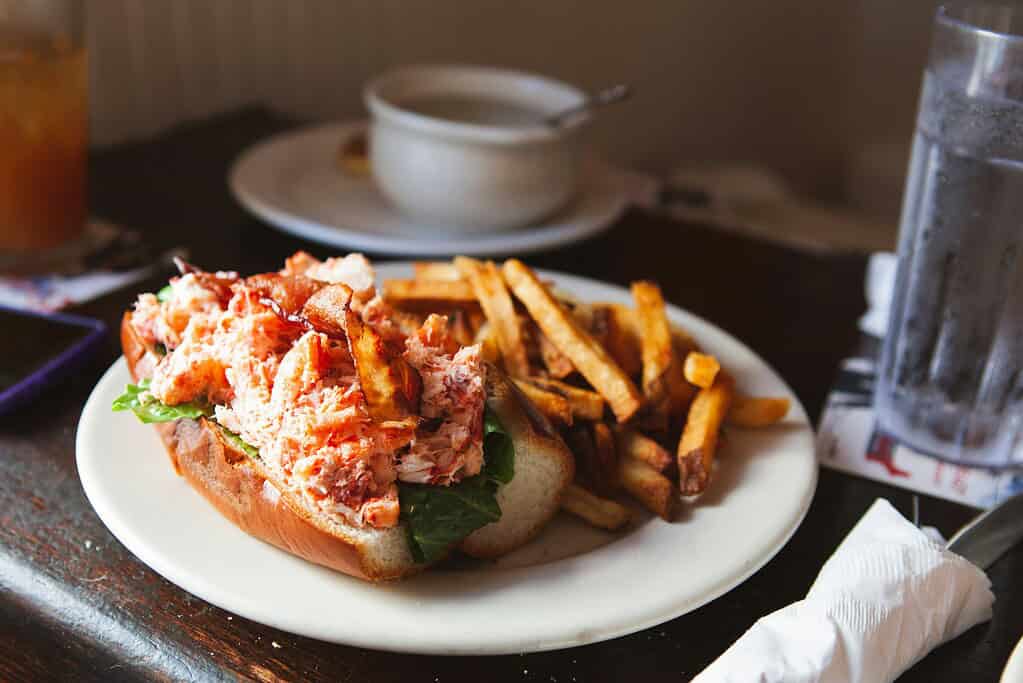
The New York lobster roll sits in the middle of a longstanding debate between Connecticut style, warm, butter-dressed, and Maine style, cold, mayo-dressed, and New York does both well enough that the debate is worth having over an actual lobster roll rather than in the abstract.
Luke’s Lobster, with multiple Manhattan locations, serves the Maine-style version, clean, cold, light on the mayo, focused entirely on the quality of the lobster.
The rolls are modest in size and priced around $20-25, which is reasonable for the quality of what you’re eating.
Pearl Oyster Bar in the West Village makes what many consider the definitive New York lobster roll, Connecticut style, warm, butter-soaked, in a toasted top-split bun with a side of shoestring fries. It’s one of those dishes that fully justifies its reputation.
Lobster roll prices in New York reflect the ingredient cost honestly. This is one area where the premium is real and the product justifies it.
Final Thoughts on Must-Try Foods in NYC
New York’s food scene is one of the legitimate wonders of the city, and the list above barely scratches the surface of what’s available across five boroughs and dozens of distinct culinary traditions.
What makes New York’s food different isn’t just the quality, it’s the density and the variety existing simultaneously at every price point.
The $2 dumpling and the $25 pastrami sandwich occupy the same few blocks. The bodega bacon egg and cheese and the raw bar oysters are both essential New York experiences separated by maybe fifteen dollars and a ten-minute walk.
Eat as much as you can. Come back for the things you missed. And when you’re on your flight home already thinking about where you’re getting your first slice next time, which you will be, know that’s exactly the right reaction.

What is the most iconic food in NYC?
The New York pizza slice and the bagel with lox and cream cheese are the two strongest arguments.
Both are genuinely different from their equivalents anywhere else and both are available on virtually every block in Manhattan.
Where is the best pizza in NYC?
Joe’s in the West Village for the quintessential slice. Juliana’s and Grimaldi’s in Brooklyn for coal-fired pie. Scarr’s on the Lower East Side for a more contemporary take.
Lombardi’s in Nolita for historical significance. All are worth visiting and the debate about which is best is genuinely unresolved.
Is NYC food expensive?
It varies enormously. A bodega sandwich costs $6. A dumpling order at Prosperity costs $2. A halal cart meal costs $10.
The expensive version of New York food is real but the affordable version is extraordinary and available everywhere. You can eat exceptionally well in New York on a tight budget.
What neighborhood in NYC has the best food?
No single answer, every neighborhood has its own food identity. The West Village and SoHo for quality restaurants and bakeries.
The Lower East Side for Jewish deli culture and dumplings. Koreatown for late-night Korean BBQ. Chinatown for dumplings and roast duck. Flushing in Queens for the most diverse and authentic international food in the entire city.
