
16 Reasons You’re Visiting NYC Wrong
Let me be straight with you, visiting NYC wrong is more common than you think, and the city makes it easy to do.
New York doesn’t punish bad decisions. It just quietly lets you have a mediocre experience while an extraordinary one exists around the corner, one neighborhood over, or two streets away from wherever you’re standing right now.
The tourist version of this city is functional, accessible, and completely forgettable. The real version is one of the most electric, overwhelming, and genuinely life-changing urban experiences on earth.
NYC always offers endless things for me to do every time I come back. A diner I’ve never been to. A rooftop I didn’t know existed. A neighborhood that doesn’t look like anything else in the city.
New York doesn’t run out of things to give you. Most visitors just never ask for them.
You’re Only Seeing Manhattan
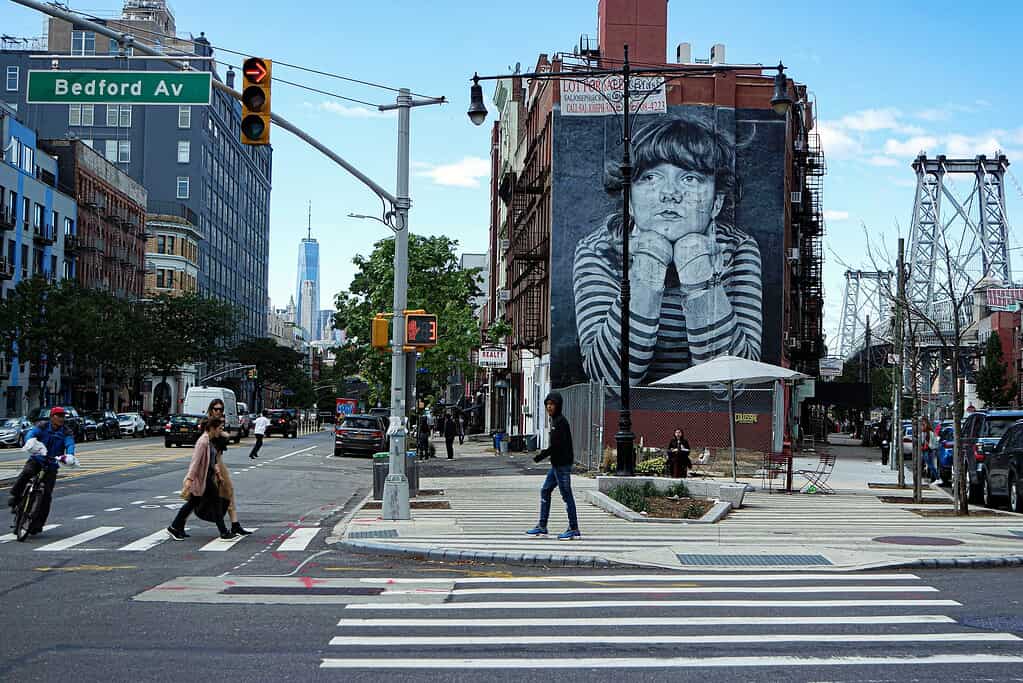
Manhattan is extraordinary. It’s also only one of five boroughs, and building your entire New York trip around it means you’re experiencing roughly 20% of the city while missing some of its most interesting parts.
Brooklyn alone could absorb a full trip. Williamsburg’s restaurant and bar scene rivals anything in Manhattan.
DUMBO’s waterfront views of the Manhattan Bridge are among the most photographed in the city for good reason.
Park Slope is the kind of neighborhood that makes you understand why people move to New York and never leave. Prospect Park on a weekend afternoon is Central Park without the tourist volume.
Queens is the most ethnically diverse urban area in the world, and Flushing alone contains more authentic international food than most cities offer in their entirety.
The Bronx has Arthur Avenue, New York’s real Little Italy, operating since the early 1900s, completely untouched by tourism.
Manhattan is the starting point. The rest of the city is where New York actually lives.
You’re Not Researching the Weather for Your Visit
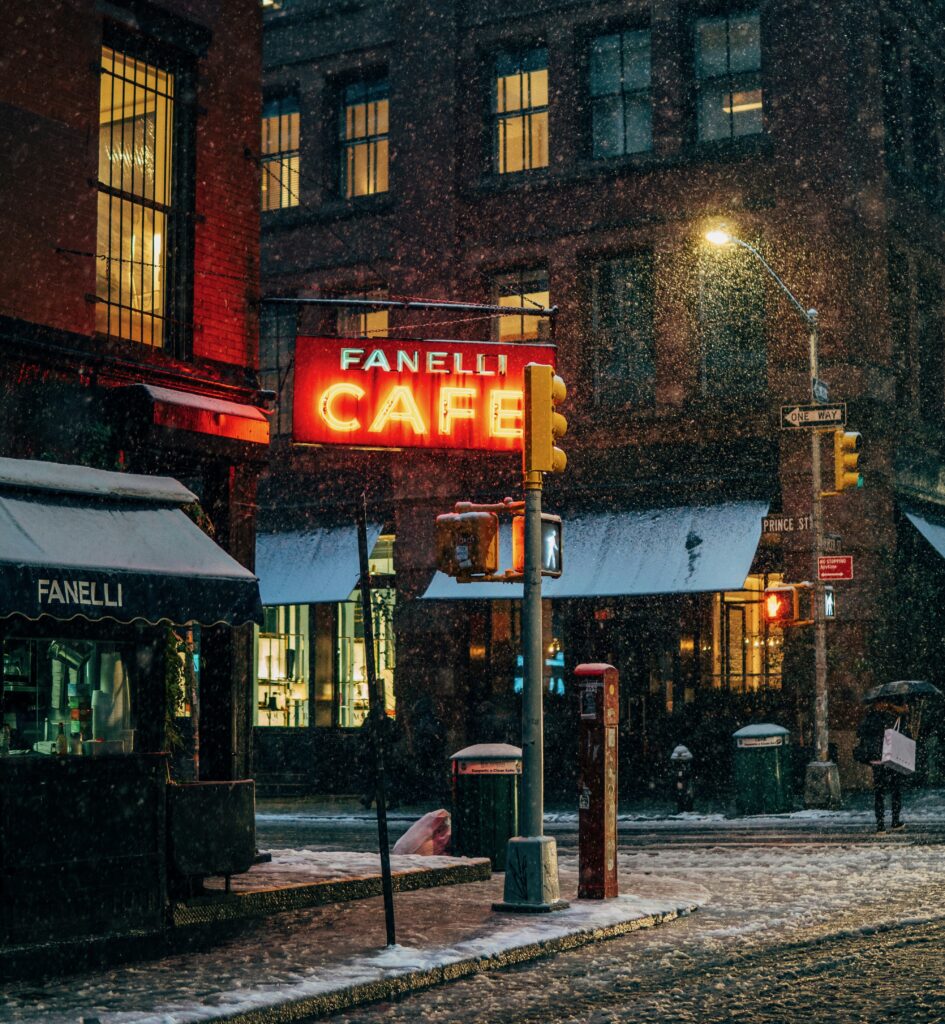
New York has four genuinely distinct seasons, and showing up unprepared for whichever one you’re visiting in is one of the most avoidable ways to make your trip uncomfortable.
January and February in New York are serious winter, temperatures regularly drop below freezing, wind tunnels between Midtown skyscrapers make it feel significantly colder, and snow is a real possibility.
Showing up in a light jacket because you looked at the average temperature without accounting for wind chill is a mistake you’ll make once.
July and August flip the entire situation. The heat radiates off the pavement. Subway platforms reach temperatures that feel genuinely dangerous.
Humidity sits on you all day. The city is fully alive and operational but physically demanding in ways that affect how much you can comfortably do in a single day.
Spring and autumn are the sweet spots, mild, walkable, beautiful, but even they bring sudden weather shifts that make layers non-negotiable.
Check the forecast before you pack, not after you land. New York’s weather doesn’t care about your plans.
You’re Skipping the Outer Boroughs
This connects to the Manhattan-only mistake but deserves its own point because the outer boroughs aren’t just more of New York, they’re a completely different experience from anything Manhattan offers.
Brooklyn has neighborhoods that feel like small cities within a city, each with its own character, restaurant scene, and energy.
Astoria in Queens has Greek food, Arabic food, and a neighborhood vibe that’s warm and genuinely local in ways that tourist-heavy Manhattan rarely is.
Staten Island’s north shore has been quietly developing one of the more interesting arts and food scenes in the city.
The subway connects all of it at the same $3.00 fare that takes you one stop in Midtown.
There is no financial barrier to exploring the outer boroughs, just a willingness to get on a train and go somewhere that isn’t on the standard tourist map. Do it at least once. It will change how you think about New York.
You’re Visiting During the Holidays Without Booking Early

New York during the Christmas season, Thanksgiving through New Year’s, is one of the most magical urban experiences in the world and one of the most expensive and logistically painful if you haven’t planned ahead.
Hotel rates in December spike significantly above their already high baseline. Restaurants worth eating at require reservations weeks in advance.
The Rockefeller Center tree, the department store windows, the holiday markets at Bryant Park and the Union Square, all of these are genuinely worth seeing and all of them come with crowds that require patience and timing.
The visitors who enjoy holiday New York are the ones who booked their hotel four months ago, made restaurant reservations before they left home, and built their itinerary around the reality of December crowds rather than assuming it’ll sort itself out.
Holiday New York rewards planning. It punishes spontaneity more than any other time of year.
You’re Eating Breakfast at Your Hotel

Hotel breakfast in New York is one of the most reliable daily budget drains on any NYC trip, and it’s almost never worth what it costs. This is one of my top NYC budget saving tips.
A hotel breakfast, eggs, toast, juice, coffee, runs $25-45 per person at most mid-range Manhattan properties.
The bodega two blocks away makes a bacon egg and cheese on a roll for $5-7, fresh to order, in under two minutes.
The coffee costs $2-3. The whole experience costs $10 for two people and is more authentically New York than anything the hotel breakfast room offers.
New Yorkers don’t eat hotel breakfasts. They eat bodega sandwiches walking to the subway, or sit at a diner counter with a coffee that gets refilled without asking. Both of these options are better than the hotel version and cost a fraction of the price.
Find the nearest bodega on your first morning. Make it a routine. It will be one of the most genuinely local things you do in the city.
You’re Missing the Free Experiences

New York has a reputation for being expensive, and it is, if you only engage with the paid version of it. The free version of this city is extraordinary and most visitors barely touch it.
Central Park is 843 acres of free public space in the middle of Manhattan. The Brooklyn Bridge walk costs nothing and delivers some of the best skyline views available anywhere in the city.
The Staten Island Ferry crosses the harbor past the Statue of Liberty twice without charging a dollar. The High Line runs 1.5 miles through the West Side at no cost.
Shakespeare in the Park at the Delacorte Theater in Central Park is free. SummerStage concerts across all five boroughs are free. The Chelsea galleries that rival any museum in the city are free.
The New York Public Library’s main reading room on Fifth Avenue is one of the most beautiful public spaces in America. Free.
Build free experiences into every day of your trip. They’re not consolation prizes, they’re some of the best things the city offers.
You’re Only Visiting the Famous Landmarks
The Empire State Building, Times Square, the Statue of Liberty, the 9/11 Memorial, these are famous because they’re genuinely significant NYC landmarks.
They’re also the version of New York that every visitor sees, which means experiencing only them gives you a city that feels like a greatest hits collection rather than a place.
New York’s real landmarks are the ones that don’t require a ticket. The corner in the West Village where the streets go diagonal and nothing lines up.
The view of the Manhattan Bridge from the exact spot in DUMBO that’s been in ten thousand photographs. The reading room at the New York Public Library that stops people in their tracks.
The specific bench in Central Park where the skyline appears through the trees in a way that takes your breath away every single time.
See the famous ones. Then spend the rest of your trip looking for the ones that aren’t famous yet.
You’re Not Using Happy Hour
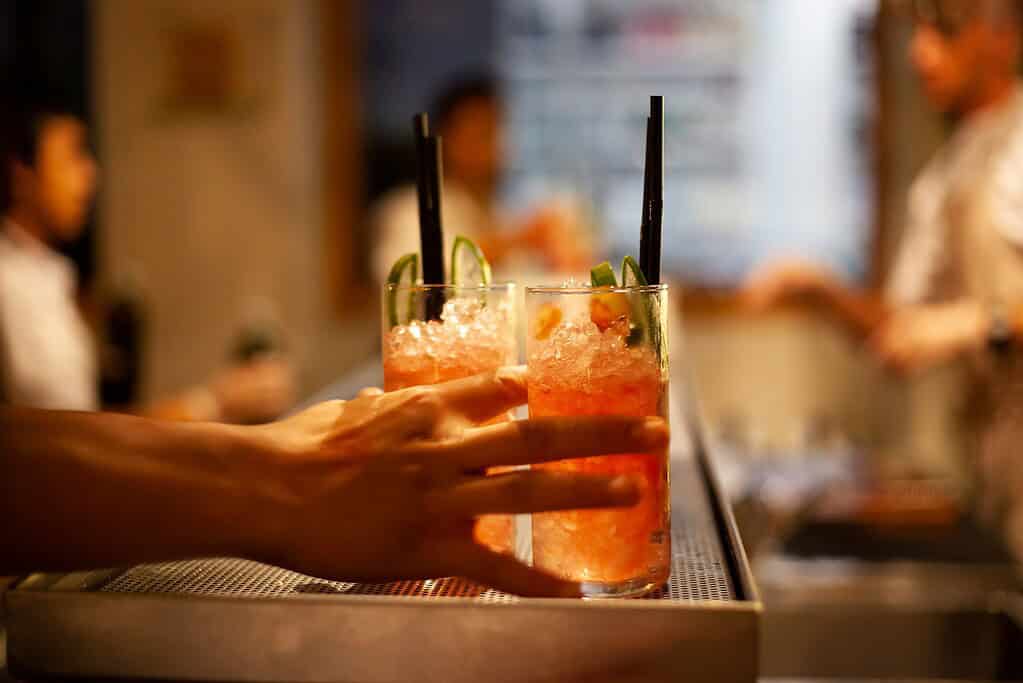
New York’s bar scene is extraordinary and extraordinarily expensive if you’re paying full evening prices.
Happy hour changes this equation significantly and most visitors never think to use it.
Most bars in Manhattan and Brooklyn offer discounted drinks from 4-7 p.m. on weekdays. Cocktails that run $18-22 in the evening come down to $10-14. Draft beers drop from $9-12 to $5-7. Some spots throw in discounted food as well.
The West Village, East Village, and Lower East Side have the strongest happy hour cultures in Manhattan, genuinely good bars with full cocktail programs participating rather than just discounting well spirits.
Williamsburg and Greenpoint in Brooklyn have similar options at slightly lower base prices.
Plan your drinks for late afternoon. Transition to dinner after. The difference across a week of evenings for two people is significant enough to cover a Broadway show or a nice dinner you wouldn’t otherwise have budgeted for.
You’re Not Including a Rooftop Bar or Meal on Your Itinerary
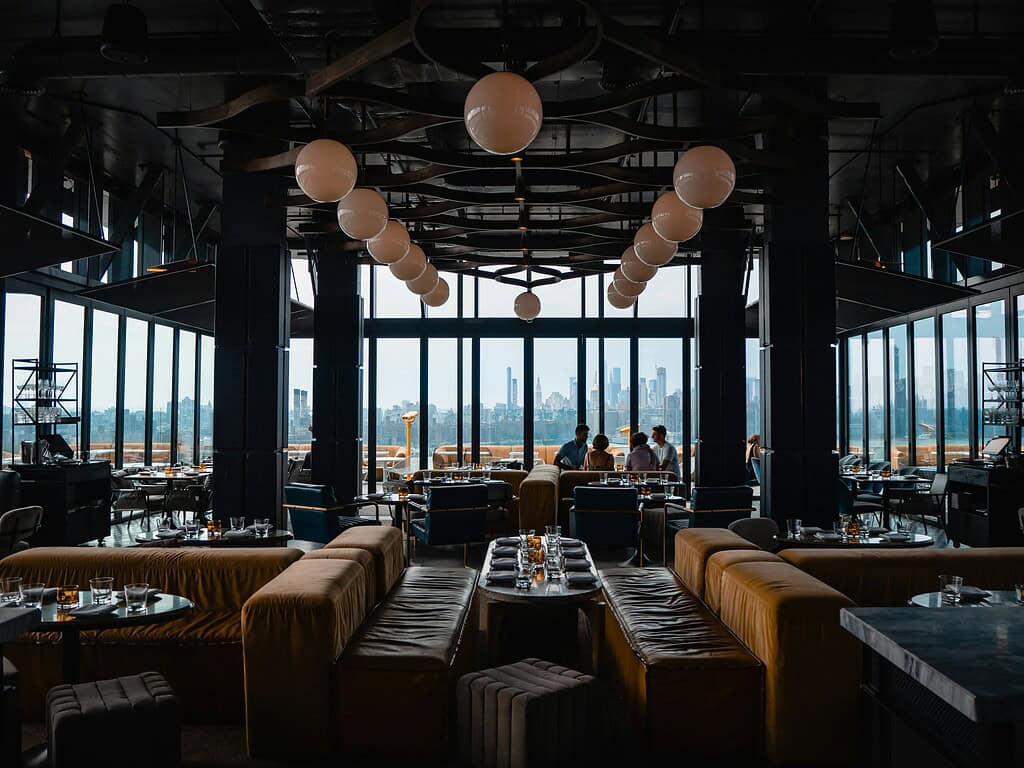
New York has some of the best rooftop experiences in the world, and a NYC itinerary without including at least one is leaving one of the city’s signature experiences on the table.
There’s something about being twenty or thirty floors above Manhattan with a drink in hand and the skyline stretching in every direction that doesn’t exist anywhere else.
The Press Lounge in Hell’s Kitchen has one of the most dramatic views of Midtown available. Westlight in Williamsburg looks back at Manhattan from Brooklyn in a way that reframes the entire city.
The rooftop at 230 Fifth in the Flatiron district has the Empire State Building as its backdrop.
Options range from casual and affordable to reservation-only fine dining. The view is the point regardless of price point.
Book in advance for the more popular spots. Go at sunset if you can time it. And dress appropriately, rooftop venues in New York have dress codes that they enforce.
You’re Not Eating at a Proper NYC Diner
The New York diner is a specific and increasingly rare institution, and eating at one is one of the most genuinely local experiences the city offers, and one of the most overlooked by visitors chasing trendy restaurant reservations.
The classic NYC diner is open 24 hours or close to it. The menu is enormous, eggs twelve ways, pancakes, club sandwiches, Greek salads, burgers, pasta, pie. The coffee comes in a ceramic mug and gets refilled without asking.
The booths are vinyl. The prices are honest. The whole experience costs $15-20 per person and feels like New York in a way that a $60 dinner at a reservation-only restaurant sometimes doesn’t.
Lexington Candy Shop on the Upper East Side has been operating since 1925. The Waverly Restaurant in the West Village.
The Veselka on Second Avenue in the East Village, open 24 hours, serving Ukrainian food alongside the standard diner menu, completely one of a kind. Go for breakfast or late night. Both are correct.
You’re Moving Too Fast Between Neighborhoods

New York’s neighborhoods are distinct enough that moving through three or four of them in a single day means you’re passing through rather than experiencing any of them.
The West Village deserves an entire afternoon, the winding streets, the independent restaurants, the bookshops, the specific energy of one of the most beautiful urban neighborhoods in America.
SoHo deserves a morning. Williamsburg deserves a full day. Astoria deserves more time than most visitors ever give it.
The instinct to maximize coverage, hit the High Line, then DUMBO, then the Lower East Side, then Williamsburg all in one day, produces a trip where you’ve technically seen a lot and genuinely experienced nothing.
Pick two neighborhoods per day. Walk them slowly. Eat in them. Sit in their parks and cafés. Let them show you what they actually are rather than what they look like from a moving taxi window.
You’re Shopping at Souvenir Shops Instead of Exploring Real NYC Shopping
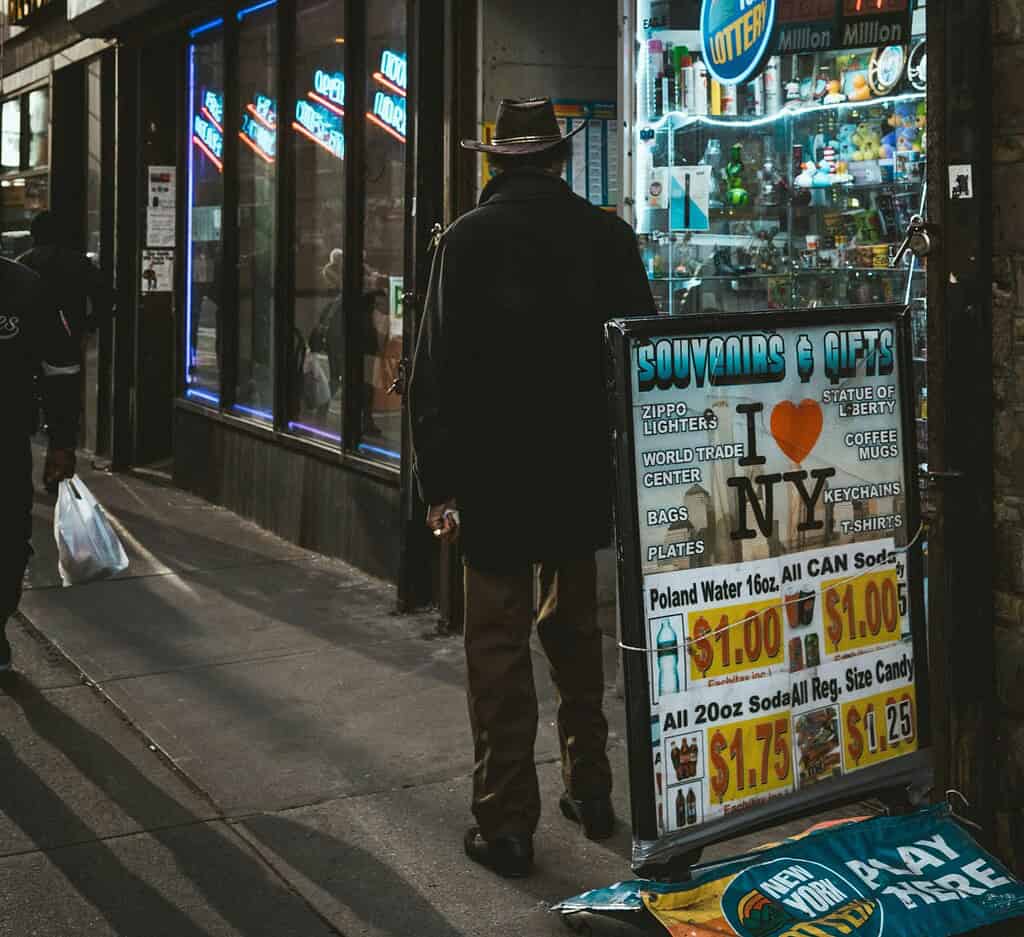
The I Love NY t-shirts and Yankees hats and Statue of Liberty snow globes available at Times Square souvenir shops are the same items manufactured in the same facilities and sold at inflated prices to visitors who haven’t discovered where New York actually shops.
If you want affordable New York souvenirs and gifts, Chinatown is where you go. Canal Street and the surrounding blocks have everything at prices that make the Times Square shops look embarrassing, phone cases, bags, jewelry, novelty items, and yes, the I Love NY merchandise at a fraction of the tourist zone markup.
If you want the version of New York shopping that’s actually worth the investment, Williamsburg has vintage clothing and independent boutiques that carry things you won’t find anywhere else.
SoHo has the kind of refined, well-curated retail that justifies the prices because the product quality and curation are genuinely excellent.
The Strand bookstore on Broadway has 18 miles of books and a merchandise section that produces genuinely good gifts.
Shop in the right places. New York’s retail scene is extraordinary when you’re in the right neighborhood.
You’re Eating at Tourist-Facing Restaurants
The laminated photo menu. The host outside trying to pull you in. The QR code that leads to a website with stock photography of food that looks nothing like what arrives at the table.
These are the tells of a tourist-facing restaurant, and eating at them regularly across a New York trip quietly inflates your food budget for no quality gain.
A pasta dish at a tourist restaurant near a major Midtown attraction costs $28-38. The same quality dish at a neighborhood Italian restaurant in the West Village or Carroll Gardens in Brooklyn costs $18-24.
The neighborhood version is usually better because it’s feeding regulars who come back and notice the difference.
Walk away from the photo menus. Find where locals eat. The classic NYC foods you want to try are better, the price is lower, and the experience of eating somewhere that isn’t designed exclusively for one-time visitors is worth finding every time.
You’re Eating Near Times Square
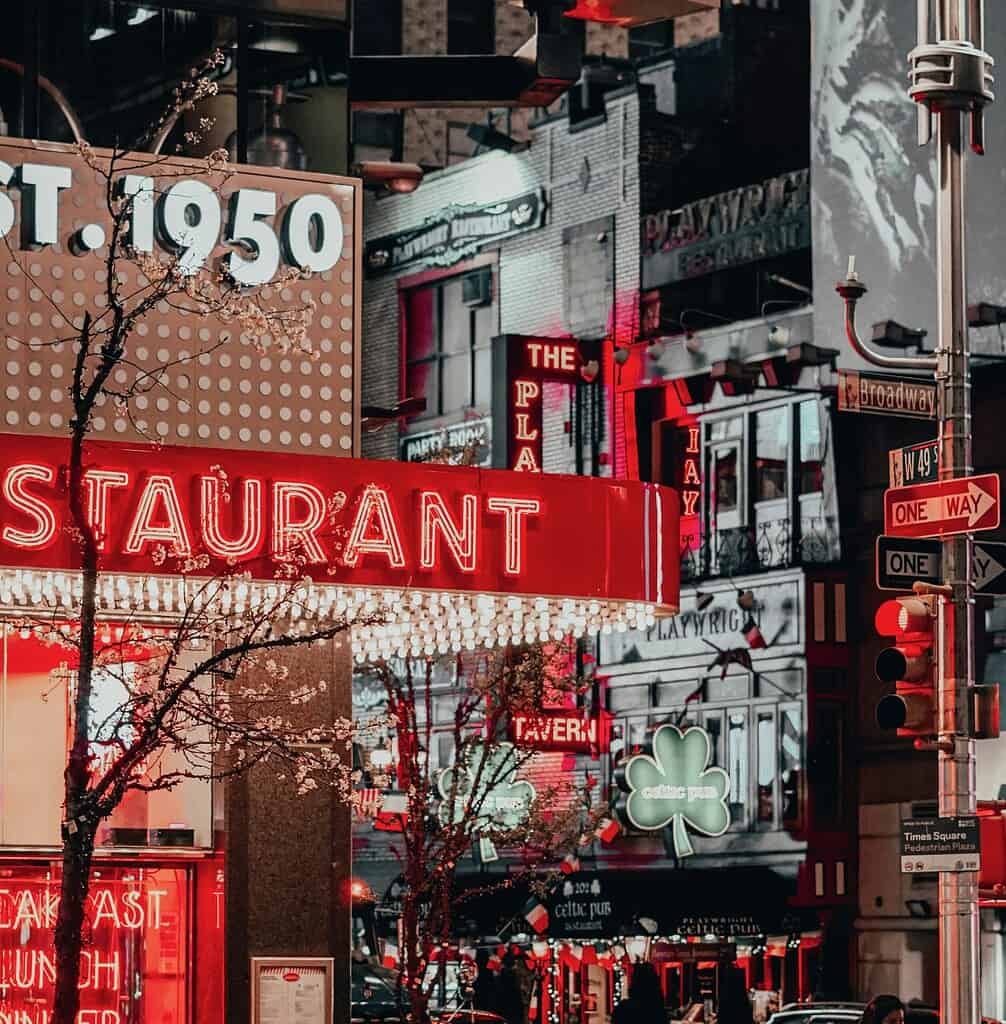
Times Square restaurants operate in their own pricing universe, and eating in the immediate vicinity is one of the fastest ways to inflate your daily food budget with no corresponding benefit.
A mediocre pasta dish near Times Square costs $32-40. The same dish three blocks west in Hell’s Kitchen costs $18-24 and is frequently better because the restaurant is cooking for a neighborhood rather than a tourist surge. A beer in Times Square costs $14-16. The same beer at a Hell’s Kitchen bar costs $7-9.
The markup is real, consistent, and completely avoidable. Times Square is worth walking through, worth seeing at night when the screens light everything up, and absolutely not worth eating or drinking in.
Five minutes in any direction puts you in a neighborhood with real restaurants at real prices. Make that walk every time. Don’t hurt your NYC trip costs eating in Times Square!
You’re Trying to See Everything in One Trip
New York is not a city you finish. It’s a city you return to, and the visitors who try to see everything in one trip leave exhausted, having rushed through a checklist without actually experiencing any of it.
The museums alone could absorb a month. The neighborhoods could absorb a year. The restaurant scene changes faster than any guide can keep up with.
The city is genuinely inexhaustible, and treating a first trip as an attempt to cover it comprehensively is a setup for a frantic, unsatisfying week.
Pick ten things you actually want to do. Do those ten things properly. Leave the other ninety for next time, and there will be a next time, because that’s what New York does to people.
The best New York trips are the ones with room in them. Room to wander into something unplanned, trust me on this.
Room to stay at a dinner table longer than the itinerary allowed. Room to find the thing that becomes your favorite New York story and that wasn’t on any list. You’ll be back for another NYC trip!
You’re Only Visiting Once

This is less a mistake and more a prediction. If you’ve done New York right, if you found the bodega breakfast and the rooftop at sunset and the neighborhood that felt like nowhere else and the diner at midnight and the free concert in the park and the pizza slice that settled the debate, you already know you’re coming back.
New York doesn’t give you everything on the first visit. It gives you enough to understand what you missed, which is its own kind of genius. The city is specifically designed to make you want more of it.
Come back in a different season. Explore a different borough. Go deeper into a neighborhood you only passed through. Eat at the restaurant you didn’t get a reservation for this time.
New York is worth visiting once. It’s worth visiting every chance you get.

Final Thoughts on Visiting NYC the Right Way
New York will give you exactly what you’re willing to look for. Show up expecting Times Square and a hotel breakfast and a taxi everywhere and that’s what you’ll get, functional, forgettable, expensive.
Show up curious, willing to take the subway to a neighborhood you don’t know, eat at a counter where nobody speaks to you unless you speak first, and sit on a bench in a park that isn’t Central Park, and New York will give you something that stays with you.
The city doesn’t hide its best parts. It just doesn’t advertise them to people who aren’t paying attention.
Pay attention. Walk more than you planned. Eat somewhere that doesn’t have a website. Take the ferry. Find the rooftop. Get slightly lost in Brooklyn.
That’s the New York worth visiting. And once you find it, once is never enough.

What is the biggest mistake tourists make in NYC?
Staying in or near Times Square and treating Manhattan as the entire city. Both decisions inflate your costs and limit your experience simultaneously.
Staying in a neighborhood with real character and exploring the outer boroughs at least once transforms what New York actually delivers.
Is NYC worth visiting more than once?
Without question. New York is genuinely inexhaustible, the neighborhoods, the food scene, the cultural calendar, and the city’s energy change faster than any single trip can capture.
Most people who visit once leave with a list of everything they didn’t get to. That list is the reason for the second trip.
What is the most underrated experience in NYC?
The outer boroughs consistently deliver experiences that rival or exceed anything Manhattan offers at lower prices and without the tourist volume. Flushing in Queens for food.
Williamsburg and DUMBO in Brooklyn for atmosphere and views. Arthur Avenue in the Bronx for old New York character that barely exists in Manhattan anymore.
When is the best time to visit NYC?
September through November for the best combination of weather, crowds, and atmosphere. The city is at its most beautiful in autumn and the summer tourist volume has dropped.
Spring from April through June is equally strong. Both seasons deliver New York at its most walkable and most enjoyable.
