

14 Cultural Etiquette Tips for NYC to Know
New York City doesn’t come with a manual. But it probably should, if I’m being honest.
If you’re looking for cultural etiquette tips for NYC before your visit, you’re already ahead of most people who show up completely unprepared for how the city actually operates.
NYC cultural etiquette isn’t as formal or ancient as what you’d encounter in Japan. There are no temples requiring specific rituals, no deeply rooted spiritual customs to navigate.
But New York has its own unwritten code, a set of social expectations that locals follow instinctively and that visitors routinely get wrong.
Some of it is practical. Some of it is cultural. And some of it is just the result of millions of people sharing an extremely small amount of space and figuring out how to make that work without losing their minds.
I’ve spent a lot of time in New York, it’s only 90 minutes from Toronto, and I know the city well enough to recognize a tourist the second they stop in the middle of the sidewalk to check Google Maps.
Get the basics right and New York City opens up in ways that most tourists never experience.
Get them wrong and you’ll spend your trip accidentally irritating everyone around you without understanding why.
Tip—And Tip Properly
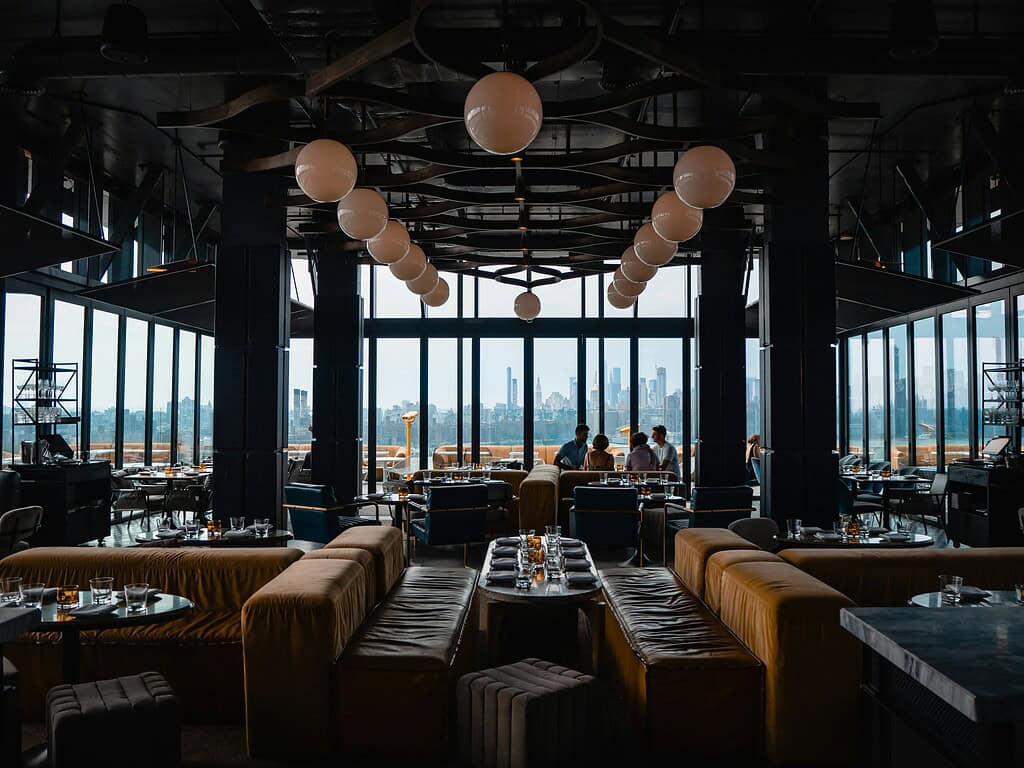
New York has a tipping culture unlike almost anywhere else in the world, and if you’re visiting from a country where tipping isn’t standard, this is the single most important thing to understand before you arrive.
Tipping in NYC isn’t optional. It’s not a reward for exceptional service. It’s a baseline expectation built into how the service industry operates.
Many servers, bartenders, and service workers earn below minimum wage on their base salary specifically because tips are assumed to make up the difference.
The standard for restaurants is 18-20% of the pre-tax bill for decent service. 20% has become the default for most New Yorkers.
If the service was genuinely excellent, 22-25% is not unusual. If the service was poor, 15% is the floor, anything below that sends a clear message, but leaving nothing is considered genuinely rude rather than a statement.
Bars follow a similar structure. $1-2 per drink for casual orders, more for complex cocktails. Bartenders remember who tips well and who doesn’t, and service adjusts accordingly.
Beyond restaurants and bars: tip your hotel housekeeping ($2-5 per night left on the pillow), your taxi or rideshare driver (15-20%), your barber or hairdresser (15-20%), and anyone who carries your luggage.
Many payment terminals now default to suggested tip amounts of 18%, 20%, and 25%. Don’t be caught off guard by this.
Pick one, tap, and move on. Choosing “custom amount” to tip below 15% at a sit-down restaurant will not go unnoticed.
Walk at the Right Pace—And Stay to the Right
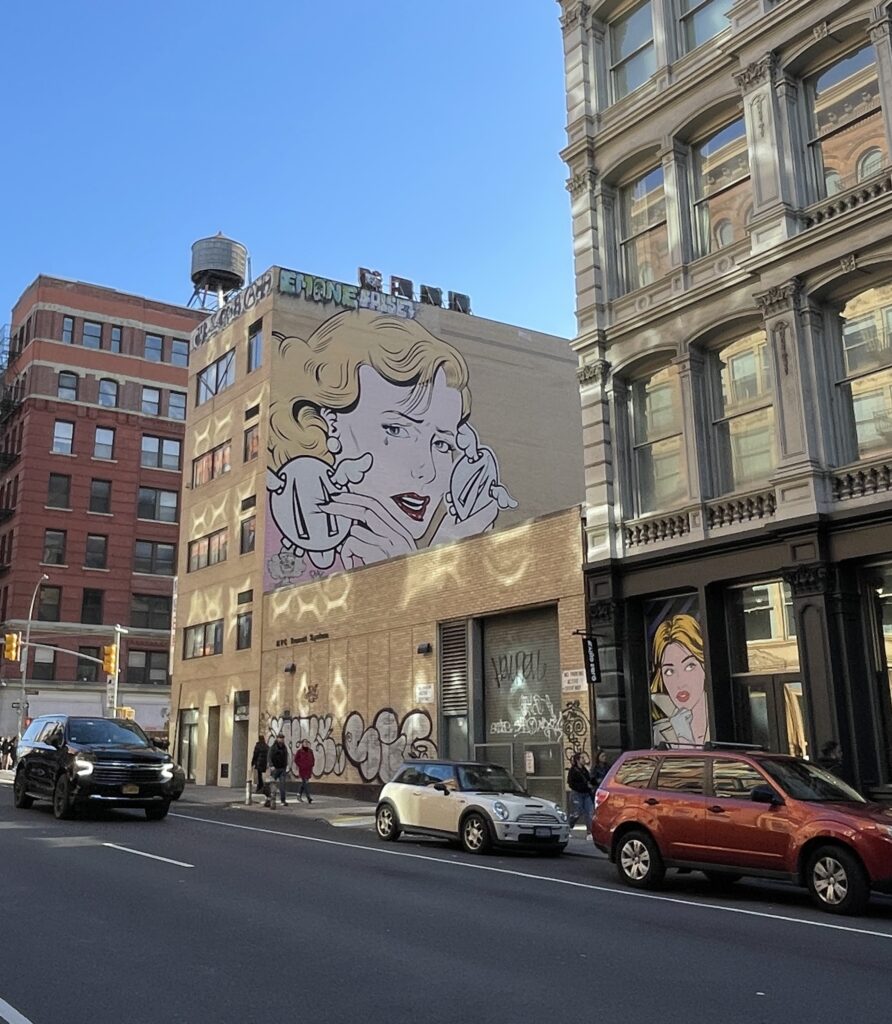
The sidewalks of New York City are essentially high-speed corridors, and treating them otherwise is one of the fastest ways to mark yourself as a tourist.
New Yorkers walk with purpose. They’re going somewhere, they know exactly how to get there, and they’ve mentally calculated how long it should take.
Someone stopping suddenly, walking three abreast, or drifting across the pavement without checking what’s behind them disrupts a system that millions of people depend on every single day.
The basic rule is simple: stay to the right, walk at a reasonable pace, and if you need to stop, step to the side first.
Doorways, building edges, and storefronts are acceptable places to pause. The middle of the sidewalk is not. Avoid blocking the sidewalk as you walk, this is one of the top things not to do in NYC.
Groups are the biggest offenders. Traveling in a line of four or five people taking up the full width of the pavement forces everyone behind you to slow down or navigate around you. It’s not malicious, but it’s genuinely inconsiderate.
If you need to check your phone, step aside. If you need to look at a map, step aside.
If you want to take a photo of a building, step aside and do it quickly. The sidewalk keeps moving whether you’re ready or not.
Know the Subway Rules
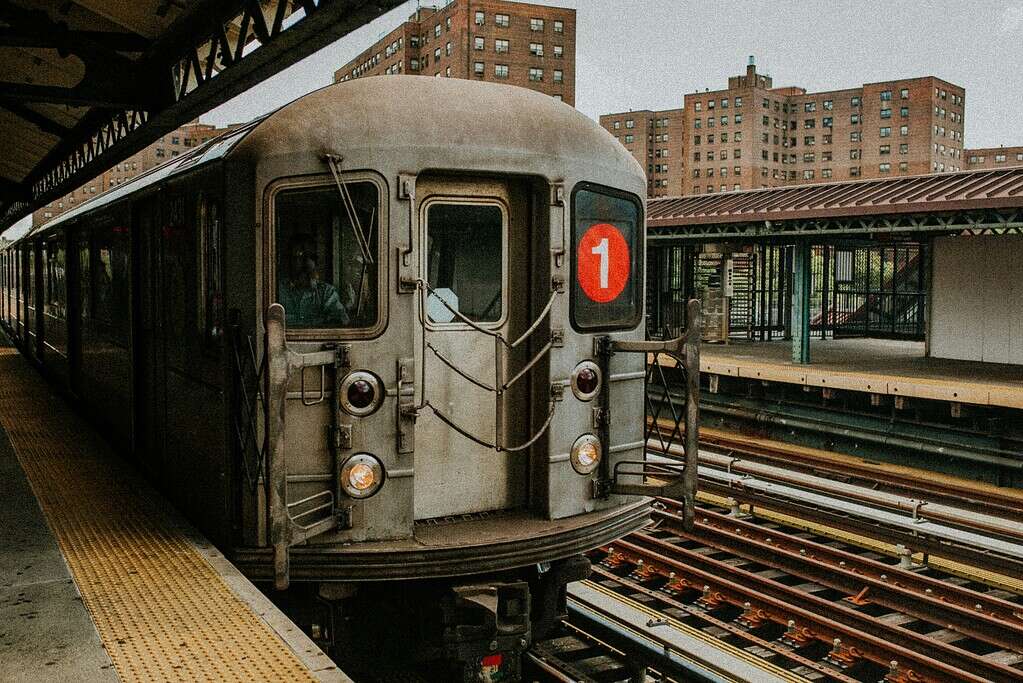
New York’s subway is the city’s circulatory system, and it has its own etiquette that locals take seriously even if nobody’s enforcing it officially.
The most important rule is one that seems obvious but gets violated constantly: let passengers exit before you board.
On a crowded platform, the instinct is to push forward as soon as the doors open. Don’t. Stand to the side of the door, let everyone off, then get on.
This applies everywhere, but on the NYC subway it’s especially important because the cars are often packed and people genuinely cannot get out if you’re blocking the way.
Give up your seat. If you’re sitting in a priority seat and someone elderly, pregnant, visibly injured, or traveling with young children boards the train, you stand up. This isn’t a guideline, it’s an expectation.
Don’t block the doors. Don’t put your bag on a seat during rush hour. Don’t clip your nails, eat a full meal, or play music out loud without headphones. Don’t lean on the pole that six other people are also trying to hold.
The subway is a shared space at maximum capacity for most of the day. The etiquette exists because it has to.
Don’t Block the Entrance to Anything
New York City is dense. Everything, subway entrances, building lobbies, restaurant doors, elevator openings, has a constant flow of people moving in and out.
Standing in any of these openings, even briefly, creates a bottleneck that ripples outward immediately. Someone coming up the subway stairs runs into you.
Someone exiting a building has to navigate around you. Someone trying to board an elevator can’t get on because you’re standing in the doorway.
Move through and then stop. Don’t stop in the middle of the transition.
This is one of those things that feels minor until you’re on the other side of it, stuck behind someone who just stopped dead at the top of the subway stairs while checking their phone, and then it feels extremely inconsiderate.
New Yorkers will not tell you politely to move. They’ll move around you, exhale loudly, or say something direct.
Save everyone the interaction and just keep moving until you’re clear of the threshold.
Be Direct—But Not Rude
New York has a reputation for rudeness that isn’t entirely fair. New Yorkers are direct. That’s different.
If you ask for directions, you’ll get them clearly and efficiently without much small talk. If you ask a question in a shop, you’ll get a straight answer.
If you’re in someone’s way, they’ll tell you. This isn’t hostility, it’s just how communication works in a city where everyone is busy and time is genuinely limited.
The adjustment for most visitors is learning not to interpret directness as aggression. Someone who says “you need to move” isn’t being cruel.
Someone who gives you a two-sentence answer and walks away isn’t being dismissive. It’s the local communication style.
What actually qualifies as rude in New York is different too. Asking someone too many questions when they’re clearly busy.
Expecting small talk from someone serving you during a rush. Being indecisive at the front of a long line. Taking too long to find your payment method at a checkout.
Get to the point, be clear about what you need, say thank you, and move on. You’ll get along fine.
Have Your Payment Ready

This connects to the directness point but deserves its own mention because it’s a real source of friction in New York.
Lines move fast in this city. Coffee shops, food trucks, delis, bodegas, lunch counters, the expectation is that by the time you reach the front of the line, you know what you want and you’re ready to pay for it.
Reaching the register and then spending thirty seconds opening your wallet, finding your card, fumbling with your phone, or deciding between two options while a line of eight people waits behind you is genuinely inconsiderate.
Have your order ready before you reach the front. Have your payment method out and accessible. If you’re paying by card, know your PIN. If you’re paying by phone, have it unlocked.
This applies doubly at busy coffee shops during morning rush hour, where the entire operation is a finely tuned machine that a single indecisive customer can completely derail.
Respect the Bodega
New York’s bodegas are neighborhood institutions, and they deserve a level of respect that most tourists don’t think to extend.
The bodega isn’t a convenience store in the generic sense. It’s often family-run, deeply embedded in its neighborhood, and open at hours when nothing else is. The person behind the counter probably knows every regular by name and order.
Don’t walk in and treat it like a tourist attraction. Don’t take photos of the cat sitting on the counter without asking. Don’t be loud, demanding, or dismissive of the space.
Order simply and clearly. If you’re getting a sandwich, know what you want before you reach the front. Say please and thank you.
Tip the dollar or two if there’s a tip jar. These places run on tight margins and community goodwill.
The bodega will absolutely become part of your daily routine if you’re in New York for more than two days. Treat it accordingly from the start.
Don’t Stare or Make Extended Eye Contact on the Subway
On the street, brief eye contact and a nod is normal in New York. On the subway, it’s a different world.
New Yorkers on the subway have developed a remarkable ability to be in extremely close proximity to strangers while maintaining total psychological privacy. The way this works is through a mutual, unspoken agreement to not stare.
You’ll notice people looking at their phones, reading, staring at the floor, or gazing into the middle distance.
What they’re not doing is making sustained eye contact with the person sitting directly across from them.
Especially don’t do this with a subway performer by watching their “show”, you will be hounded to pay a tip for watching, one of many scams in NYC to avoid.
Staring at people on the subway makes everyone uncomfortable. It signals either aggression, confusion, or that you’re a tourist who hasn’t picked up on the system yet. None of these are ideal.
Look around briefly, take in the environment, then settle your gaze somewhere neutral. You’re in a shared space, behave accordingly.
Don’t Assume NYC Is All of Manhattan

New York City is five boroughs, not one neighborhood in Midtown, keep that in mind!
Referring to Manhattan as “New York” while ignoring Brooklyn, Queens, the Bronx, and Staten Island is a mild but real source of irritation for New Yorkers who live outside Manhattan, which is most of them.
Brooklyn has its own identity, culture, food scene, and neighborhoods that are as compelling as anything in Manhattan.
Queens is one of the most ethnically diverse places on earth and has food that rivals any borough.
The Bronx gave the world hip-hop and has one of the best baseball stadiums in the country.
If you’re only planning to see Times Square and Central Park and calling it a New York trip, that’s your prerogative.
But don’t make the mistake of thinking that’s the whole picture, and definitely don’t say so out loud to a New Yorker from Brooklyn.
Don’t Expect Small Talk from Service Workers During a Rush
New York service workers are good at their jobs. Many of them are exceptionally good.
But during a rush, they are operating at maximum speed to serve the maximum number of people in the minimum amount of time. This is not the moment to chat.
If you try to make extended conversation with a barista handling fifteen drink orders, a deli worker during the lunch rush, or a cashier with a line to the door, you’re not being friendly, you’re being oblivious to the situation around you.
Save the conversation for quieter moments. If you go back to the same spot multiple times and get to know someone over a few visits, that’s different. But walking in during a rush and expecting leisurely interaction is a misread of the room.
A genuine smile, a clear order, a thank you, and a reasonable tip will get you further than attempted small talk every single time.
Keep Your Voice Down in Residential Areas at Night
New York’s residential neighborhoods, the brownstone blocks of Brooklyn, the quieter streets of the West Village, the upper reaches of Manhattan, are actual communities where people live, sleep, and raise families.
Late-night noise from groups returning from bars or restaurants echoing down a quiet residential street is a real quality of life issue for people who live there.
New York may be the city that never sleeps, but the person in the brownstone you’re walking past at 1 a.m. probably has work at 7.
This isn’t an official rule. It’s just basic consideration for the people whose neighborhood you’re moving through temporarily.
Keep the volume reasonable after midnight in residential areas. Save the loud conversations for the bar you just left or the Uber you’re about to get into.
Don’t Complain About the Cost Out Loud

New York is expensive. Everyone knows New York is expensive. New Yorkers know it better than anyone because they live with it every day.
Loudly expressing shock at the price of a cocktail, a sandwich, or a hotel room is one of those things that marks you immediately as someone who didn’t do their research.
New Yorkers don’t need the reminder, and they generally don’t have a lot of patience for it.
You chose to come to one of the most expensive cities in the world. Budget accordingly, accept the prices, and enjoy what you’re paying for.
A $20 cocktail at a good Manhattan bar is still cheaper than flying somewhere else.
The one place this doesn’t apply is genuine price gouging or overcharging, that’s worth raising.
But expressing sticker shock at normal New York prices to the person serving you is unnecessary and a little embarrassing.
Don’t Take Up More Space Than You Need
New York has an extraordinary amount of people in an extraordinarily small area. The entire social contract of the city is built on the implicit understanding that everyone agrees to take up only their fair share of space.
This applies everywhere. On the subway, don’t manspreader your legs across two seats. Don’t put your bag on the seat next to you during rush hour.
On the sidewalk, don’t walk slowly in the center of the path. In a restaurant, don’t drape your coat across an empty chair at a neighboring table.
It’s not about being rigid. It’s about spatial awareness in an environment where space is genuinely scarce and shared by everyone equally.
The New Yorkers who are best at this have an almost unconscious efficiency of movement, they know exactly how much space they need and they take exactly that amount. It’s worth trying to adopt even partially for the duration of your visit.
Say Please and Thank You—Every Time

This one sounds basic, but it matters more in New York than people expect. New Yorkers are direct, fast-moving, and not particularly effusive. But they notice manners.
The please when you order something. The thank you when it arrives. The genuine acknowledgment of the person serving you as an actual human being doing a job, not a feature of the establishment.
Service workers in New York deal with thousands of interactions a week. A significant number of those interactions involve people who treat them as invisible or as obstacles between themselves and what they want.
Being genuinely polite, not performatively warm, not trying to start a conversation during a rush, just consistently saying please and thank you, cuts through that in a way that gets noticed.
It’s also just the right thing to do. New York is a city of people working extremely hard in often difficult conditions. The least you can do is be decent.
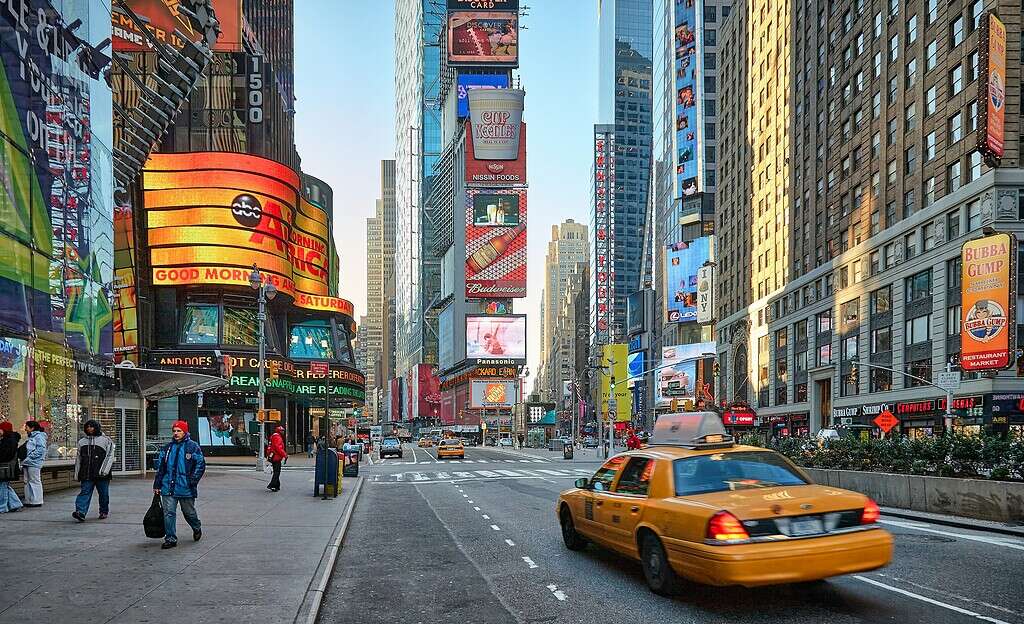
Final Thoughts on NYC Cultural Etiquette
New York doesn’t ask you to be perfect. It asks you to be aware. The city operates at a speed and density that requires a basic level of social cooperation from everyone moving through it.
When that cooperation breaks down, when people stop in the middle of the sidewalk, block subway doors, or treat service workers as props, the whole system feels it.
But when you get it right, when you move with the rhythm of the city instead of against it, New York is one of the most electric and rewarding places on earth to spend time. That said, here are a few must know tips for NYC before you visit!
The food is extraordinary. The neighborhoods are endlessly interesting. The energy is unlike anywhere else.
And the people, once you learn to speak their language, direct, efficient, unpretentious, are actually pretty great.
Tip properly. Walk purposefully. Be direct and be decent. The rest will take care of itself. Have a wonderful trip and eat plenty of pizza for me!
How much should I tip at restaurants in NYC?
The standard is 18-20% of the pre-tax bill for decent service, with 20% being the most common default among New Yorkers.
For excellent service, 22-25% is appropriate. Most payment terminals now suggest tip amounts automatically, use them as a guide and adjust based on your experience.
Is it safe to take the subway in NYC at night?
Generally yes NYC is safe, though staying aware of your surroundings is always advisable. The subway runs 24 hours, and most lines are well-used even late at night.
Stick to well-lit areas of platforms, stay near other passengers, and trust your instincts. The subway is statistically safe, but common sense applies as it does anywhere in a major city.
Do New Yorkers actually hate tourists?
No. New Yorkers are often frustrated by tourist behavior, stopping on sidewalks, blocking subway doors, moving slowly in busy spaces, but it’s the behavior they react to, not the person.
Approach New Yorkers directly, be clear about what you need, and don’t waste their time, and you’ll find most of them genuinely helpful.
What’s the biggest mistake tourists make in NYC?
Staying only in Midtown Manhattan and treating Times Square as representative of the city. New York’s best food, most interesting neighborhoods, and most authentic experiences are largely found outside the tourist epicenter.
Get on the subway, go to Brooklyn, explore Queens, and give yourself time to actually experience the city rather than just its most photographed version.

Great article! 🙂 Regards from Poland.
Ohhh I love this article!
I have been several times in NYC and definitely fell in love with each borough! Send u love from Serbia 🙂
Thank you for your kind words!