
9 Smart Ways to Save Money in Thailand
Thailand has a reputation for being affordable, and for the most part that reputation is earned.
But knowing how to save money in Thailand the smart way means the difference between a good trip and one that genuinely stretches your budget without sacrificing a single thing worth having.
The country is already cheap by almost any global standard. Street food costs $1-3. Guesthouses run $15-30 a night.
Local transport is a fraction of what you’d pay back home. But affordable doesn’t mean you can’t overspend, and plenty of travelers do, usually on the same handful of avoidable decisions.
These nine tips aren’t generic budget advice. They’re specific, Thailand-tested moves that keep more money in your pocket from the moment you land to the moment you leave.

Take the Airport Rail Link From Suvarnabhumi — Not a Taxi
This is the money-saving tip that applies from the very first minute you land in Thailand, and getting it wrong sets an expensive tone for everything that follows.
A metered taxi from Suvarnabhumi Airport into central Bangkok costs approximately 300-500 THB plus expressway tolls of 25-75 THB, totaling 350-600 THB depending on traffic and destination.
A Grab from the airport runs similarly, sometimes higher during surge pricing on arrival evenings.
The Suvarnabhumi Airport Rail Link connects directly to Phaya Thai station in central Bangkok in approximately 30 minutes and costs 15-45 THB depending on your stop.
From Phaya Thai you connect directly to the BTS Skytrain network for onward travel across the city at standard fare.
The math is straightforward, you’re saving 300-500 THB on a single journey before you’ve even checked into your hotel. Across a group of two travelers that’s 600-1,000 THB saved on arrival day alone.
Follow signs for the Airport Rail Link immediately after clearing customs. Trains run frequently throughout the day and evening.
Get a Rabbit Card for the BTS connection at Phaya Thai and you’re moving through Bangkok efficiently from the moment you land.
Book Domestic Flights 2-3 Months in Advance

Thailand’s budget airline network, AirAsia, Nok Air, and Thai Lion Air, connects Bangkok to Phuket, Chiang Mai, Koh Samui, Krabi, and every major destination in the country at prices that are extraordinary when booked early and genuinely painful when left until the last minute.
Bangkok to Phuket booked two to three months out regularly comes in under 800-1,200 THB ($22-35 USD).
The same route booked two weeks out during high season runs 2,500-4,500 THB or more. The flight is identical. The aircraft is identical. The only variable is when you decided to buy the ticket.
During high season, December through April, domestic routes fill up fast as international visitor numbers peak alongside Thai domestic tourism.
Waiting until you’re confident about your itinerary costs real money on journeys you were always going to take anyway.
A practical note on baggage: budget airlines in Thailand price base fares on cabin baggage only.
Always add checked luggage during the initial online booking, airport add-on prices are significantly higher than booking-time prices. Sort your full fare including baggage the moment you lock in your dates.
Use SuperRich Exchange Booths — Never Hotels or Airports
Currency exchange rates in Thailand vary significantly depending on where you exchange, and the gap between the best and worst options is real enough to matter across a full trip.
Airport exchange counters at Suvarnabhumi and Don Mueang offer some of the worst rates available in Thailand. Hotel front desks are similarly poor.
Both charge a spread that quietly takes a percentage of every transaction without itemizing the cost in a way that’s immediately obvious.
SuperRich exchange booths, identifiable by their orange or green branding, consistently offer among the best cash exchange rates in Thailand and are available throughout Bangkok and in major tourist areas.
The difference between exchanging $500 USD at an airport counter versus a SuperRich booth can easily be 500-800 THB, meaningful money for a straightforward rate comparison that takes five minutes of planning.
The practical approach: exchange just enough at the airport on arrival for your first taxi and immediate needs, 500-1,000 THB is sufficient.
Then find a SuperRich booth once you’re settled and exchange your main cash amount there.
The Wise card is an excellent complement for card-based spending at close to mid-market exchange rates on every transaction.
Get an Airalo eSIM or Local SIM Before You Land

Staying connected in Thailand from the moment you land is essential, Grab for transport, Google Maps for navigation, translation apps for menus, and sorting your data solution before arrival is significantly cheaper and more convenient than airport alternatives.
Airalo is the most convenient option for most travelers. Download the app before you leave home, purchase a Thailand data plan, and arrive with data already active.
No airport queue, no language barrier at a phone counter, no SIM tray fumbling after a long flight. Thailand data plans on Airalo start at competitive prices for reliable coverage across Bangkok and major tourist areas.
If your phone supports eSIM, most modern smartphones do, this is the cleanest solution available.
Physical SIM cards from DTAC, AIS, or True Move are available at airport counters on arrival. They’re reliable and staff will install and activate on the spot. Airport pricing is slightly higher than buying in the city but reasonable for the arrival convenience.
One practical note: local SIM cards bought in Thailand often come with free calls to Thai numbers and generous data packages at prices that make international roaming look absurd by comparison.
If you’re staying more than a week, a local SIM frequently works out cheaper than an eSIM for extended usage.
Use the BTS Skytrain and MRT in Bangkok

Bangkok traffic is legendary for good reason, a taxi journey that should take 20 minutes during rush hour regularly takes 60-90 minutes and costs 200-400 THB in a metered cab or higher on Grab during surge.
The BTS Skytrain and MRT subway system cover most of Bangkok’s major tourist areas, shopping districts, and neighborhoods at 16-59 THB per journey depending on distance.
They’re fast, air-conditioned, and completely unaffected by street traffic. The same journey that costs 300 THB in a taxi and takes an hour costs 40 THB on the BTS and takes 15 minutes.
Get a Rabbit Card for the BTS at any station, it’s a stored-value card that eliminates the need to buy individual tickets for every journey.
Load it with 300-500 THB for your first few days and top up at any station vending machine. The MRT has its own stored-value card available at MRT stations.
Plan your Bangkok accommodation near a BTS or MRT station. The price difference between a hotel on the Skytrain line and one requiring a taxi for every journey compounds across a full Bangkok stay into a meaningful transport cost difference.
Use Songthaews in Chiang Mai, Pattaya and Beyond

Outside Bangkok, the Skytrain and MRT don’t exist, but songthaews do, and they’re one of Thailand’s most cost-effective and genuinely local transport options.
Songthaews, the red shared pickup trucks that operate throughout Chiang Mai, the blue ones in Pattaya, and variations in numerous other Thai cities, function as informal shared taxis.
You flag one down, tell the driver where you’re going, and if it’s on their general route they nod and you climb in the back. The fare in Chiang Mai runs 30-50 THB per person for most journeys within the city.
Compare this to a tuk-tuk negotiated at 150-200 THB for the same journey or a Grab at 80-120 THB and the savings are immediate.
Songthaews are how locals in Chiang Mai actually move around the city daily, joining that system rather than defaulting to tourist transport options is both cheaper and more authentic.
In Pattaya the blue songthaews run along the main beach roads for 10 THB per person, one of the cheapest forms of urban transport anywhere in Thailand.
In other beach towns and smaller cities across the country, equivalent shared vehicle systems operate on similar pricing principles. Ask your guesthouse what the local equivalent is and use it.
Eat at Shophouse Lunch Stalls Between 11am and 2pm
This is one of the most consistently overlooked money-saving strategies in Thailand and one of the most rewarding in terms of both cost and food quality.
Thai shophouse restaurants, the simple, often unmarked family-run operations that serve rice and curry from steam trays, operate a lunch service that is simultaneously the best value meal of the day and the most authentically Thai eating experience available to visitors.
A plate of rice with two or three curry or stir-fry dishes costs 60-100 THB ($1.80-3 USD). You point at what looks good from the steam trays at the front, they scoop it onto your plate, and you have a fresh, genuinely delicious Thai meal for under $3.
The food is cooked that morning and replenished throughout service, turnover is high and quality reflects it.
These restaurants are everywhere in Thai cities and towns outside the tourist corridors. They don’t have English menus. They don’t need them. The steam tray system is self-explanatory regardless of language.
The peak lunch window, 11am to 2pm, is when the selection is at its widest and the food is freshest. After 2pm dishes start running out and the quality of remaining options drops.
Find the nearest busy shophouse to wherever you’re staying. Eat there for lunch as often as possible.
The food is better than most tourist restaurants and the cost is a fraction of anything with an English menu.
Withdraw Large Amounts Less Often and Always Choose Thai Baht at the ATM

Two specific ATM habits that save meaningful money across a Thailand trip, and both are easy to implement once you know about them.
Every Thai bank ATM charges a flat 220 THB fee per foreign card withdrawal regardless of which bank you use. Bangkok Bank, Kasikorn, SCB, Krungthai, the fee is identical across all of them.
The only exception worth knowing: AEON Bank ATMs charge 150 THB and can be found inside Big C, Lotus, and Makro stores if you happen to be near one.
Their network has reduced in recent years so don’t specifically hunt for them, but use one if you come across it.
Given the flat fee structure, withdrawing larger amounts less frequently is straightforwardly smarter than smaller amounts more often.
Withdrawing 5,000 THB in one transaction costs 220 THB in fees. Withdrawing the same 5,000 THB across five 1,000 THB transactions costs 1,100 THB in fees.
The math makes the behavior obvious, take out what you’ll need for several days at once rather than going back to the ATM daily.
The second habit is equally important: when the ATM asks whether you want to be charged in your home currency or Thai Baht, always choose Thai Baht.
Choosing your home currency activates Dynamic Currency Conversion, which applies a 3-5% markup on the exchange rate that benefits the ATM operator rather than you.
Always choose Thai Baht and let your home bank handle the conversion at a significantly better rate.
Avoid Shopping on Tourist Streets — Buy the Same Things for Less Elsewhere
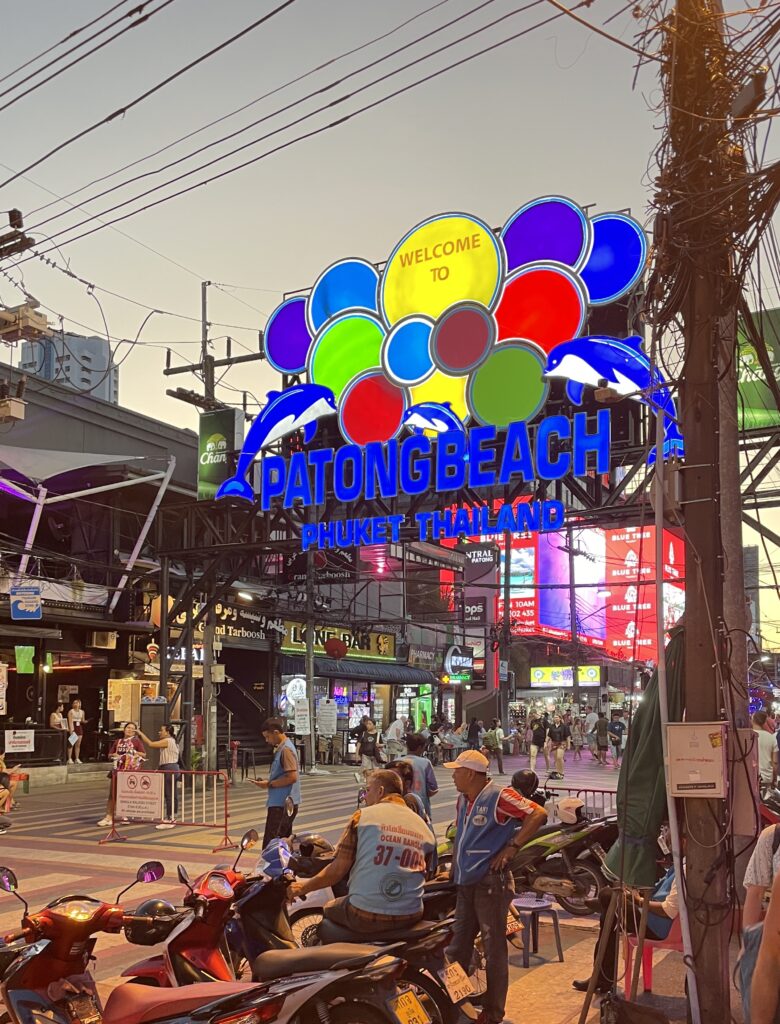
Thailand’s tourist streets are worth visiting for the atmosphere and energy, but buying souvenirs, clothing, and everyday items on them means paying tourist markup on things available significantly cheaper a few streets away.
The elephant pants, the fridge magnets, the Chang beer vest, the Thai massage vouchers, the sarongs, all of it is available on Khao San Road in Bangkok, the Night Bazaar in Chiang Mai, and Bangla Road in Phuket at prices that reflect the tourist foot traffic rather than any inherent value.
The same items cost 30-50% less at local markets and shopping centers a short distance away.
In Bangkok, Chatuchak Weekend Market and Or Tor Kor Market offer better prices and better quality than Khao San Road for almost every souvenir category.
Big C and Lotus hypermarkets stock Thai snacks, toiletries, and everyday items at prices the tourist strip can’t compete with.
In Chiang Mai, Warorot Market, known locally as Kad Luang, is where locals actually shop. Prices for the same items available in the Night Bazaar are significantly lower and the market has a genuine local character that the tourist-facing alternatives don’t.
Visit the tourist streets. Experience them. Take photos. Then do your actual buying somewhere else.

Final Thoughts on Saving Money in Thailand
Thailand is already one of the best value destinations in the world, but the gap between a traveler who applies these habits and one who doesn’t is real and measurable across a full trip.
The Airport Rail Link instead of the taxi. The SuperRich exchange booth instead of the airport counter. The shophouse lunch instead of the tourist restaurant. The BTS instead of the taxi.
The songthaew instead of the tuk-tuk. None of these are sacrifices, they’re just the smarter version of decisions you were going to make anyway.
Apply them consistently and Thailand rewards you with more money left for the experiences that actually matter, the extra night on the island, the cooking class you almost skipped, the nicer dinner you justified because you’d been smart everywhere else.

Is Thailand cheap to travel in 2026?
Yes, it remains one of the most affordable destinations in the world. Street food costs $1-3, guesthouses run $15-30 per night, and local transport is extremely cheap. Applying smart spending habits makes it even more affordable without sacrificing anything worth having.
What is the cheapest way to get from Suvarnabhumi Airport to Bangkok?
The Airport Rail Link to Phaya Thai station costs 15-45 THB and takes approximately 30 minutes. This is significantly cheaper than a metered taxi at 350-600 THB and faster during peak traffic hours.
Is Grab available throughout Thailand?
Grab operates in Bangkok, Chiang Mai, Phuket, Pattaya, and most major tourist areas. In smaller towns and rural areas availability reduces. Always download and set up Grab before you land for transparent, fairly priced transport wherever it’s available.
What is the best way to exchange money in Thailand?
SuperRich exchange booths consistently offer among the best cash exchange rates in Thailand. Avoid airport counters and hotel exchange desks which charge poor rates. A Wise card is an excellent complement for card-based spending at close to mid-market exchange rates on every transaction.
