

6 Japan Entry Requirements to Know in 2026
Japan’s entry process is more relaxed in some ways and stricter in others, which is exactly why it’s worth understanding the actual Japan entry requirements rather than assuming you already know how they work.
Nothing here is complicated, but a few of these rules genuinely surprise first time visitors, especially the passport one.
Here’s what to have sorted before you fly to Japan in 2026, and a couple of things worth doing even though they’re technically optional.
Getting the basics right early means you can spend your planning energy on the fun part, whether that’s building out a full Japan itinerary or narrowing down your must see list.
Passport Validity, and Why Japan’s Rule Works Differently
This is the one that catches people off guard, because Japan doesn’t follow the same rule as most of its neighbors.
Officially, Japan only requires your passport to be valid for the duration of your stay, not the flat 6 month buffer that many other enforce.
In practice though, plenty of airlines still apply their own internal 6 month rule regardless of what Japan itself requires, since that’s become an industry standard baseline for international travel generally.
So while Japan’s actual law is more relaxed, don’t assume that means you can cut it close.
The safest move is still to have at least 6 months of validity left, not because Japan demands it, but because your airline might, and getting turned away at check-in over an airline policy is just as disruptive as getting denied at the actual border.
If you’re planning a trip that includes things to do in Kyoto alongside Tokyo, renew early enough that this isn’t something you’re thinking about while you’re supposed to be planning temples and food.
Visa Exemption Length Depends on Your Nationality

Japan has visa exemption agreements with more than 70 countries and regions, but unlike some destinations that give everyone the same flat number of days, the length here genuinely varies depending on where you’re from.
Most visitors, including travelers from the US, Canada, Australia, and much of Europe, get up to 90 days.
A smaller group of countries, including the UK, Germany, Austria, Ireland, Switzerland, and Mexico, actually get up to 6 months.
On the other end, a handful of nationalities are capped much shorter, sometimes as little as 14 or 15 days.
If your passport isn’t on the exemption list at all, you’ll need to apply for a visa in advance through a Japanese embassy or consulate rather than expecting to sort anything on arrival.
Don’t assume your exemption length matches what a friend told you about their trip, since it genuinely depends on nationality rather than being universal.
Getting this wrong is one of the more avoidable tourist mistakes to avoid in Japan, and it takes two minutes to check properly before you book anything.
Skip the Paperwork with Visit Japan Web
Visit Japan Web is Japan’s official pre-registration portal, and here’s the important part, it’s optional, not mandatory.
You can absolutely skip it and fill out paper forms on the plane or at the airport instead.
That said, there’s very little reason to skip it. Registering in advance generates QR codes for both immigration and customs, meaning you walk through arrival scanning a code instead of filling out forms by hand while jet lagged.
It takes a few minutes to set up before you fly, and it noticeably speeds up the actual process once you land, especially at busier airports like Narita and Haneda during peak season.
It’s also completely free, which matters if you’re being careful with your budget travel tips for Japan and want to avoid any of the third party sites that sometimes try to charge for things that don’t cost anything through official channels.
Set it up once, save your flight and accommodation details, and update it for each new trip if you’re a repeat visitor. Also be careful of fake Japan arrival websites, these are a classic Japan scam, it’s free to do the customs arrival portal.
Proof of Onward or Return Travel
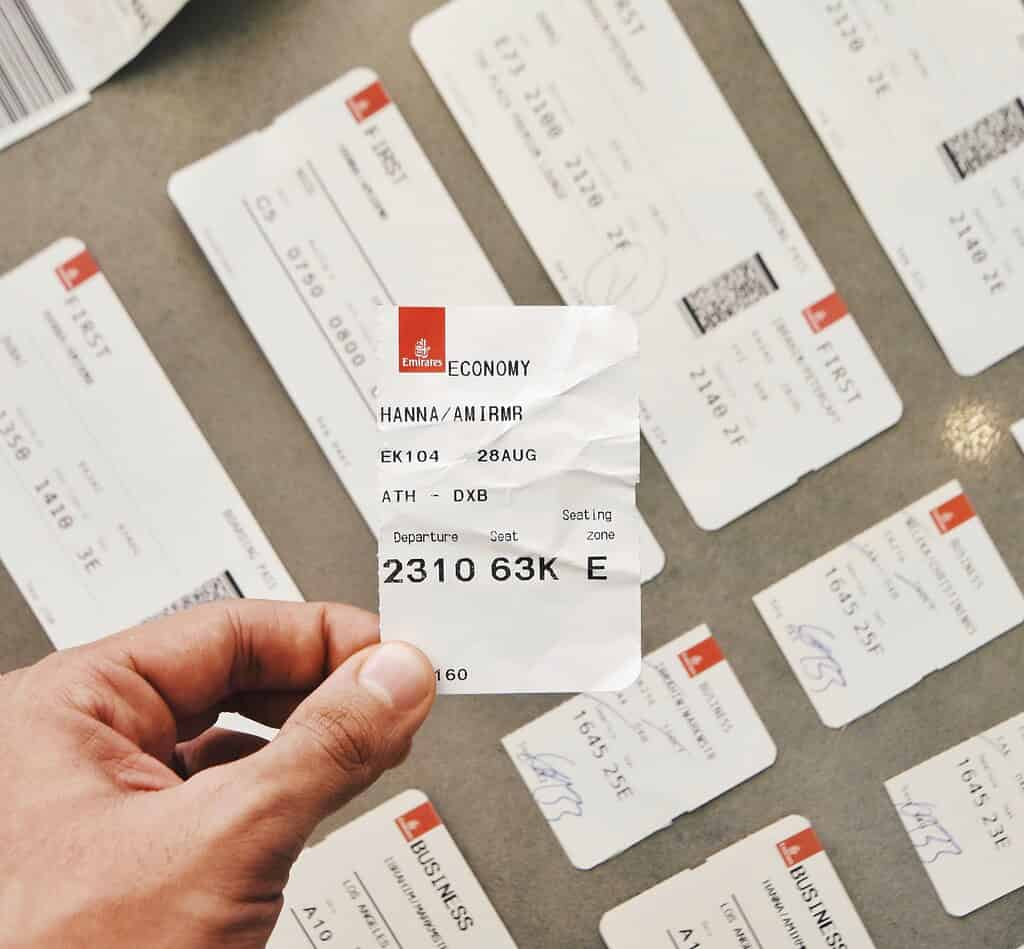
Airlines and immigration can both ask to see evidence that you’re planning to leave Japan within your permitted stay, so having a return or onward ticket ready is standard practice rather than something to figure out at the counter.
A confirmed return flight or a ticket onward to your next destination both satisfy this.
If you’re not committed to a fixed departure date, a flexible or refundable ticket works as a reasonable way to check this box without locking yourself into plans you’re not ready to make.
This matters just as much whether you’re timing your trip around the best time to visit Japan for cherry blossoms or planning a quieter off season visit.
Confirmed Accommodation
Japan requires visitors to provide their accommodation address as part of the arrival process, since hotels and guesthouses are required to register foreign guests with local authorities.
If you’re staying with friends or family instead of a hotel, their address works just as well.
This doesn’t need to cover your entire trip, just wherever you’re headed first. If the rest of your itinerary is still up in the air, book the first night or two specifically to satisfy this, then sort the rest once you’ve landed.
It’s also worth knowing which scams in Japan to avoid exist around accommodation booking specifically, since fake listing sites do occasionally target popular tourist areas the same way they do elsewhere in Asia.
Proof of Sufficient Funds, and Who This Actually Applies To

This one gets listed as a general requirement a lot, but it’s worth being precise about who it actually affects, since it’s not something most tourists will ever be asked about.
Proof of funds is genuinely part of the process if you’re a nationality that needs to apply for a visa in advance through a Japanese embassy, in that case, bank statements and financial documentation are a standard part of what you submit alongside your application.
For the majority of visitors coming from visa-exempt countries, the US, UK, EU, Australia, Canada, and dozens of others, this simply isn’t checked at the airport or border on arrival.
It’s baked into the advance visa process for the countries that need one, not a general on-the-spot requirement for everyone.
If you do need to apply for a visa, budget realistically for your trip anyway. Understanding your likely Japan trip costs ahead of time makes the whole planning process smoother regardless of whether you’re formally proving funds to an embassy or just budgeting for yourself.
Final Thoughts for Your Japan Trip
None of these requirements are difficult on their own, but Japan does things slightly differently than its neighbors, a more relaxed passport rule, an optional digital system instead of a mandatory one, and exemption lengths that genuinely depend on where you’re from rather than one flat number for everyone.
Work through this list in the weeks before you fly, register on Visit Japan Web even though you don’t have to, and double check your specific nationality’s exemption length rather than assuming it matches someone else’s experience.
Get this part sorted and you can focus on the parts that actually matter, whether that’s finalizing a Tokyo itinerary or figuring out how many days to give Kyoto.

Does my passport need 6 months of validity to enter Japan?
Not officially. Japan only requires your passport to be valid for the length of your stay.
That said, many airlines still apply their own 6 month rule at check-in, so it’s safest to have that buffer regardless of what Japan itself technically requires.
Do I need a visa to visit Japan as a tourist?
Travelers from more than 70 countries can enter visa-free, though the length varies by nationality, most get up to 90 days, some up to 6 months, and a few shorter.
If your country isn’t on the exemption list, you’ll need to apply for a visa in advance.
Is Visit Japan Web mandatory?
No, it’s optional. You can complete paper forms instead. But since it’s free and speeds up both immigration and customs on arrival, there’s very little reason to skip it.
Do I need to prove I have enough money to enter Japan?
Only if you’re applying for a visa in advance through an embassy, in which case financial documentation is part of that process.
Visitors from visa-exempt countries are generally not asked to prove funds at the airport or border.
