
9 Things Tourists Overpay for in Thailand
Thailand has a reputation for being one of the most affordable travel destinations in the world, and that reputation is genuinely earned.
Street food costs next to nothing. Local transport is cheap. Accommodation at every budget level delivers value that most Western countries can’t touch.
But there’s a version of Thailand that costs significantly more than it should, and most tourists spend their entire trip in it without realizing there’s another option.
The things tourists overpay for in Thailand aren’t obscure traps, they’re the most common, most visible, most seemingly obvious choices available at every turn. The airport transfer.
The exchange booth in arrivals. The tour desk at your hotel. The massage on the main tourist street.
None of these are scams exactly. They’re just the expensive version of something available considerably cheaper a short walk or one phone app away.
I’ve been to Thailand more times than I can count and the tourist pricing system is consistent, predictable, and entirely avoidable once you know where it lives.

Airport Transfers and Taxis
The airport is where Thailand’s tourist pricing system introduces itself, and it does so immediately and confidently.
Unofficial taxi operators and transfer companies work the arrivals hall at Suvarnabhumi with quoted prices that bear no relationship to what the journey should cost.
A metered taxi from Suvarnabhumi to central Bangkok costs 250-350 THB plus expressway tolls of 25-75 THB.
The same journey quoted by an unofficial transfer operator in arrivals runs 600-1,200 THB depending on how tourist-facing your body language is at that particular moment.
The Airport Rail Link solves this entirely for Bangkok-bound travelers, 15-45 THB to Phaya Thai station depending on your stop, connecting directly to the BTS Skytrain.
For those who need a taxi, Grab from the official taxi stand on the arrivals floor locks in the metered rate before you get in the car.
The pattern repeats at every airport in Thailand. Don Mueang, Phuket, Chiang Mai, every arrival hall has operators quoting tourist rates to travelers who haven’t yet oriented themselves.
Booking your transfer in advance or using Grab from the moment you clear customs eliminates this entirely.
This is also one of the most common situations where scams in Thailand blend into legitimate but overpriced services, the distinction matters less than the outcome, which is the same either way.
Currency Exchange
Where you exchange money in Thailand determines how many baht you actually receive, and the difference between the best and worst exchange options is significant enough to matter across a full trip.
Airport exchange counters at Suvarnabhumi and Don Mueang offer some of the worst rates available anywhere in Thailand.
The spread they charge, the gap between the mid-market rate and what they give you, can run 10-15% on a busy day.
On a $500 USD exchange, that’s $50-75 gone before you’ve spent a single baht on anything you actually want.
Hotel exchange desks are equally poor. The convenience premium they charge is real and consistent.
SuperRich exchange booths, identifiable by orange or green branding and found throughout Bangkok and in most major tourist areas, consistently offer among the best cash exchange rates in Thailand.
The difference between exchanging at Suvarnabhumi versus a SuperRich booth in the city can easily be 500-800 THB on a meaningful exchange amount.
The practical approach: exchange just enough at the airport for your taxi and immediate needs, 500-1,000 THB is sufficient. Then find a SuperRich booth once you’re settled and exchange your main amount there.
A Wise card loaded with Thai baht handles card-based spending at close to mid-market rates for everything else. This combination eliminates most of the hidden currency cost that quietly inflates Thailand trip budgets.
Souvenirs Near Tourist Attractions

The souvenir stalls immediately surrounding Thailand’s major temples, markets, and tourist sites operate on a pricing logic entirely separate from what the same items cost anywhere else.
Proximity to a major attraction adds a surcharge that has nothing to do with quality and everything to do with captive foot traffic.
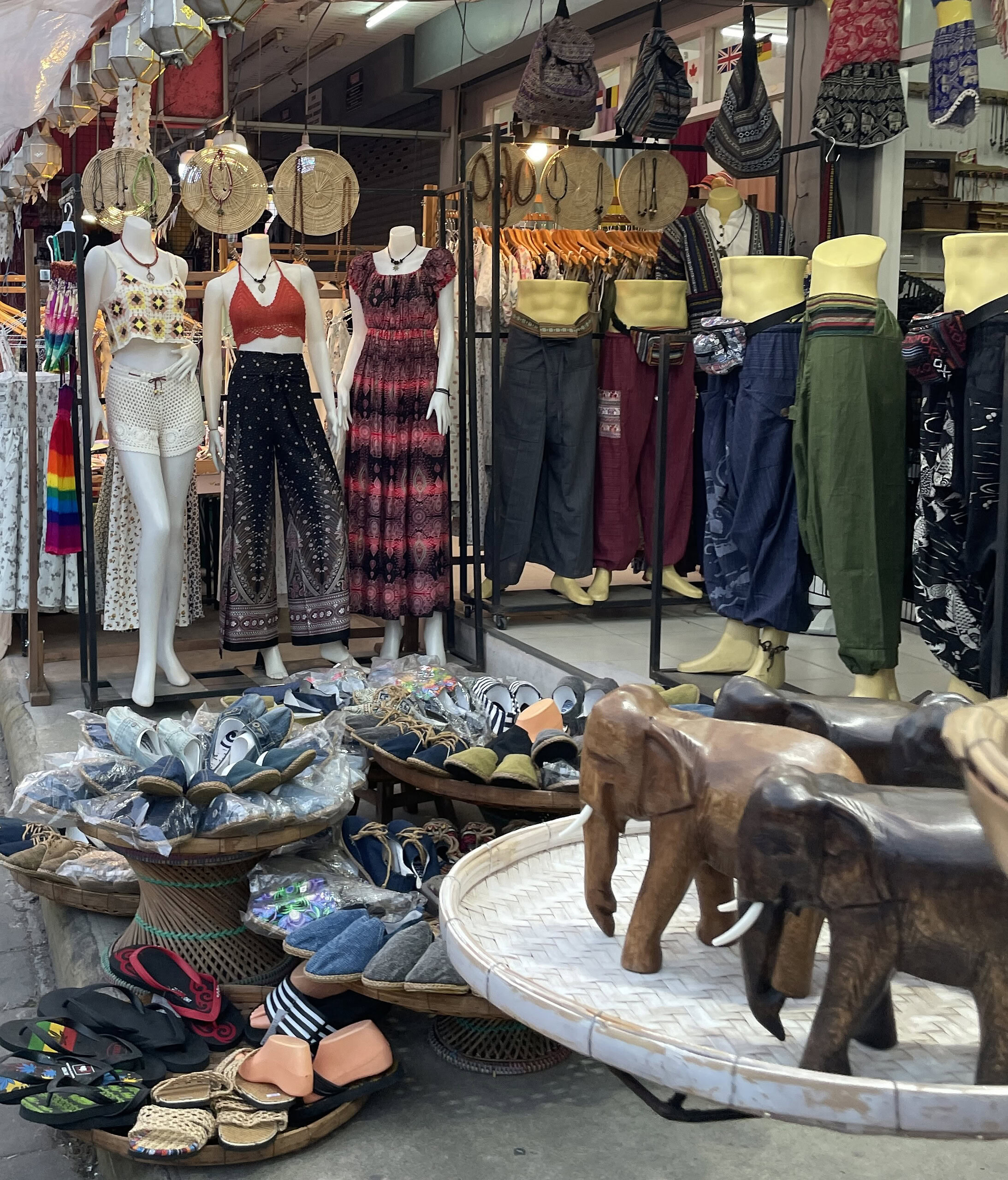
The elephant pants quoted at 350 THB outside Wat Pho cost 120-150 THB at Chatuchak Weekend Market in Bangkok.
The hand-painted ceramics sold for 800 THB near the Grand Palace entrance cost 300-400 THB at a local market fifteen minutes away.
The traditional Thai silk scarves, the decorative fans, the Buddha figurines, all of it carries a tourist location premium that evaporates the moment you leave the immediate vicinity of whatever brought you there.
Buying souvenirs at or immediately adjacent to major attractions is one of the most consistent overpaying situations in all of Thailand travel. The fix is straightforward: note what you want, don’t buy it there, find it at a local market later.
Chatuchak in Bangkok, Warorot Market in Chiang Mai, and the night markets in Chiang Rai all sell the same items at prices that reflect actual value rather than tourist footfall.
Good Thailand travel tips always include this one because it’s one of the easiest savings available and one of the most consistently ignored.
Food and Drinks in Tourist Areas

The food markup in Thailand’s tourist zones is one of the most well-documented and most consistently repeated overpaying situations for visitors to the country. The gap between tourist area pricing and local pricing for identical food is not subtle.
A pad thai at a restaurant on Khao San Road costs 180-250 THB. The same dish at a street stall two blocks off any tourist street costs 60-80 THB. A Chang beer at a tourist bar in Patong runs 150-200 THB.
The same beer from a 7-Eleven costs 45-55 THB. A green curry at a tourist-facing restaurant near a major Chiang Mai temple costs 220-280 THB. The version at a local shophouse lunch counter costs 70-90 THB and is frequently better.
The markup isn’t random, it’s the premium charged by businesses whose customers arrive, eat once, and leave without ever returning to notice the price difference.
Local restaurants don’t have that luxury. They’re cooking for people who come back daily and notice when quality or value slips.
Walk away from the photo menus. Follow the lunch crowds. Eat where the signage is in Thai rather than English.
Your food budget across two weeks in Thailand responds to this single habit more dramatically than almost anything else on this list.
Elephant Sanctuary and Activity Tours
Ethical elephant sanctuaries are one of the most sought-after experiences in Northern Thailand and one of the most dramatically variable in pricing, with identical or near-identical experiences available across a price range that should give every visitor pause before booking through the most convenient channel.
An elephant sanctuary day trip booked through a hotel concierge or resort tour desk in Chiang Mai regularly runs 3,500-4,500 THB per person.
The same experience, frequently at the same sanctuary with the same guide and the same itinerary, booked through Klook, Viator, or directly with the operator costs 2,000-2,800 THB per person.
The difference is the commission markup that hotel concierges and resort tour desks build into every booking, typically 30-50% above what the operator actually charges.
This applies beyond elephant sanctuaries to every packaged tour in Thailand: cooking classes, zip-lining, island hopping, ATV tours, and cultural experiences all carry the same markup when booked through accommodation rather than directly.
Twenty minutes of comparison shopping before any paid activity in Thailand consistently saves 800-1,500 THB per person.
Across a family or group booking multiple activities during a two-week Thailand itinerary, the total savings are genuinely significant.
Spa and Massage Treatments Near Tourist Streets

Thailand’s massage culture is one of the genuine pleasures of being in the country, and the pricing disparity between tourist street massage shops and local ones located two or three streets away is one of the most consistent overpaying situations available to visitors.
A one-hour Thai massage on Khao San Road, Walking Street in Pattaya, or Bangla Road in Patong costs 400-600 THB.
The same one-hour Thai massage at a local shop fifteen minutes’ walk from the tourist corridor costs 150-250 THB.
The quality difference is rarely in the tourist area’s favor, the local shops serving returning neighborhood customers have far more incentive to maintain standards.
The premium on tourist street massage shops isn’t for better service. It’s for location, the foot traffic generated by being on the main tourist drag, visible to every passing visitor. Remove yourself from that geography and the price drops immediately.
This is also worth knowing from a ways to save money in Thailand perspective across a longer trip, if you’re getting massages regularly, and you should be, the per-session saving compounds meaningfully across two weeks.
Sunscreen and Pharmacy Items
Western-brand sunscreen, insect repellent, and pharmacy items purchased at tourist-area pharmacies and resort shops in Thailand carry a markup that catches most visitors off guard the first time they need to restock.
A 50ml tube of Banana Boat SPF50 sunscreen costs 380-450 THB at a tourist area pharmacy or resort shop.
The same product at Big C, Lotus, or Boots in a non-tourist commercial area costs 180-220 THB. Japanese sunscreen brands, Biore UV, Anessa, are widely available at Thai pharmacies at local pricing that’s still significantly below what tourist-area shops charge for Western equivalents.
The same dynamic applies to insect repellent, after-sun lotion, basic medications, and toiletries. Items purchased at resort gift shops carry the highest premium of all, sometimes double what a 7-Eleven three minutes’ walk from the gate charges for the same product.
The smart move is to bring adequate sunscreen supply from home given Thailand’s intensity of UV exposure, and to purchase any pharmacy items you need at Big C, Lotus, or Boots rather than the nearest tourist-facing convenience option.
The best time to visit Thailand in terms of UV intensity runs year-round in the south, adequate sunscreen isn’t optional and paying tourist prices for it across two weeks adds up unnecessarily.
Motorbike and Scooter Rentals
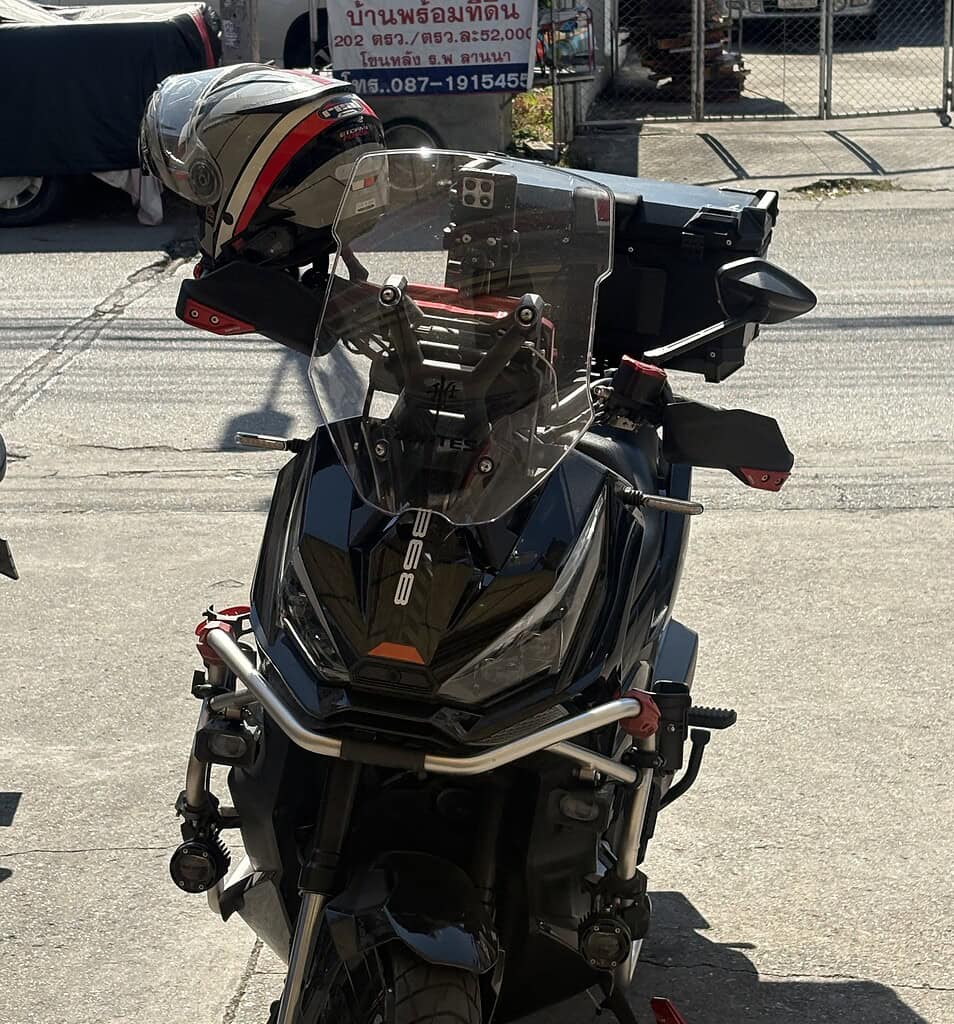
Renting a motorbike in Thailand is one of the best decisions you can make for exploring beach towns, islands, and areas where public transport doesn’t reach conveniently.
Renting one from the first shop you see near the beach or ferry pier is one of the most consistent overpaying situations available.
Motorbike rental pricing in tourist-facing beach areas runs 300-400 THB per day for a standard scooter.
The same bike from a local rental shop ten minutes’ walk from the beach strip costs 150-200 THB per day.
On a five-day island stay, that difference is 750-1,000 THB per rental, meaningful money for a decision that takes five extra minutes of walking to optimize.
Beyond daily rate, tourist-area rental shops in Phuket and Koh Samui specifically have a documented pattern of charging for pre-existing damage that was already present at pickup. Photograph every centimeter of the bike before you ride away.
Document scratches, dents, and worn areas with timestamped photos. This single habit eliminates an overpaying situation that has nothing to do with actual damage you caused.
Longtail Boat Rides and Island Transfers
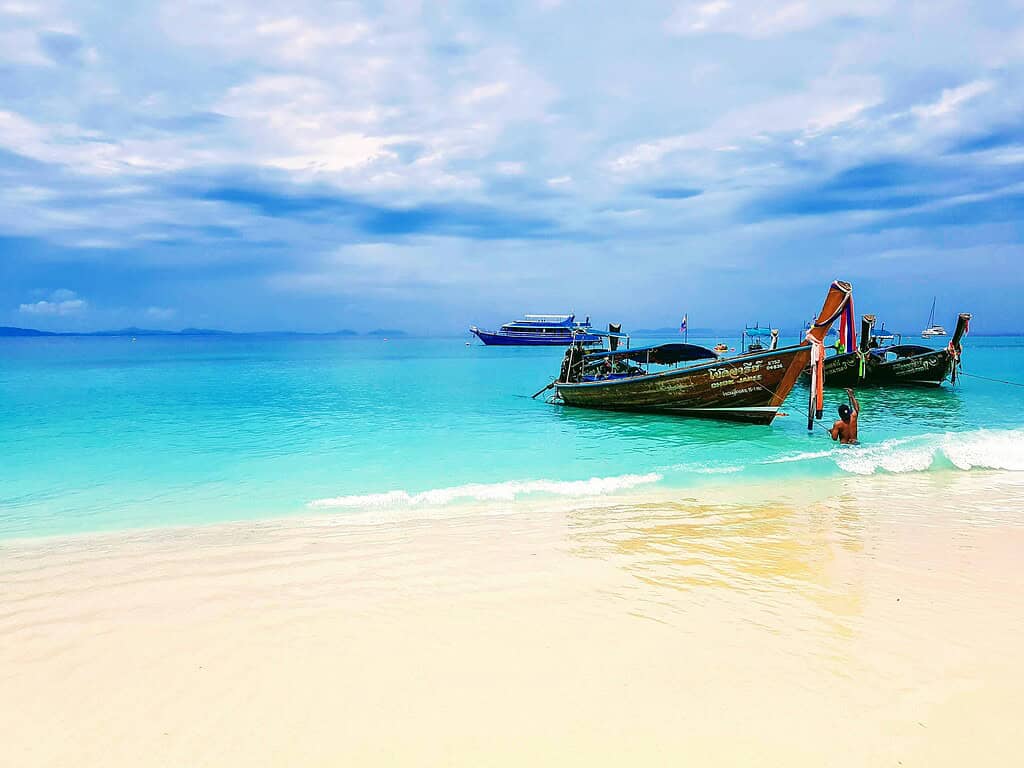
Longtail boat rides and island transfers booked on the beach or at the pier represent some of the most dramatically tourist-priced experiences in Thailand, with walk-up pricing often running double or triple what the same journey costs when arranged in advance.
A longtail boat from Railay Beach to Krabi Town quoted at the beach costs 150-200 THB per person for a shared boat.
The same journey pre-arranged through your guesthouse or a local operator costs 80-120 THB.
A private longtail for island hopping quoted at the beach in Koh Lanta costs 2,500-3,500 THB.
The same boat with the same stops arranged through a local tour operator costs 1,500-2,000 THB.
The walk-up beach pricing premium exists because the seller knows you’re already at the beach, already committed to the destination, and have no realistic comparison point in the moment. Pre-booking removes the leverage entirely.
For island transfers specifically, Koh Phi Phi to Phuket, Koh Samui to the mainland, ferry crossings throughout the Gulf and Andaman, booking through 12Go or local operators in advance consistently produces lower prices than pier-side walk-up booking, with the added benefit of a confirmed seat rather than waiting to see whether the next boat has space.
Thailand Has Two Price Systems and Most Tourists Only Know One
The tourist pricing system in Thailand isn’t a conspiracy and it isn’t a scam. It’s a market response to visitors who don’t know local prices, don’t have time to comparison shop, and are making decisions in moments of convenience rather than preparation.
Every item on this list has a tourist price and a local price. The tourist price is what you pay when you book through the most visible, most convenient, most English-facing channel available at the moment you need something.
The local price is what you pay when you know in advance what things cost, have done twenty minutes of comparison, and are willing to walk slightly further from the main tourist drag.
The gap between those two pricing systems ranges from minor on some purchases to genuinely significant on others.
Across a full two-week trip, a traveler who consistently accesses local pricing versus one who consistently pays tourist pricing will finish with hundreds of dollars more in their pocket for an identical experience.
Thailand is still extraordinarily affordable even at tourist prices, which is exactly why most visitors never notice the gap. The meals are still cheap. The massages are still inexpensive. The tours are still accessible.
But the version of Thailand that exists one step removed from the tourist pricing system is significantly better value, and once you know where to look for it, it’s not particularly hard to find.

Final Thoughts on What Tourists Overpay for in Thailand
Thailand will take more of your money than it needs to if you let it, and the way it takes it is rarely dramatic enough to feel like a problem in the moment.
The slightly inflated airport transfer. The exchange rate that wasn’t quite as good as it could have been. The tour that cost 1,000 THB more than it needed to.
The massage on the tourist street rather than around the corner. None of these feel significant individually.
Across a two-week trip they add up to a meaningful amount that went somewhere other than the experiences that mattered.
The fix isn’t complicated. Know what things cost before you need them. Book tours through comparison platforms rather than hotel concierges.
Walk one street in any direction from any major tourist attraction before spending money on anything. Use Grab and SuperRich as defaults for transport and currency respectively.
Do those things consistently and Thailand rewards you with everything its reputation promises at the price point that actually justifies the journey.

Why do tourists overpay in Thailand?
Convenience and lack of price awareness are the two main drivers. Tourist-facing businesses price for visitors who don’t know local rates and are making decisions based on what’s immediately visible rather than what’s available with minimal research. The fix is knowing approximate local prices before you arrive.
Is Thailand still affordable despite tourist pricing?
Even at tourist prices Thailand remains significantly cheaper than most Western destinations. The point isn’t that tourist pricing makes Thailand expensive.
It’s that local pricing makes it considerably better value for the same experience.
What is the biggest overpay situation for tourists in Thailand
Research approximate costs before you need them. Book tours through Klook or directly with operators.
Use Grab instead of street taxis. Exchange currency at SuperRich rather than airport counters. Eat where locals eat rather than where the signs are in English.
These five habits eliminate most tourist pricing situations consistently. For a full breakdown of smart spending strategies, the ways to save money in Thailand guide covers everything in detail.

All very good points but two big ones missed.
Cash Exchanges v’s ATM costs
Water machines only charging 1 baht for a full refill of bottled water versus around 14 to 35 baht for a bottle and better for the environment with less plastic used
Hello June, thanks for commenting! ATM fees are usually the same for most ATM’s, 250 BAHT per transaction last I know.