
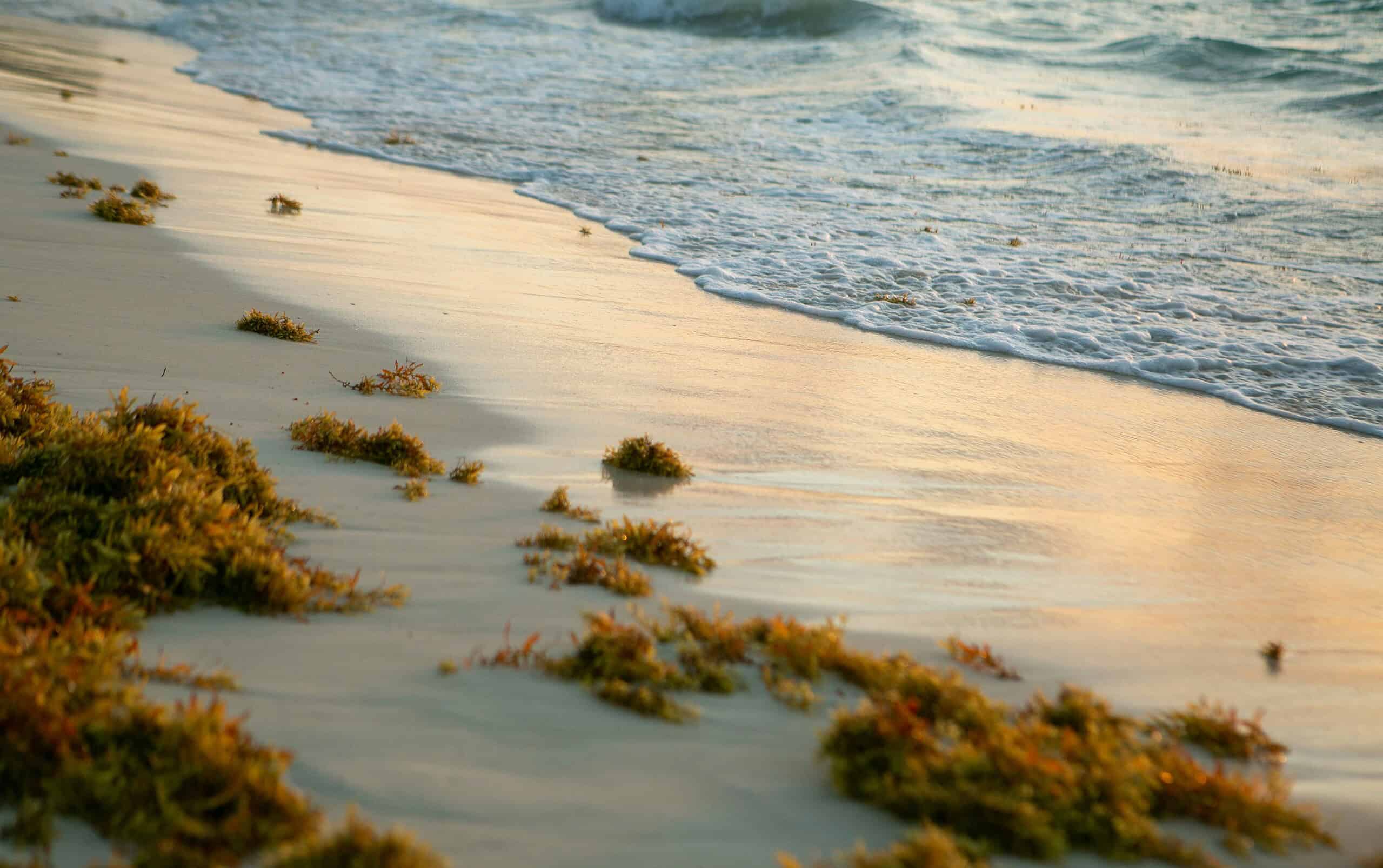
Sargassum in Mexico: 11 Things to Know Before You Book
Sargassum in Mexico is one of the most confusing things to plan around, because the advice you hear never agrees.
Every few weeks, someone in my Facebook group posts a photo of a beach covered in brown seaweed.
Half the comments say cancel the trip. The other half say it was perfectly fine when they went.
Both sides are telling the truth. Sargassum comes in pulses, some beaches get hit hard while others barely notice, and a trip can land on either side of that.
The good news is that a few simple checks before you book take most of the guesswork out.
Here are the 11 things I would look at first, from when it shows up to which beaches stay clearer.
What Sargassum Is and Why Mexico Gets It
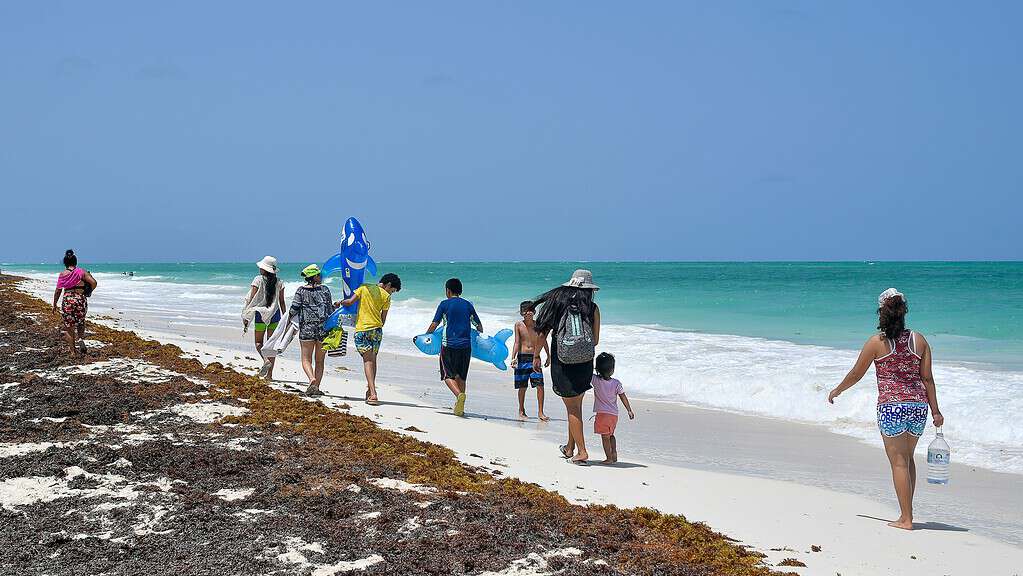
Sargassum is a type of floating brown seaweed that drifts across the Atlantic in huge mats.
Ocean currents carry it toward the Caribbean, and parts of it wash up on the coast of Mexico’s Yucatan Peninsula.
It does not arrive as one steady stream. It comes in pulses, so a beach can look perfectly clear one week and heavily covered the next.
That is why you will see completely different reports from travelers who visited the same place a few weeks apart.
Only a portion of the seaweed floating offshore actually reaches the beach, and much of it is collected before it does. Sargassum is a natural, recurring part of the Caribbean now, not a one-time event.
The Mexican government and local teams track it closely, and offshore barriers and collection boats are used to catch some of it before it reaches shore.
That effort helps, but it cannot stop every pulse, which is why conditions still change from week to week. Knowing that it moves in waves makes the rest of this guide easier to use.
When Sargassum Season Is Worst
Sargassum season in Cancun and the Riviera Maya generally runs from around April to October.
The heaviest arrivals usually come in June, July, and August, when the beaches are at their most affected.
Seasons vary from year to year, and 2026 was a heavy one. That is why I would never promise that any single month is guaranteed clear or guaranteed bad.
If you are traveling in summer, expect some seaweed on at least part of the coast, and plan for it.
That does not mean you will have a bad trip. It means you should choose your beach, your resort, and your activities with it in mind.
The first arrivals often appear in spring, and the season builds through early summer.
By September and October, levels usually start to ease, though a late pulse is always possible. If you are traveling at either end of the season, check conditions closer to your dates.
Think in probabilities rather than guarantees. The summer months carry the most risk, and the rest of the year carries less.
The Months That Are Usually Clearest

November through March is typically the cleanest stretch. December through February is generally the safest window if a clear beach is your top priority.
Early arrivals in January and March 2026 were a reminder that the pattern is not perfect.
Seaweed can show up outside the usual months, so even in winter it pays to check conditions before you go.
The trade-off is price and crowds. The clearest months are also high season, when hotels cost more and the best rooms go quickly.
My guide to the best time to visit Cancun and the Riviera Maya compares each month, so you can weigh the weather, the crowds, and the seaweed risk together.
Even in clear months, one stormy week or shift in the wind can push seaweed ashore for a few days.
I would treat the winter odds as good, not perfect, and keep the same flexible mindset I describe later in this guide. If your dates are flexible, late autumn and winter give you the best odds.
Beaches Facing the Open Caribbean Get Hit Hardest
Where you stay matters as much as when. Beaches that face the open Caribbean take the full force of incoming seaweed, with nothing to slow it down.
The south end of the Cancun Hotel Zone, Playa del Carmen, Akumal, and Tulum are the areas reported to see the most.
Tulum is often named as one of the worst affected, because the coast there has no offshore reef to break up the incoming mats.
That does not mean those places are off the table. Many travelers still enjoy them, and the seaweed is often cleared from the beaches in front of hotels.
But if a clean, swimmable beach is the main reason for your trip, it helps to know where the risk is highest.
Keep in mind that hotels in these areas often clear their beach each morning, so the beach in front of your resort can look very different from a public stretch down the coast. A resort with a strong cleaning routine makes a big difference in the same town.
Before you decide, I would read up on whether Tulum is worth visiting, since sargassum is just one of the factors to weigh there.
Some Beaches Stay Clearer Than Others

The same geography that causes problems elsewhere protects some beaches. Sheltered coastlines tend to see much less seaweed, even in heavy years.
The north side of the Cancun Hotel Zone, which faces the calmer water toward the lagoon, is one of the more reliable areas.
Playa Norte on Isla Mujeres is another, and it is often named as one of the clearest beaches close to Cancun. The west coast of Cozumel is also sheltered by the island itself.
No beach is immune, so I would still check recent photos before booking. But if you want the best odds of a clear stretch of sand, these are the places to start.
Sheltered does not mean calm every day. The water on the lagoon side of Cancun can be less appealing for swimming than the open Caribbean, so check what the beach is actually like for your needs, whether that is swimming, lounging, or walking.
A short ferry ride gets you to Isla Mujeres, and my guide to the things to do in Isla Mujeres shows what is worth the trip, whether you stay there or visit for the day.
The Smell Is Usually the Bigger Problem
Most people are surprised to learn that fresh, floating sargassum is generally harmless. It looks messy, but the larger issue is what happens after it washes up and starts to decay.
Once it piles up on the sand, it breaks down and releases a gas that smells like rotten eggs.
On heavy days, that smell can drift across the beach and into nearby areas, which is often what ruins the experience more than the seaweed itself.
People with respiratory sensitivities may find the smell harder to handle, so it is worth thinking about if that applies to you or someone you are traveling with.
If the smell bothers you, ask the resort for a room away from the beach side, or plan a few hours at the pool or inland.
Sargassum smell tends to be strongest in the morning and when the seaweed has been sitting in the sun, so it can change during the day.
Thick mats in the water can also hide small stinging organisms, so I would skip swimming through heavy patches. If the water is thick with seaweed, stay on the sand or head to the pool instead.
Resorts Clean Their Beaches, But Not All Equally
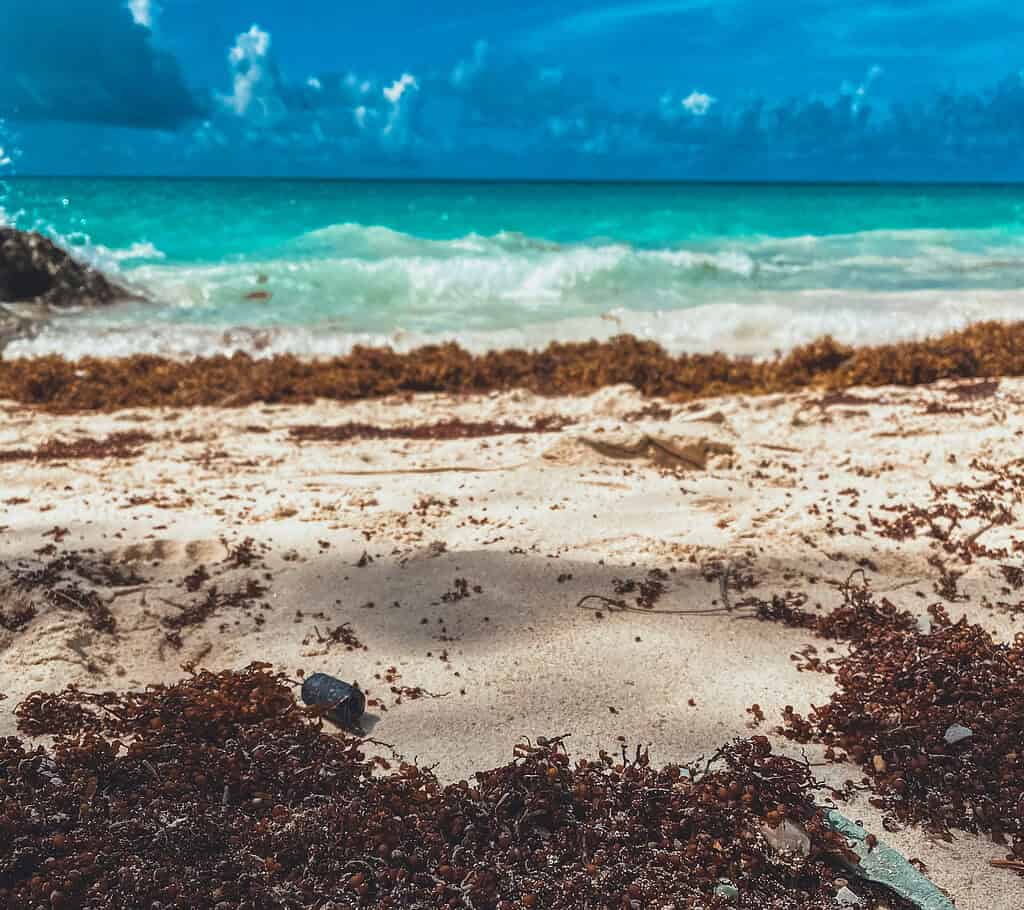
Many large resorts run daily cleanup crews that rake and remove seaweed from their stretch of beach each morning. That is a big reason some travelers barely notice sargassum at all.
The effort varies widely. Some properties clean thoroughly and early, while others only react once the beach is already covered.
Offshore barriers and municipal crews help, but the beach in front of your resort depends mostly on that resort.
Before you book, ask whether the resort has a daily cleaning program, and read recent guest reviews for mentions of seaweed. Photos from the last few weeks tell you more than the promotional images do.
A resort that cleans well can still struggle on the heaviest days, when arrivals outpace the crews. Reviews that mention sargassum and describe how staff handled it are the most useful ones to look for.
I cover this as part of choosing the right property in my guide to all-inclusive mistakes in Mexico, because the beach is one of the most common things people forget to check.
How to Check Conditions Before You Go
You can check sargassum conditions yourself, and you should. A quick look in the week or two before your trip takes the guesswork out.
Start with satellite outlooks. The University of South Florida’s Sargassum Watch System publishes regular maps and regional bulletins, and NOAA also publishes sargassum inundation risk maps.
They show the general picture rather than every beach, but they are a useful guide to how heavy the season is.
Then look for recent, dated photos from guests at your actual resort, and read the newest reviews. Beach conditions change quickly, so anything older than a few weeks is not very helpful.
Remember that satellite maps show the regional picture and not one specific beach. A map that looks heavy does not mean every resort is affected, and a map that looks light does not guarantee a clear shoreline, so use them together with recent photos.
Check again a few days before you fly. If conditions look bad, you still have time to adjust your plans.
Book Flexible Rates in Peak Months

Because sargassum arrives in pulses, no forecast is perfect. That makes a flexible booking one of the smartest protections you have, especially from spring through early fall.
Look for rates with free cancellation up to a few days before arrival, and read the cancellation window carefully.
It is easy to book and forget the deadline, which is exactly when a change of plans becomes expensive.
Non-refundable rates are cheaper, but they leave you with nothing if conditions change. In peak months, I would pay a little more for the option to cancel.
If your dates cannot move, ask the resort what it offers when the beach is heavily covered.
Policies differ, and it is better to know before you book than to ask when you are already standing on a seaweed-covered shore.
A flexible booking does not mean you are expecting the worst. It simply means you are not locked in if the beach turns out to be a poor match for your plans.
Plan Days That Don’t Depend on the Beach
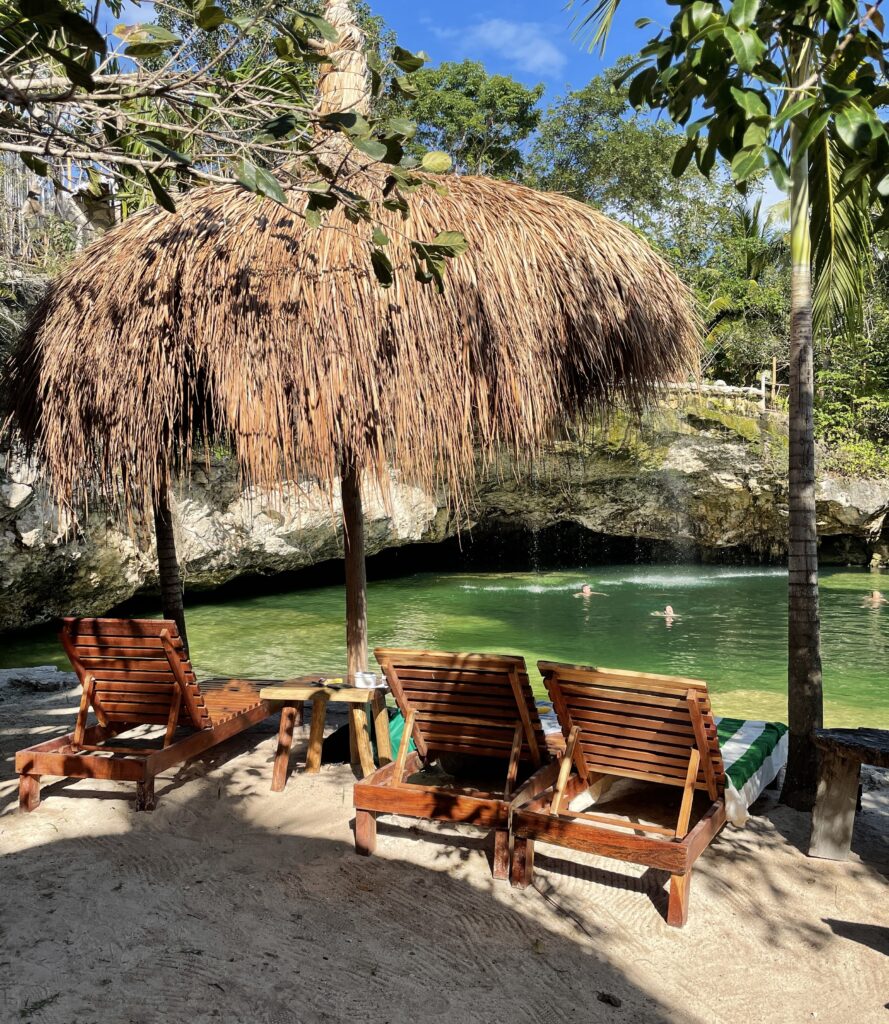
The easiest way to take the stress out of sargassum is to build a trip that does not rely on a single beach. The Riviera Maya has far more to offer than sand.
Cenotes, Mayan ruins, and small colonial towns are not affected by seaweed. Boat tours and snorkeling trips usually head offshore, where the water is largely clear. And most resort pools are unaffected on a rough beach day.
I would plan at least a couple of days that work whatever the beach looks like. That way, a bad beach morning is just a reason to switch to something else.
On the days you do want the beach, aim for early morning. Crews usually clear the sand overnight or at sunrise, so the shoreline often looks its best before the day’s pulse arrives.
My guide to the best Cancun day trips is full of options that work well when the beach is not at its best.
Heavy Seaweed Years Can Mean Lower Prices
If you are flexible and willing to accept some risk, heavy sargassum years can work in your favor.
Some hotels may lower their rates when seaweed affects bookings, particularly in the worst affected areas.
I would not count on it. Discounts depend on the hotel, the dates, and the season, and a low price does not make up for a beach you cannot enjoy.
Compare prices across dates and properties rather than assuming a cheap rate means a good deal.
If you do find a lower rate, check the beach conditions and cleaning policy first. The best value is a fair price at a resort with a good beach program.
One more thing worth doing is asking the resort about its beach conditions directly before you commit to a lower rate.
An honest answer about recent weeks is more valuable than a discount on a stay you will not enjoy.
I share more ways to save in my Mexico budget travel tips, including how moving your dates by a few weeks can make a real difference.

Final Thoughts on Sargassum in Mexico
Sargassum is a real part of travel in the Riviera Maya now, but it should not be a reason to cancel your trip. It is something to plan around, like weather.
Check the season, pick the right area and resort, book flexibly, and have a few activities that do not depend on the beach. Then check conditions again before you fly.
Do those things, and the chances of a trip ruined by seaweed drop a lot. Even in heavy years, most travelers find a good stretch of sand and plenty to do.
When is sargassum season in Cancun and the Riviera Maya?
Sargassum season generally runs from around April to October, with the heaviest arrivals in June, July, and August.
The cleanest months are usually November through March. Seasons vary, though, so I always recommend checking recent conditions before you go.
Is it safe to swim in sargassum?
Fresh, floating sargassum is generally considered harmless, but thick mats can hide small stinging organisms, and decomposing seaweed on the sand smells strongly.
I would avoid swimming through heavy patches. If you have respiratory sensitivities, check with your doctor before traveling in peak months.
Which beaches in Mexico have the least sargassum?
Sheltered beaches tend to be clearer. The north Hotel Zone in Cancun, Playa Norte on Isla Mujeres, and the west coast of Cozumel are often named as more protected. Open coast beaches like Tulum, Akumal, and Playa del Carmen tend to see more. No beach is guaranteed clear.
Is it worth visiting Cancun during sargassum season?
For many travelers, yes. Choose a sheltered area or a resort with a daily beach cleaning program, book a flexible rate, and plan activities that do not depend on the beach. If a clear, swimmable beach is your only priority, the winter months give you better odds.
